BREATHING AND REGULATION: WHAT THE SCIENCE TELLS
BREATHING AND REGULATION: WHAT THE SCIENCE TELLS US Much More Than Taking a Breath We breathe around twenty thousand times every day. Most of those brea...
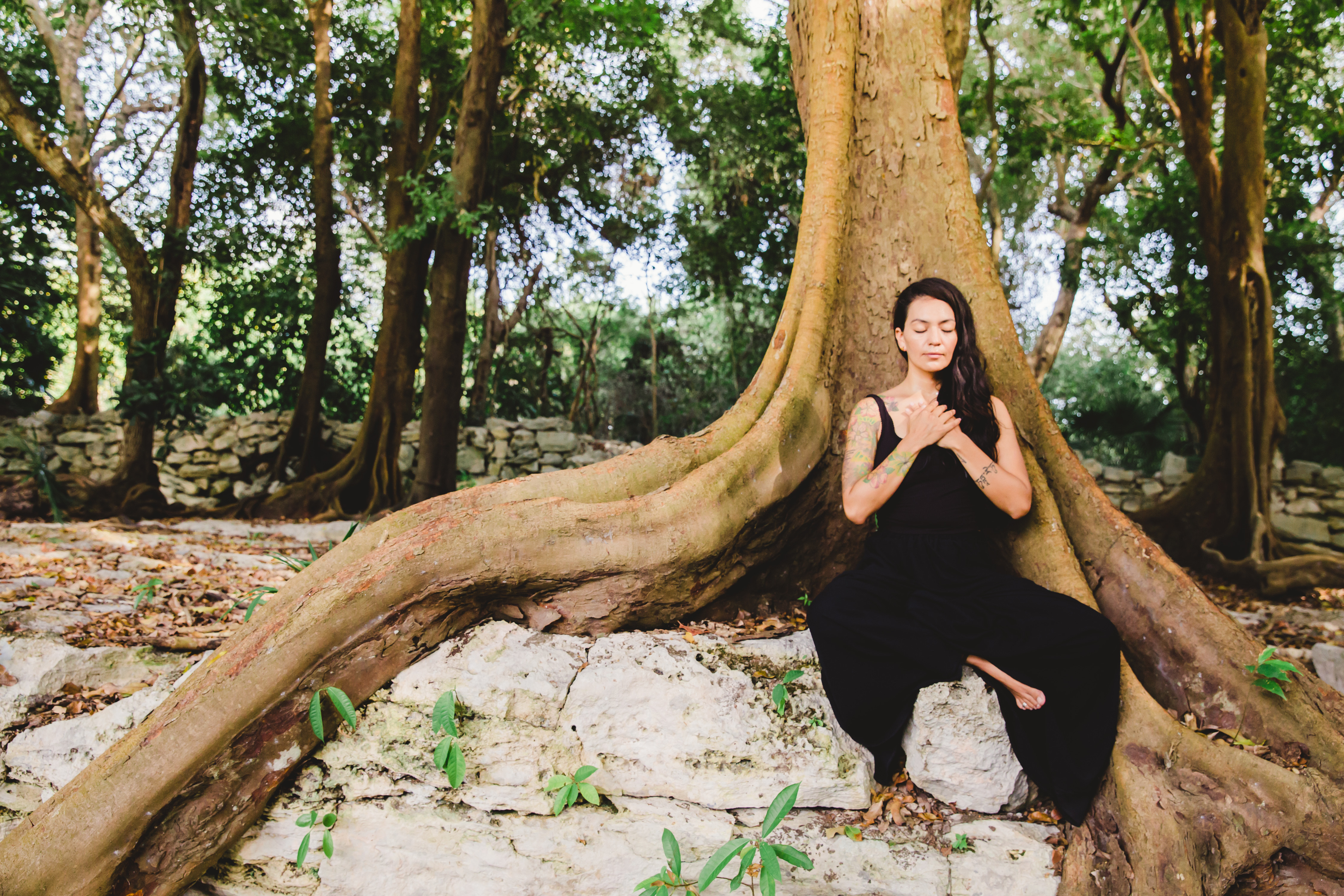
BREATHING AND REGULATION: WHAT THE SCIENCE TELLS US Much More Than Taking a Breath We breathe around twenty thousand times every day. Most of those breaths happen without us having to think about them. While we sleep. While we talk. While we walk. While we laugh. While we cry. Breathing accompanies us from the very first moment of life and continues to do so until the last. Precisely because it is always there, we tend not to notice it. And yet, few functions in the body participate in so many processes at once. We often imagine that we breathe simply to bring oxygen into the lungs. While there is an important truth in this, we now know that breathing has far broader functions. Every inhalation and exhalation participates in the exchange of oxygen and carbon dioxide, helps maintain the body's acid-base balance, influences cardiovascular function, changes pressure within the chest, and generates signals that are continuously integrated by the nervous system. Breathing is not simply about taking in air. Breathing is an ongoing conversation between the lungs, heart, blood vessels, brainstem, respiratory muscles, and autonomic nervous system. An Automatic Function... That Can Also Be Conscious Most of the functions essential to life happen without voluntary intervention. We do not need to decide when our heart should beat. Nor do we need to remember to keep our liver working. Or tell our kidneys to filter our blood. Breathing shares this quality. If we stop thinking about it, it continues. And that is extraordinary. But breathing also has a quality that is relatively unusual. We can consciously influence it. We can take a deeper breath. We can gently lengthen the exhalation. We can hold our breath for a few seconds.
We can sigh. We can yawn. We can sing. We can speak. Few bodily functions allow for this kind of participation between automatic processes and conscious attention. Perhaps that is why breathing has attracted the interest of medicine, physiology, neuroscience, contemplative practices, and somatic education for centuries. Not because it is a magical tool. But because it is one of the most fascinating bridges between what happens spontaneously and what we can consciously relate to. Breathing Also Informs the Nervous System For a long time, we thought of breathing primarily as a mechanism for transporting gases. Today we know that it is also a constant source of information for the nervous system. Each breath changes the activity of numerous receptors throughout the body. The lungs detect the degree to which their tissues are expanding. Blood vessels register changes in the concentration of carbon dioxide and oxygen. The heart continuously adjusts its rhythm in relation to the respiratory cycle. The diaphragm changes pressure within the abdomen and chest. All this information travels to different regions of the nervous system, where it is integrated with signals coming from the rest of the body. Breathing does more than sustain life. It also helps the body sense how life is unfolding in each moment. An Ongoing Dialogue with Regulation In recent years, numerous studies have explored how certain breathing patterns may influence processes related to physiological regulation. We know that, in many people, slow and comfortable breathing can be associated with measurable changes in cardiovascular activity, heart rate variability, and certain indicators of autonomic nervous system function. At the same time, we also know that regulation is far more complex than any breathing technique. Sleep. Feeling safe. The quality of our relationships. Movement. Nutrition. Pain.
Context. Life history. All of these participate in the way the body regulates itself. That is why, at Sentido Somático, we prefer to think of breathing as one doorway into regulation. Not the only doorway. Nor a universal solution. But one of the many ways through which the nervous system can continue learning how to relate to the world and to itself. And perhaps this is one of the most hopeful perspectives. Because it reminds us that every breath is not simply an exchange of air. It is also an opportunity to participate, with greater awareness, in a biological process that has accompanied us from the very beginning of our existence. EXPERIENCE GIVES MEANING Few things accompany us as faithfully as breathing. It is present when we are born and remains with us until the end of life. We breathe while we sleep. While we laugh. While we cry. While we work. While we rest. And yet, most of the time, we barely notice it. Perhaps that is one of its greatest paradoxes. What is most constant can also become what is most invisible. Breathing as a Way of Meeting Ourselves For thousands of years, different cultures have recognized that breathing occupies a special place in human experience. In the traditions of yoga and prāṇāyāma, for example, breathing has been described as a bridge between body, mind, and attention. Other contemplative traditions have also recognized the breath as a pathway for cultivating presence, calm, and clarity. Although these forms of knowledge emerged within cultural and philosophical contexts different from those of contemporary science, it is striking that many of these traditions identified, through observation and practice, something that continues to interest physiology and neuroscience today: breathing occupies a unique place in our experience. We do not need to translate one language into the other in order to recognize their value.
Each illuminates different aspects of the same reality. Tradition reminds us that breathing can be a path toward presence. Science helps us understand some of the physiological processes involved in that experience. The two perspectives can meet with respect. Breathing Is Always With Us Unlike many other practices, breathing does not need to be learned in order to exist. It is already happening. There is no need to look for it. It is here. Perhaps its greatest value, then, is not in turning it into a technique. Perhaps it is in reminding us that there is always a possibility of meeting the present moment again. Not because breathing can resolve everything we experience. But because it never stops accompanying us. Anywhere. At any stage of life. Under any circumstances. Listen Before Trying to Change In recent years, countless approaches centered around what is often called "breathwork" have emerged. Many have awakened a genuine interest in exploring the body. Others, however, convey the idea that we should always breathe in a particular way in order to reach an ideal state. At Sentido Somático, we want to offer a different perspective. Before asking ourselves how we should breathe, perhaps we can ask: How is my body breathing today? The question seems simple. And yet, it profoundly changes our intention. We are no longer looking to correct. We are looking to understand. We are no longer trying to impose a rhythm. We are trying to discover the rhythm our body is expressing in this moment. Sometimes we may notice a spacious breath. At other times, a more contained one. There may be days when we sigh frequently. Others when we barely notice our breathing at all. Each of these possibilities is part of the body's extraordinary capacity to adapt to the circumstances it is living through.
Observing does not mean resigning ourselves to what is. It means beginning a conversation. Breathing Can Also Be an Act of Respect We often think that caring for the body means doing something to it. Changing it. Correcting it. Training it. Optimizing it. But perhaps there is another form of care. Accompanying it with curiosity. Breathing offers us that possibility every day. Not because it is a tool for controlling the nervous system. But because it can become an opportunity to listen to it. And sometimes, feeling listened to is also part of regulation. Perhaps breathing does not invite us simply to inhale and exhale. Perhaps it invites us, again and again, to remember that the body does not need to be mastered in order to be understood. And perhaps that is where a different relationship with ourselves can begin. Not one based on demand. But on presence. Because some of the deepest conversations with the body do not begin when we try to change the way we breathe. They begin when, for the first time, we stop and listen. PRACTICE TRANSFORMS Once we understand that breathing participates in the body's regulation, and that different cultures have considered it a bridge between body and attention for centuries, a natural question arises. What can I do with all of this? Our proposal begins in a perhaps unexpected way. Not by changing the breath. But by getting to know it. Before attempting to change the course of a river, we need to observe how it flows. Breathing is somewhat similar. Before directing it. Before lengthening it. Before making it deeper. We can begin simply by discovering how it is happening.
A Practice of Meeting At some quiet moment during the day, without seeking any particular state, you might pause for a few moments. There is no need to close your eyes. There is no need to sit in a particular way. There is no need to breathe in any specific manner. Simply allow the breath to continue as it already is. For a few seconds, observe. Where do you notice the movement of your breath most clearly? At the nostrils? In the chest? Around the ribs? In the abdomen? Are there natural pauses between one breath and the next? Are the inhalation and exhalation similar in length? There is no need to answer correctly. There is no ideal answer. We are simply learning a new language. Perhaps you will discover something you have never noticed before. Perhaps you will not. Both possibilities are part of the experience. From Control to Companionship We often relate to the body by trying to direct it. Breathe better. Relax. Calm your nervous system. Reduce your stress. Although these intentions usually come from a desire to care for ourselves, they can sometimes become another form of demand. Breathing can offer another possibility. Instead of asking: How can I breathe correctly? Perhaps we can explore: How can I accompany the breath that is possible for my body today? The difference may seem subtle. But it profoundly changes the relationship. We are no longer treating breathing as a problem that needs to be corrected. We receive it as an expression of what the body is experiencing in this moment. And from there, we begin to know ourselves more deeply.
When Breathing Changes on Its Own Many people discover something curious when they practice this kind of observation. After a few minutes, without having tried to change anything, the breath may begin to shift slightly. Sometimes it becomes a little more spacious. At other times, a spontaneous sigh appears. Sometimes the rhythm becomes slower. And sometimes no noticeable change occurs at all. All of these possibilities are normal. What matters is not creating a particular response. What matters is remembering that the body has an extraordinary capacity for self-regulation when it encounters supportive conditions. Our task is not always to direct that process. Often, it is simply to stop interrupting it. A Practice That Can Accompany Us Throughout Life Breathing has something very few experiences share. It is always available. We do not need a special place. Or a particular time. Or any specific equipment. Breathing travels with us. In a waiting room. While we walk. Before beginning a meeting. While holding the hand of someone we love. While watching a sunset. While resting for a few minutes after an intense day. Perhaps that is why so many traditions have considered it a companion along the way. Not because it has answers to all our questions. But because it is always present when we choose to listen again. At Sentido Somático, we believe that practice is not only about learning new techniques. It is also about transforming the way we relate to what is already part of our lives. And few things accompany us as consistently as breathing. Perhaps that is why it does not need to become a tool for controlling the body. Perhaps it is enough to allow it to become a conversation again. A silent conversation. Patient.
Available. One that, breath by breath, reminds us that there is always a possibility of returning to the present moment. Not to escape life. But to inhabit it with greater presence. RESEARCH CONTINUES Breathing has accompanied humanity long before physiology existed as a scientific discipline. Contemplative traditions observed it for centuries. Medicine began describing its mechanisms. And, over the last few decades, neuroscience and physiology have greatly expanded our understanding of its relationship with the nervous system. Today we know much more than we did just fifty years ago. We understand more clearly how the respiratory centers of the brainstem coordinate the rhythm of breathing. We have a more precise understanding of the communication between the lungs, heart, blood vessels, and autonomic nervous system. Research has shown that certain breathing patterns can influence some physiological indicators, such as heart rate variability and baroreflex sensitivity, in certain people and circumstances. And at the same time, we are still learning. We continue to investigate the mechanisms that may explain individual differences in responses to breathing practices. We continue studying how breathing interacts with attention, movement, body perception, and relational context. Research is also growing around the role of breathing in areas such as persistent pain, anxiety, rehabilitation, athletic performance, and different contemplative practices. Science moves forward. And it does so precisely because it continues to ask questions. Between Enthusiasm and Caution When a subject generates a great deal of interest, the risk of exaggerating its possibilities also increases. Breathing has been no exception. In recent years, numerous methods have emerged claiming that specific breathing techniques can profoundly transform our lives. Some of these approaches are supported by promising research. Others make claims that do not yet have sufficient scientific support. At Sentido Somático, we believe these two realities can coexist honestly. We can feel genuine enthusiasm about what research is discovering.
And at the same time, maintain the caution necessary not to turn a hypothesis into a certainty. That attitude does not limit knowledge. It strengthens it. Because it allows us to keep learning without losing critical thinking. Regulation Never Depends on a Single Element Perhaps one of the most important ideas emerging from contemporary research is this: Regulation does not depend on breathing alone. It depends on the whole organism. Sleep. Movement. Feeling supported. Having moments of rest. Living within an environment that feels sufficiently safe. Nutrition. Care. The ability to express emotions. All of these participate, in different ways, in how the nervous system organizes its responses. Breathing can become a valuable doorway. But it is not the only one. Recognizing this is also a way of respecting the extraordinary complexity of the human body. A Conversation That Continues Perhaps the greatest gift breathing offers us is not a technique. Perhaps it is the reminder that there is a conversation that never stops. Every inhalation. Every exhalation. Every sigh. Every pause. They speak of an organism that continues adapting to life. Not to make it perfect. But to keep it alive. If this chapter has fulfilled its purpose, perhaps you will not finish it thinking that you need to breathe differently. Maybe you will finish with a different question. What can I continue discovering about the way my body breathes the life I am living? You do not need to answer it today.
Some questions need time. They need silence. They need experience. And perhaps that is one of the deepest teachings of breathing. That every moment offers another opportunity to listen. Not with the intention of controlling the body. But with the willingness to know it a little more deeply. Because breathing does not ask us for perfection. Again and again, it offers us the possibility of meeting ourselves through the body from exactly where we are, rather than from where we believe we should be. And perhaps that is where true regulation begins. Not by mastering the body. But by learning to live in an increasingly respectful relationship with it. ESSENTIAL REFERENCES This chapter integrates knowledge from respiratory physiology, neuroscience, medicine, and contemplative traditions, clearly distinguishing the nature of each source. Respiratory Physiology and Medicine • West, J. B., & Luks, A. M. West's Respiratory Physiology. • Hall, J. E. Guyton and Hall Textbook of Medical Physiology. Neuroscience • Kandel, E. R., Koester, J. D., Mack, S. H., & Siegelbaum, S. A. Principles of Neural Science. • Reviews in Nature Reviews Neuroscience on respiratory control and autonomic regulation. Breathing and Physiological Regulation • Systematic reviews and review articles in Frontiers in Physiology, Journal of Applied Physiology, Neuroscience & Biobehavioral Reviews, and Autonomic Neuroscience addressing slow breathing, heart rate variability, autonomic regulation, and baroreflex sensitivity. Contemplative Traditions • Yoga Sutras of Patañjali. • Hatha Yoga Pradipika. These works are cited as historical and philosophical references for understanding the development of contemplative knowledge about breathing, rather than as experimental evidence in the sense of contemporary biomedical research.
EDITORIAL NOTE Last scientific review: July 2026. Predominant level of evidence: High for respiratory physiology, neural control of breathing, and the relationship between certain breathing patterns and some physiological indicators. Moderate for research into specific clinical applications of different breathing techniques, an area that continues to evolve. References to contemplative traditions are presented as experiential and historical frameworks that can enter into dialogue with science, without establishing direct equivalence between the two languages. SENTIDO SOMÁTICO'S EDITORIAL COMMITMENT At Sentido Somático, we understand breathing as a deeply human experience before we understand it as a technique. We value scientific knowledge because it helps us better understand how the body functions, and we honor the wisdom of contemplative traditions because they remind us that the body can also be known through direct experience. Our commitment is to build bridges between these worlds with rigor, humility, and respect, without reducing one to the other. Science explains. Experience gives meaning. Practice transforms. Research continues.