HOW DO DIFFICULT EXPERIENCES AFFECT OUR BODY?
HOW DO DIFFICULT EXPERIENCES AFFECT OUR BODY? When a person goes through a potentially traumatic experience, we often immediately think about emotions o...
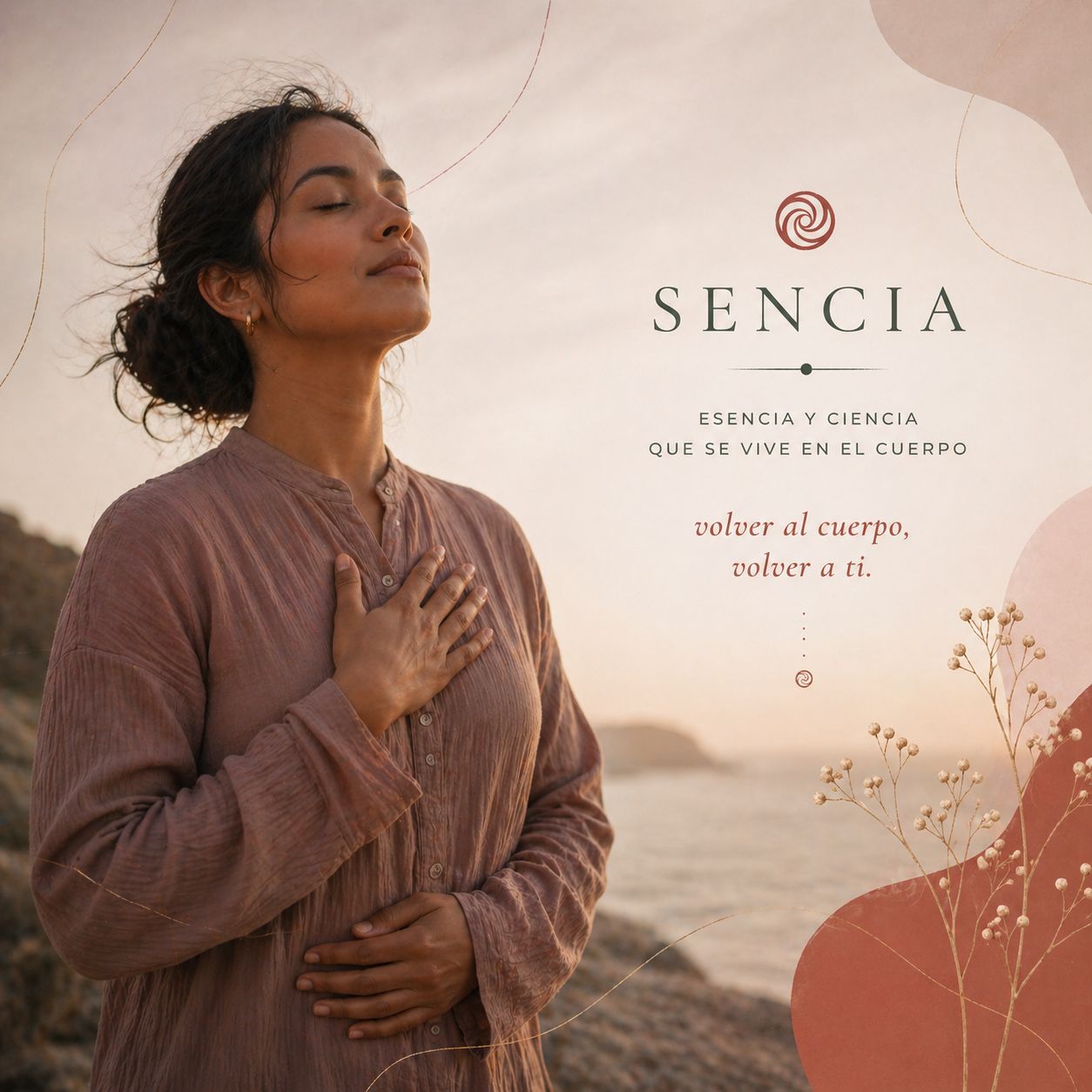
HOW DO DIFFICULT EXPERIENCES AFFECT OUR BODY? When a person goes through a potentially traumatic experience, we often immediately think about emotions or thoughts. However, there is an equally important question. What happens throughout the rest of the organism? The answer offered by current science is clear. Difficult experiences do not affect the mind alone. They involve the whole body. And this does not mean that the body "stores" trauma as if it were an object hidden somewhere in our tissues. It means something much more interesting. The entire organism participates in the way we learn, adapt, and respond to what we experience. Because the nervous system does not exist separately from the body. It is one of the ways through which the body organizes life. AN ORGANISM THAT FUNCTIONS AS A WHOLE For a long time, medicine studied the different systems of the body separately. The nervous system. The endocrine system. The immune system. The digestive system. The cardiovascular system. Today we understand that all of them are in constant communication. When the nervous system detects a threat, that communication changes. Stress-related hormones temporarily modify the way the organism distributes energy. Breathing may become faster or more shallow. Heart rate changes. Digestion may slow down. Muscles increase their tone in preparation for action. Attention becomes primarily directed toward what the organism interprets as relevant to survival. All of these responses are part of the same adaptive strategy. They are not independent errors. They are the coordinated expression of an organism attempting to respond to an extraordinary situation. WHEN ADAPTATION CONTINUES
In most situations, once the situation has ended, the organism gradually reorganizes its functioning. However, some experiences can keep certain patterns activated for longer. Not because the body has forgotten how to regulate itself. But because it continues to interpret the world through what it has learned. Over time, this sustained adaptation can influence different aspects of everyday life. Some people experience changes in sleep quality. Others notice digestive discomfort, persistent body tension, fatigue, difficulty concentrating, or increased sensitivity to certain stimuli. Research also continues to explore the relationship between chronic stress, nervous system regulation, inflammation, and different physiological processes. However, it is important to be very precise. The existence of an association does not mean that everyone will develop the same manifestations, nor that every symptom necessarily has a traumatic origin. Each organism has its own history, biology, and context. THE BODY SPEAKS THE LANGUAGE OF ADAPTATION We often hear expressions such as: "My body won't let me rest." "My body is always tense." "I feel like I'm constantly on alert." Many people look for answers through questions such as how to regulate the nervous system, anxiety and the nervous system, emotional exhaustion, why is my body always on alert?, or how does stress affect the body? These questions reflect a very human need to make sense of our experience. And they deserve to be met with respect. Current science invites us to understand that the body is not trying to get in our way. It is expressing the way the organism learned to adapt. Not because it wants to keep us in suffering. But because, at some point in our history, that organization may have represented the best strategy available to protect life. Understanding this can profoundly change the way we see ourselves. The body stops being a problem that needs to be corrected. It begins to become a companion trying to tell us how it learned to move through the world. And perhaps this is one of the deepest ways to begin a true somatic healing process. Not by fighting against the body.
But by learning to listen to it with the same curiosity, respect, and compassion with which we would listen to the story of someone we love. EXPERIENCE GIVES MEANING When we talk about the relationship between difficult experiences and the body, it is easy to imagine that the goal is to "feel again." However, before talking about feeling, perhaps there is an even more important question. How have I learned to inhabit my body until now? At Sentido Somático, we like to begin there. Because each person has built that relationship in a different way. Some grew up experiencing their body as a safe place. Others learned very early to remain constantly alert. Some discovered that expressing emotions was welcome. Others learned that staying quiet, becoming tense, or disconnecting helped them preserve connection, avoid conflict, or move through situations that exceeded their available resources. None of these ways of inhabiting the body appear by accident. They all tell a story. THE BODY ALSO LEARNS WAYS OF BEING IN THE WORLD When we think about learning, we usually imagine knowledge or skills. Learning a language. Riding a bicycle. Solving a problem. However, the organism learns long before we can put our experience into words. It learns rhythms. It learns distances. It learns ways of breathing. It learns when to relax and when to remain alert. It learns how much space to occupy. It learns how to approach others. And it also learns when it is safer to contain, accelerate, avoid, or remain still. Over time, these ways of organizing ourselves no longer feel like conscious decisions. They become our habitual way of being in the world. That is why many people say: "I've always been this way." But perhaps the question is not whether you have always been this way. Perhaps it is: What did your organism learn in order to make this way of inhabiting life possible?
NOT EVERY DISTANCE IS ABSENCE Sometimes, when a woman discovers that it is difficult for her to feel certain parts of her body or remain present with certain internal experiences, she immediately concludes that she is doing something wrong. From our perspective, that conclusion deserves to be approached with great care. Because at certain moments in life, taking distance from certain sensations may have been a deeply intelligent strategy. Not everyone needs to immediately learn to inhabit their body more fully. Many first need to discover how they learned to protect themselves within it. This shift in perspective can profoundly change the process. We no longer begin by trying to eliminate a response. We begin by trying to understand its function. And often, that understanding reduces the shame with which so many people enter spaces of somatic therapy, looking for how to regulate the nervous system, trying to understand disconnection from the body, or seeking relief from emotional exhaustion, without yet understanding the story their body has been trying to tell. A RELATIONSHIP BEFORE A GOAL Perhaps this is why we talk so little about goals and so much about relationships. Inhabiting the body is not a task we need to complete. It is a relationship that can continue to transform throughout our lives. There are days when it is easier to feel present. And others when the organism needs greater protection. That does not necessarily mean going backward. It means continuing to live. The question then shifts from: How do I learn to inhabit my body? to something much gentler: How have I learned to inhabit my body, and what new experiences might gradually help me build a different relationship with it? Perhaps this question does not require an immediate answer. But it does open a deeply respectful space for continued learning. Because every relationship needs time. And our relationship with our own body is no exception. PRACTICE TRANSFORMS
After understanding that the body learns ways of inhabiting the world, perhaps a different question begins to emerge. Not a question about changing immediately. A question about beginning to observe. How have I learned to inhabit my life? And perhaps, alongside it, another equally important question. How have I learned to inhabit my body? We do not seek to answer them all at once. Some answers may come quickly. Others may need time. Because many of the ways we live today began organizing themselves long before we were able to understand them through words. LOOKING FROM WITHIN We often move through our history trying to remember events. However, there is another way of approaching it. By observing how we live in the present. How do you breathe when someone disagrees with you? What happens in your body when you need to ask for help? How do you respond when conflict appears? Is it easy for you to rest? Do you feel that you always need to be available for others? Can you enjoy yourself without feeling guilty? These questions are not intended to find a problem. They are intended to discover a story. Because the way we inhabit our body and our relationships today also speaks about what our organism learned throughout life. WHAT SEEMED NORMAL Many people discover, over time, that some experiences they considered completely normal for years were experienced by their organism as deeply overwhelming or potentially traumatic. Not because we now need to reinterpret our entire history through the word trauma. Nor because every difficulty needs to be explained that way. But because knowledge can help us look at what we did not previously know how to name with new eyes. Sometimes, growing up in an environment where fear, constant demands, emotional indifference, or unpredictability were common can make these experiences seem like simply "life."
However, when we begin to understand how the nervous system learns, we discover that what seemed ordinary may have required enormous adaptive effort. And this discovery is not intended to change the past. Its purpose is to expand our understanding of the present. CURIOSITY REVEALS MORE THAN JUDGMENT At Sentido Somático, we believe that questions can be deeply transformative. Not because they provide immediate answers. But because they help us approach our experience without violence. Curiosity has a very particular quality. It allows us to stay. Judgment, on the other hand, tends to rush toward conclusions. When we ask with curiosity: What did my organism learn here? How did I come to respond this way? What was this response trying to protect? Aspects of our history that remained outside our awareness for a long time can begin to reveal themselves. Not because they were deliberately hidden. But because, until now, we may not have had the language to recognize them. Understanding how we learned to inhabit the body can also help us understand how we learned to inhabit life. And perhaps that is one of the greatest gifts of knowledge. Not giving us a new identity. But helping us look at our experience from within, with greater clarity, greater sensitivity, and deep compassion. AN INVITATION FOR THIS WEEK Over the next few days, choose an ordinary moment. Not an extraordinary one. It could be a conversation, a meal, a moment of rest, or the end of your day. Instead of asking yourself whether you did something right or wrong, try observing calmly: • How was I breathing? • Where did I feel more tension or more support? • What did my body need in that moment? • What response appeared automatically? Do not try to change anything. Just observe. Because, very often, transformation begins when we stop demanding answers and start asking better questions.
Perhaps that is where a different relationship with the body begins. And, over time, a different way of inhabiting life as well. RESEARCH CONTINUES For many years, trauma research focused largely on understanding what happens when an experience overwhelms an organism's capacity to adapt. Today, without abandoning that question, science is increasingly interested in another one that is equally important. What conditions support the nervous system's capacity to continue learning throughout life? This question has led to research into nervous system regulation, the quality of relationships, rest, movement, breathing, body awareness, neuroplasticity, and other processes involved in human adaptation. Each new study expands our understanding. At the same time, it reminds us that no aspect of the organism functions in isolation. The body, nervous system, relationships, and environment are part of the same biological conversation. WHAT WE KNOW TODAY There is broad scientific agreement on several fundamental points. We know that difficult experiences can influence the way the organism organizes multiple physiological functions. We know that the body actively participates in processes of adaptation. We know that learning continues throughout life. And we know that experiences of safety, social support, rest, movement, and healthy relationships can contribute to conditions that support the organism's capacity to reorganize. We are still learning how all of these processes interact and why each person responds differently. That diversity is not a problem. It is part of the extraordinary complexity of human life. RELATIONSHIP ALSO TRANSFORMS Perhaps the greatest lesson of this article is not simply discovering that the body changes through experience. Perhaps it is understanding that the relationship we build with our body can also change. For a long time, many people learned to experience their body as a place they could not trust. A body that hurt.
That became tense. That became exhausted. That seemed to react without permission. But when we begin to understand how that organism learned to protect life, the relationship starts to change. The body stops looking like a problem. It begins to become a companion on the journey. Not always easy to understand. But deeply worthy of being heard. At Sentido Somático, we believe that the body does not need to become someone different in order to begin feeling safer. It needs different experiences through which it can continue learning. Every experience of respected rest. Every safe relationship. Every boundary expressed. Every moment of presence. Every act of kindness toward ourselves. Also becomes a learning experience for the nervous system. Because the organism does not learn only from danger. It also learns from care. And perhaps that is one of the most hopeful ideas that science offers us today. Our history deeply influences the way we inhabit our body. But history never stops interacting with the present. And as long as that dialogue remains possible, there will also remain the possibility of learning new ways of inhabiting life. Not to become another person. But to discover that our relationship with the body can continue to grow, transform, and offer us new ways of being in the world. Perhaps this is, ultimately, the deeper meaning of somatic healing. Not erasing the story. But gradually expanding the possibilities from which we choose to live it. REFERENCE BIBLIOGRAPHY Systematic Reviews and Review Articles As part of Sentido Somático's editorial methodology, this article prioritizes knowledge drawn from systematic reviews, review articles, and scientific consensus, as these integrate findings from multiple studies and provide a broader view of the current state of knowledge. The main sources that inspired this article include: • Nature Reviews Neuroscience — Neurobiology of stress, adaptation, and plasticity.
• Nature Reviews Immunology — Communication between the nervous system, immune system, and inflammation. • Nature Reviews Psychology — Trauma, resilience, and adaptation. • Annual Review of Clinical Psychology — Psychological trauma, regulation, and recovery. • Annual Review of Psychology — Learning, memory, and emotional regulation. • Current Opinion in Psychology — Emotion, body perception, and development. • World Psychiatry — International consensus on trauma and stress-related disorders. University Textbooks of Reference • Principles of Neural Science. • Neuroscience. • Neuroscience: Exploring the Brain. Authors Who Inspire This Article • Bruce McEwen — Stress, allostasis, and adaptation. • Rachel Yehuda — Trauma, resilience, and plasticity. • George Slavich — Stress, inflammation, and health. • Ruth Lanius — Neurobiology of trauma. • Stephen Porges — Autonomic regulation and Polyvagal Theory (used as a complementary clinical framework and distinguished from scientific consensus where appropriate). • Antonio Damasio — Relationship between body, emotion, and consciousness. • Bud Craig — Interoception and body representation. SENTIDO SOMÁTICO EDITORIAL LOG Article 23 - Module II: Understanding Trauma Title: How Do Difficult Experiences Affect Our Body? Last scientific review: July 2026. Editorial Principles Applied This article integrates knowledge from neuroscience, physiology, developmental psychology, stress medicine, and somatic education to understand how difficult experiences can influence the organism as an integrated system. It avoids the false dichotomy between mind and body, proposing a unified understanding of the human being. It also addresses expressions frequently used by the public — such as trauma stored in the body, how to regulate the nervous system, anxiety and the nervous system, chronic stress, and somatic healing — expanding their
meaning through current scientific knowledge and avoiding simplified interpretations. In keeping with Sentido Somático's editorial approach, this article does not invite readers to interpret every physical symptom as a consequence of trauma, nor does it present single explanations for complex phenomena. Our commitment is to offer information that is rigorous, human, and respectful of the diversity of human experience. Sentido Somático Principles Understanding how we learned to inhabit our body also allows us to understand how we learned to inhabit life. The body does not need to become something else in order to begin feeling safer. It needs new experiences that allow it to discover that other possibilities exist today. The organism does not learn only from danger. It also learns from care. Sentido Somático does not seek to change who you are. It seeks to expand the possibilities from which you can live your life. These ideas express a conviction that runs throughout the entire Knowledge Center. We do not accompany people so that they can become someone different. We accompany them so they can understand the history of their organism more deeply, expand the possibilities from which they respond to life, and gradually build a freer, more conscious, and more compassionate relationship with their body. Because we believe that true transformation does not consist of erasing our history. It consists of discovering that our history never stops interacting with the possibilities of the present. And perhaps that is one of the deepest forms of hope that science offers us today. Not the promise of a perfect life. But the understanding that a living organism never loses its capacity to continue learning. And as long as that capacity remains, so does the possibility of continuing to expand the way we inhabit our body, our relationships, and our life.