From Trauma to a Greater Sense of Safety
From Trauma to a Greater Sense of Safety How the nervous system can gradually learn that life can also feel safe There is a question many people ask the...
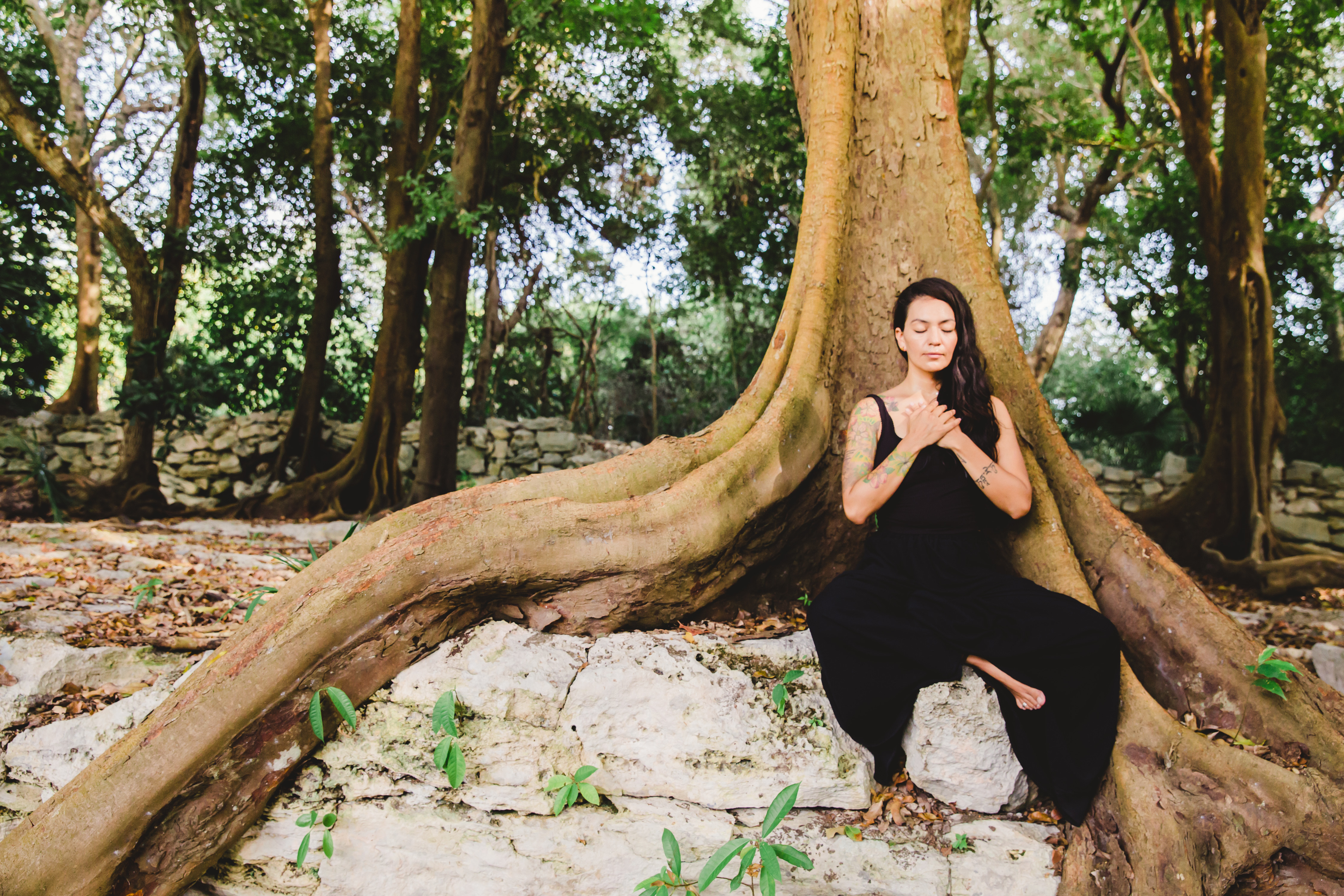
From Trauma to a Greater Sense of Safety How the nervous system can gradually learn that life can also feel safe There is a question many people ask themselves after going through difficult experiences. "Will I ever feel safe again?" They do not always express it in those exact words. Sometimes it appears in another form. As the desire to stop living on alert. To sleep deeply again. To trust other people. To enjoy a walk without feeling that something bad is about to happen. To enter a room without constantly scanning what is happening around them. Or simply to experience, even for a few minutes, the feeling that there is no need to defend themselves against everything. People who have experienced childhood trauma, complex trauma, or prolonged periods of chronic stress often describe an experience that is difficult to explain. Even when there is no objective danger anymore, the body continues to react as if it still needs to protect itself. An unexpected noise. An argument. A change of plans. A look. A tone of voice. A bodily sensation. Any of these experiences can activate intense responses that seem to arise even before a conscious thought appears. For a long time, this reality was interpreted as a sign of weakness or lack of control. Today, neuroscience offers us a much more compassionate understanding. We know that the nervous system learns from experience. And when it has lived through situations in which safety was absent for long periods of time, it can develop an extraordinary sensitivity to detecting any possible signal of threat. Not because it is malfunctioning. But because it is trying to fulfill one of its most important functions: Protecting life.
And yet, here we encounter one of the most hopeful findings of recent decades. Learning does not end in childhood. Neuroplasticity shows us that the brain and nervous system continue to change throughout life. This means that even when the organism has learned to live on alert, it can also gradually learn to recognize new experiences of safety. This does not mean forgetting the past. Nor does it mean convincing the body that everything is fine. It means something much deeper. Offering the organism enough consistent experiences for it to discover that life can also contain rest, protection, connection, and calm. Perhaps safety is not a place we arrive at all at once. Maybe it is a capacity that is built slowly. One breath after another. One relationship after another. One experience of care after another. Throughout this article, we will explore how science understands the sense of safety, what happens within the nervous system as we begin to recover it, and why this process does not depend solely on willpower, but also on the conditions that allow the organism to develop new ways of relating to itself, to others, and to the world. Because perhaps the question is no longer: "How do I stop feeling afraid?" Perhaps the question worth carrying with us is another one: "What experiences help my nervous system gradually remember that there are also places, people, and moments where life can feel safe?" And perhaps, without realizing it, this is one of the deepest transformations a human being can experience. Not giving up the ability to protect ourselves. But discovering that we no longer need to live in protection all the time. Science Explains Safety Is Also a Biological Experience When we hear the word safety, we tend to think about what happens outside of us. A home to live in. A locked door. A peaceful neighborhood. Sufficient income. People we can trust. And all of these things are undoubtedly deeply important.
However, contemporary neuroscience invites us to broaden this understanding. Safety does not depend solely on the environment. It also depends on the way the nervous system interprets that environment. Two people can be in exactly the same place and have completely different experiences. One may feel relaxed. The other may remain on alert. Not because one of them is wrong. But because each organism arrives in that moment with a different history of learning. This is where one of the most important concepts within Polyvagal Theory, developed by Stephen Porges, emerges. Our nervous system is continuously carrying out an automatic assessment of the environment in response to an essential question: "Is it safe enough to lower my guard right now?" This process occurs without requiring conscious thought and is referred to as neuroception. Neuroception is not a rational decision. It is a biological process that integrates thousands of signals from the environment and from within the body. The tone of someone's voice. The expression on another person's face. The speed of their movements. Their body posture. Physical distance. Sounds in the environment. Lighting. Previous experiences. And many other signals that the brain processes within fractions of a second. When the organism perceives enough indications of safety, the nervous system can devote less energy to vigilance and more resources to other essential functions. Talking. Learning. Playing. Creating. Resting. Enjoying. Exploring. Connecting with other people. Thinking clearly.
When it interprets that there may be a threat, on the other hand, it activates responses intended to protect life. Attention increases. Breathing changes. Energy is redistributed. Muscle tension increases. The organism prepares to act if necessary. All of this can happen before a conscious thought appears. This makes it especially important to understand something. People who have experienced childhood trauma, complex trauma, or prolonged periods of chronic stress do not have a "broken" nervous system. They often have a nervous system that has become extraordinarily well trained at detecting possible signs of danger. That learning was, at many points in their lives, a deeply intelligent survival strategy. The challenge arises when that vigilance remains active even in situations where it is no longer necessary. Not because the organism wants to suffer. But because it has not yet had enough experiences that allow it to update what it learned. And here we find one of the most hopeful contributions of neuroplasticity. Just as the nervous system learned to protect itself, it can also learn new ways of recognizing safety. This learning does not happen through positive affirmations or simply by repeating that everything is okay. It happens through experience. Repeated experiences. Consistent relationships. Predictable environments. Rest. Movement. Breathing. Play. Nature. Communities where we feel that we belong. And many small experiences in which the organism discovers that it does not need to remain completely alert. Research suggests that consistent experiences over time can support processes of nervous system regulation and increase the capacity to respond more flexibly to life's challenges. This does not mean that we stop detecting danger when danger is actually present.
Quite the opposite. A flexible nervous system remains capable of protecting us. The difference is that it no longer needs to respond as though every situation were equally threatening. Perhaps this is one of the deepest definitions of safety. Not the absolute absence of risk. But the capacity of the organism to recognize when it needs to protect itself and when it can return to being open to life. Because safety is not only about surviving. It is also about being able to rest. Love. Create. Learn. Laugh. Trust. And participate fully in the experience of being alive. And perhaps this is one of the most extraordinary capacities that the nervous system can continue developing throughout life. Experience Gives Meaning When the Body Discovers That It No Longer Has to Be on Guard All the Time There are moments that, from the outside, seem almost insignificant. A person enters a room and, for the first time in a long time, does not automatically look for the exit. Someone receives a message and no longer immediately imagines the worst possible scenario. Another person is able to sit quietly beside someone without feeling the need to fill every silence with words. A hug no longer feels uncomfortable. A difficult conversation ends without the fear of being abandoned appearing. Perhaps no one else notices these changes. But for the person experiencing them, they can represent an enormous transformation. Because they do not speak only of new ideas. They speak of a nervous system beginning to experience something different. For a long time, many people who have experienced childhood trauma or complex trauma describe the feeling of always being prepared for whatever might happen. It is not always an obvious fear. Sometimes it appears as a constant need to control.
As difficulty relaxing. As the feeling that resting is dangerous. As a silent vigilance that accompanies every day. Many people even come to believe that this way of living is simply part of their personality. They say: "I have always been this way." "I don't know how to relax." "I need to have everything under control." However, when we observe these experiences through the lens of somatic education and neuroscience, a different understanding emerges. Perhaps we are not seeing a personality trait. Perhaps we are observing the history of an organism that learned to remain alert because, at some point in its life, that vigilance increased its chances of feeling protected. And here something deeply hopeful emerges. The body can also learn another story. Not because someone explains through rational arguments that there is no longer any danger. The nervous system rarely changes through explanation alone. It learns through experience. It learns when a relationship is predictable. When someone does what they say they will do. When we can say "no" without losing the relationship. When we discover that making a mistake does not lead to rejection. When someone listens to our pain without trying to minimize it. When we rest and nothing bad happens. When, little by little, the organism accumulates experiences that contradict its old expectation of constant danger. It does not happen overnight. And it does not happen in a linear way. There will be days when the body responds intensely again. That does not mean we have gone backward. It means that learning takes time. Just as a forest can take years to regenerate after a fire, the nervous system needs many repeated experiences to build a new sense of safety. Perhaps the true transformation is not about stopping fear. Perhaps it is about discovering that fear no longer directs our entire life. That there is now also room for curiosity. For rest. For joy. For trust. For connection.
At Sentido Somático, we often say that safety is not simply a destination. It is an experience that can be cultivated. Every moment in which the body discovers that it can breathe a little more freely. Every relationship in which it does not need to constantly defend itself. Every space where it can show up as it is. Every pause in which it stops expecting danger. All of these gradually expand the capacity for nervous system regulation. Perhaps no one from the outside can measure these changes. But the person experiencing them often recognizes them with extraordinary clarity. Because eventually there comes a moment when they discover something profoundly simple. Life still contains uncertainty. Challenges still exist. But the body no longer needs to prepare for battle every moment. And perhaps that is one of the deepest forms of emotional recovery. Not eliminating our ability to protect ourselves. But recovering, little by little, our ability to feel safe enough to live. Practice Transforms An Invitation to the Body When we hear the word safety, it is easy to imagine something very large. A life without problems. A stable job. Perfect relationships. The certainty that nothing bad will ever happen again. However, the nervous system does not have to wait for the world to become perfect before it can begin experiencing small moments of safety. It often learns precisely in this way. Through simple, repeated, consistent experiences. Today I invite you to try a practice that does not attempt to convince your body that everything is okay. It simply invites you to recognize what, in this moment, your body is already able to hold. If it feels comfortable, pause for a few minutes. Allow your breathing to find its own rhythm. There is no need to change it. Simply accompany it. Now slowly observe the space around you. Do not look for anything special. Simply allow your eyes to move around the room. Notice the colors.
The light. The shapes. The textures. Perhaps a plant. A window. A photograph. An object that feels pleasant to you. Allow your eyes to remain for a few seconds on something that brings even a small sense of comfort. As you observe, ask yourself: "Is there something, however small, that my body perceives as sufficiently safe in this moment?" Perhaps it is the chair you are sitting in. The temperature of the room. The sound of the wind. The light coming through the window. The presence of someone you love. Or simply knowing that, for a few minutes, you do not have to solve anything. Now bring your attention toward your body. Notice whether there is any area that feels slightly more comfortable than the others. Perhaps your hands. Your legs. The support of your back. Or the contact of your feet with the ground. You do not need to feel deeply calm. Simply recognize what is already present. Stay there for a few moments. Breathe. And allow your body to register that experience. Before you finish, ask yourself a simple question: "What could I do today to offer my nervous system one more minute of safety?" Perhaps call someone you trust. Go for a walk somewhere that feels peaceful. Listen to music that brings you a sense of calm. Turn off your phone for a few minutes. Rest. Hug someone. Sit beneath a tree. Drink a cup of tea with attention. Or simply give yourself permission not to solve everything today.
Do not underestimate these small moments. Neuroscience reminds us that the brain learns through repeated experiences. Every moment in which the organism discovers that it can relax a little more. Every relationship in which it can feel respected. Every space in which it does not have to constantly defend itself. All of these can gradually contribute to greater nervous system regulation. At Sentido Somático, we believe that safety does not appear because one day we stop feeling afraid. It begins to grow when the body accumulates enough experiences that allow it to discover that life also contains rest, support, connection, and care. Perhaps this is the beginning of a profound transformation. Not convincing the organism that the world will never be difficult again. But helping it remember, one experience after another, that there are also moments when it can lower its guard and fully participate in life. Because, in the end, safety does not always arrive as a great event. It often begins in an instant as simple as this. A breath. A gaze. A gesture of care. And a body that, little by little, begins to believe again that living can also feel safe. Research Continues For many years, trauma research focused primarily on understanding what happens when the organism is confronted with threatening situations. As a result, we now understand much more about how the nervous system, endocrine system, immune system, and other mechanisms involved in the stress response function. That knowledge remains essential. However, over recent decades, science has begun asking a different question. "What makes it possible for a person to feel safe again?" This question has opened a new chapter in research. Today we know that the sense of safety does not depend solely on the absence of danger. It is also related to the organism's ability to recognize signals of protection, predictability, and support in its environment. Research into Polyvagal Theory, interpersonal neurobiology, attachment theory, neuroplasticity, and nervous system regulation converges around an important idea: Safety can also be learned. Not as an intellectual decision. But as a repeated experience that the organism gradually incorporates.
Every time the body experiences a supportive relationship. Every time it encounters predictability. Every time it experiences a sense of belonging. Every time it has an opportunity to rest without needing to remain vigilant. These experiences can become part of a new history of learning. Research increasingly shows that supportive relationships, social connection, restorative sleep, movement, adapted physical activity, contact with nature, contemplative practices, and other factors can support physiological regulation and well-being. This does not mean that there is one single tool capable of creating safety. Each person has a different history. And every nervous system learns at its own pace. Research also reminds us that interventions do not work in exactly the same way for everyone. What feels deeply regulating to one person may not have the same effect on another. For this reason, current research increasingly recognizes the importance of individualized therapeutic processes and respecting each person's unique history. Another particularly interesting area is that science is no longer studying only recovery after trauma. It is also investigating what factors help develop resilience before difficulties emerge. Protective relationships during childhood. A sense of community. Physical activity. Emotional education. Play. Creativity. A sense of purpose. And many other resources appear to contribute to the organism's adaptive capacity. All of this reminds us that safety is not solely about eliminating danger. It is also built by cultivating experiences that support trust and connection. A Question to Keep Exploring What experiences help my body remember that life can also feel safe? Do not look only for major events. Notice the small moments too. A conversation in which you felt heard. The calm of a walk.
Shared laughter. Silence beside someone you trust. The smell of rain. The music that always accompanies you. The embrace of someone you love. The sensation of your feet on the ground. Perhaps you will discover that safety does not appear only when all problems disappear. Perhaps it begins to grow every time the organism encounters a new experience in which it no longer needs to remain completely alert. And perhaps this is one of the most hopeful lessons emerging from contemporary science. Our nervous system never stops learning. As long as there are new experiences of care, respect, and connection, there is also the possibility of gradually expanding the sense of safety from which we participate in life. Because, in the end, safety is not only what protects us from danger. It is also what allows curiosity, creativity, rest, love, and joy to find space within us. The Research Behind This Article The sense of safety is one of the fundamental pillars of human development and well-being. Over recent decades, different fields have begun studying how the organism recognizes safety, how it learns to respond to danger, and, above all, how it can develop new forms of regulation after difficult experiences. Today we know that safety does not depend solely on the absence of external threats. It is also a biological experience that emerges when the nervous system perceives enough signals of protection, predictability, support, and connection. This understanding has been informed by knowledge from neuroscience, attachment theory, Polyvagal Theory, interpersonal neurobiology, developmental psychology, and research on neuroplasticity. At Sentido Somático, we understand safety as a dynamic process. It is not a permanent state that we reach once and then maintain forever. It is a capacity that the organism continues developing through experience. For this reason, when we speak about healing trauma, we are not referring only to reducing symptoms. We are also talking about expanding the nervous system's capacity to experience rest, trust, connection, curiosity, and participation in life. Reference Books Stephen W. Porges (2011). The Polyvagal Theory.
A foundational work for understanding how the autonomic nervous system participates in the perception of safety, social connection, and physiological regulation. Stephen W. Porges (2021). Polyvagal Safety. Explores safety as a biological experience and explains how relationships influence nervous system functioning. Daniel J. Siegel (1999). The Developing Mind. Integrates interpersonal neurobiology with human development and explores how relationships shape the brain throughout life. Louis Cozolino (2014). The Neuroscience of Human Relationships. Explores how relationships influence learning, emotional regulation, and brain development. Peter A. Levine (2010). In an Unspoken Voice. Describes how the organism responds to traumatic experiences and proposes an understanding based on the body's capacity for self-regulation and recovery. Related Research and Fields This article draws on knowledge from: • Polyvagal Theory. • Interpersonal neurobiology. • Attachment theory. • Neuroplasticity. • Developmental psychology. • Nervous system regulation. • Somatic education. • Resilience research. • Behavioral sciences. • Affective neuroscience. Each of these fields contributes to our understanding of how the organism learns to respond both to danger and to safety. What We Know Today Current scientific evidence shows that the nervous system retains throughout life the capacity to learn new forms of regulation. We also know that supportive relationships, rest, sleep, movement, contact with nature, physical activity, community participation, and other resources can contribute to a greater sense of physiological safety. At the same time, research reminds us that these processes take time. There are no interventions capable of completely transforming nervous system functioning immediately. Adaptation occurs through repeated, consistent experiences that respect each person's individual pace.
What We Are Still Learning Science continues to explore how a sense of safety develops at different stages of life and which factors best support emotional recovery following childhood trauma, complex trauma, and other adverse experiences. We are also continuing to learn how genetics, epigenetics, relationships, social context, culture, and different treatments interact to support adaptation and well-being. Each new discovery expands our understanding and strengthens an increasingly supported idea: Safety is not only an emotional state. It is a deeply biological experience. Our Commitment At Sentido Somático, we will continue reviewing the best available scientific evidence to understand how the organism learns, adapts, and develops new possibilities throughout life. But we also want to remember something that runs through every article in this Knowledge Center. The purpose of understanding the nervous system is not to spend our lives constantly analyzing our responses. It is to learn how to create conditions in which the organism can more freely express the extraordinary intelligence with which it protects, learns, and sustains life. We believe transformation does not begin when we stop feeling afraid. It begins when we discover that we can also cultivate experiences of safety. One relationship at a time. One conversation at a time. One breath at a time. Because perhaps the greatest gift we can offer our body is not to promise it a world without difficulties. It is to remind it, through everyday experience, that there are also places, people, and moments where it can rest. And perhaps, little by little, this is the deepest way of feeling that we belong to life again.