IMPLICIT MEMORY: WHEN THE BODY REMEMBERS
IMPLICIT MEMORY: WHEN THE BODY REMEMBERS WITHOUT WORDS Many people have experienced something puzzling. They know that something ended a long time ago. ...
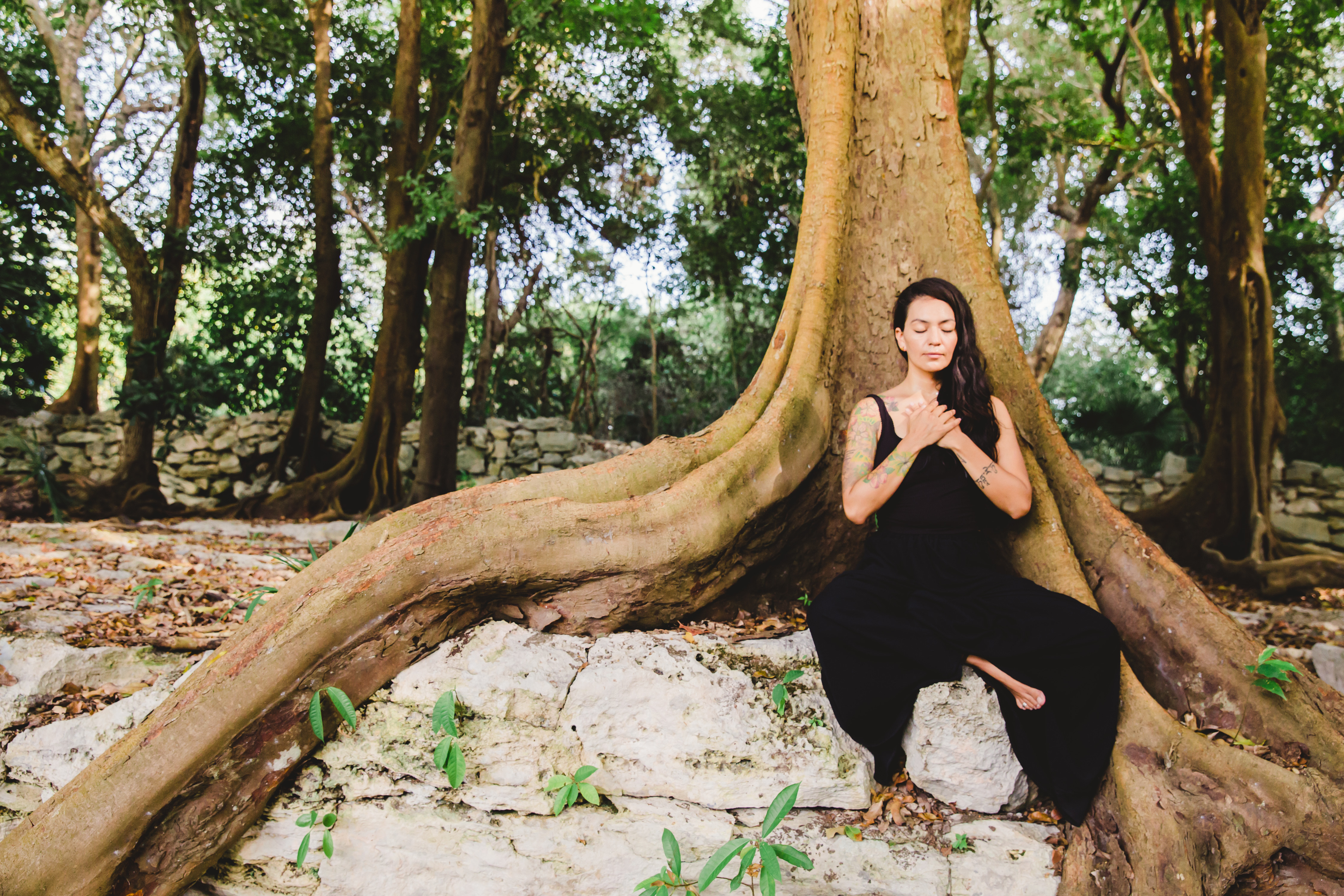
IMPLICIT MEMORY: WHEN THE BODY REMEMBERS WITHOUT WORDS Many people have experienced something puzzling. They know that something ended a long time ago. And yet their body continues to react as if it were still happening. A conversation brings unexpected tension. A smell triggers a sensation that is difficult to explain. A particular look creates an immediate need to move away. A certain tone of voice makes the body prepare to defend itself before we even understand why. Then a deeply human question arises. If I wasn't thinking about it... why did my body react that way? For a long time, these experiences were difficult to explain. Today, thanks to research into learning, memory, and the nervous system, we have a much broader understanding. Not all memory operates through conscious recollection. There is another form of learning that accompanies us from the very beginning of life. Implicit memory. LONG BEFORE WORDS Long before we can tell our story, our organism has already begun learning from it. A newborn cannot yet create autobiographical memories. They cannot explain what they feel with words. They cannot organize a narrative about their experience. And yet, their nervous system is constantly learning. It learns rhythms. It learns the presence or absence of a caregiver. It learns what touch feels like. It learns whether the world feels predictable or unpredictable. It learns how long it takes for comfort to arrive. It learns how its own organism responds when it needs help. Much of this learning occurs without language. And that is precisely why we speak of implicit memory. Not because the body stores stories as if it were a library. But because the organism learns ways of perceiving, responding, and relating to the world even before it has words to describe those experiences.
REMEMBERING DOES NOT ALWAYS MEAN THINKING When we hear the word memory, we usually imagine conscious recollections. Images. Conversations. Dates. Places. However, neuroscience distinguishes between different memory systems. Implicit memory is not primarily about consciously remembering events. It involves retaining forms of learning that influence the way we move, perceive, feel, relate, and respond. It is thanks to this kind of memory that we can walk without thinking about every movement. Ride a bicycle years after learning how. Or react automatically to certain situations. In the context of potentially traumatic experiences, this form of learning becomes particularly important. Because the organism can learn associations related to safety, danger, contact, closeness, or protection without needing to construct a complete narrative memory. THE BODY DOES NOT REMEMBER LIKE A MOVIE We often hear people say that "the body remembers." This expression is trying to describe something real, although it can also lead to misunderstandings. From the perspective of current scientific knowledge, it would be more precise to say that the organism retains learning that continues to influence the way we respond to the present. The body does not remember events in the same way that it remembers a story told through words. The organism remembers ways of responding to the world. And that distinction is fundamental. Because it shifts our attention away from the idea of a body that stores secrets and toward an understanding of an organism that is extraordinarily capable of learning. We are not talking about a body trapped in the past. We are talking about an organism that continues to use learning that, at some point in its history, may have supported its adaptation. Understanding this distinction profoundly changes the way we understand expressions such as trauma stored in the body, body-based therapy, somatic healing, or nervous system regulation. We no longer imagine a body containing hidden memories waiting to be discovered.
We begin to understand a living organism that continues to learn, adapt, and reorganize its relationship with the world. And this perspective opens a deeply hopeful possibility. Because what was learned can also continue to change through new experiences. EXPERIENCE GIVES MEANING Implicit memory may seem like a complex concept. And yet, most people have experienced it at some point without knowing there was a name for it. Perhaps you entered a place and, without understanding why, felt that you needed to leave. Perhaps a particular way of speaking caused your body to tense before you even understood what was happening. Maybe a melody, a perfume, or an expression on someone's face awakened an emotion that was difficult to explain. Or perhaps you have noticed that certain situations consistently trigger similar responses, even though you rationally know that each context is different. These experiences can create a great deal of confusion. "Why do I react this way if I know I'm safe now?" The answer is not always found in what we consciously remember. Often, it lies in what the organism learned long before we could explain it with words. WE LEARN BEFORE WE UNDERSTAND One of the most fascinating findings in developmental psychology and neuroscience is that learning begins long before language appears. Before we construct autobiographical memories. Before we organize a story about who we are. Before we can even think about our own experience. From the beginning of life, the organism learns. It learns whether touch tends to be calm or unpredictable. It learns how the world responds when it needs help. It learns whether expressing an emotion brings people closer or pushes them away. It learns how much it can relax in the presence of others. These forms of learning do not initially become narrative memories. They become ways of being. And precisely because of this, they can accompany us for many years without us knowing where they came from.
This also helps us understand why some experiences associated with childhood trauma can continue to influence adult life even when there is no detailed conscious memory of each event. It does not necessarily mean that there is a repressed memory. It means that the organism may have learned particular ways of responding long before we were able to understand or narrate them. WHEN A RESPONSE HAS MORE HISTORY THAN WE IMAGINED Sometimes we think our reactions began on the day we first noticed them. Yet many have been organizing themselves silently for years — or even decades. Not because the organism is living trapped in the past. But because it continues to use learning that, at some point, supported adaptation. Understanding this can profoundly change the way we see ourselves. Instead of asking: "What's wrong with me?" we can begin to ask: "What did my organism learn in order to respond this way?" And that question opens a completely different possibility. It invites us to look from within. With curiosity. With respect. And with a willingness to discover that some experiences we considered normal for a long time may have required extraordinary responses from our organism to sustain life, connection, or a sense of belonging. We are not trying to reinterpret our entire history through trauma. We are trying to understand it more deeply. NAMING TO RECOGNIZE At Sentido Somático, we believe that putting a name to an experience does not replace the experience itself. But it can help us recognize what remained without words for a long time. When we understand what implicit memory is, many people stop feeling that their body is reacting "for no reason." They begin to discover that there is a history of learning behind many of their responses. And that discovery can bring something deeply valuable. Not definitive answers. But a new way of relating to themselves.
Because understanding does not mean trapping ourselves in the past. It means expanding the clarity with which we inhabit the present. And perhaps that is one of the greatest gifts of knowledge. Not telling us who we are. But offering us a language that allows us to observe our experience with less fear, less shame, and greater trust in the organism's extraordinary capacity to continue learning throughout life. PRACTICE TRANSFORMS Understanding implicit memory is not about becoming an expert in neuroscience. It has a much more immediate purpose. Learning to relate differently to our own experience. At Sentido Somático, we do not expect knowledge to replace what we feel. We hope that knowledge helps us approach what we feel with greater curiosity, greater respect, and less fear. Because often, suffering does not come only from what we experienced. It can also come from the conclusions we built about ourselves because of it. QUESTIONS OPEN POSSIBILITIES We often believe that transforming our lives means finding answers. Yet many of the deepest transformations begin with a question. Not a question that needs to be solved immediately. A question we are willing to stay with. What did my organism learn in this situation? What meaning did this experience have for me? Do I still need to respond in the same way today? Are there other possibilities that my nervous system has not yet been able to recognize? These questions are not intended to correct the past. Nor do they seek to prove that our responses were wrong. They seek something much more valuable. To create a dialogue between our experience, our beliefs, and the way we have learned to inhabit life. Because when a question arises from curiosity rather than judgment, the organism does not need to defend itself against it. It can begin to explore. UNDERSTANDING ALSO CREATES SPACE
Many people come to somatic therapy or search for how to regulate the nervous system, hoping to find a technique that will quickly eliminate whatever is causing them distress. Practices can be deeply valuable. But perhaps there is an even more important step before that. Creating space to understand. When we understand that a response has a history, we stop experiencing it only as an obstacle. We begin to see it as a form of learning. And that perspective changes the relationship. Demand begins to give way to curiosity. Guilt finds a place where it can begin to rest. And gradually, we discover that we do not need to fight against our body in order to begin listening to it. A PRACTICE FOR OBSERVING This week, choose an everyday situation in which you notice an automatic reaction. Do not try to change it. Do not try to control it. Simply take a few moments to observe. Then try asking yourself one simple question. What might this response be trying to protect? Stay with it for a few moments. Perhaps no immediate answer will appear. And that is okay. Sometimes the greatest value of a question is not in answering it quickly. It is in opening a space where new ways of understanding ourselves can emerge. At Sentido Somático, we believe that questions have enormous transformative power. Not because they directly change the nervous system. But because they expand the horizon from which we can observe our experience. And when the way we look at our history changes, new possibilities for inhabiting the present can begin to open as well. Because questions do not only help us better understand what we experience. They also invite us to enter into a dialogue with the beliefs we have built about ourselves and with the way we learned to relate to life. And perhaps that is where one of the deepest transformations begins. Not when we find all the answers. But when we discover that we are now capable of asking different questions.
RESEARCH CONTINUES Implicit memory remains one of the most fascinating and active fields of contemporary neuroscience. Every year, we understand more about how the organism learns through experience, how different memory systems participate in adaptation, and how these forms of learning can continue to reorganize throughout life. However, research also invites us to move beyond some ideas that for many years seemed self-evident. Today we know that not every transformation depends on recovering a conscious memory. Nor does every automatic response mean that a forgotten memory exists waiting to be found. Reality is much richer and much more interesting. WHAT WE KNOW TODAY There is broad scientific agreement that human beings have different memory systems. We know that much learning occurs implicitly, particularly during the early years of life. We know that these forms of learning can influence the way we perceive safety, danger, contact, movement, and relationships. And we also know that these systems remain open to learning throughout life. Precisely because of this, new experiences have enormous value. Not because they erase what happened. But because they can expand the range of responses available to the organism. WHAT WE ARE STILL RESEARCHING Many questions remain open. How do implicit memory and autobiographical memory interact throughout development? What conditions support a more flexible integration of difficult experiences? How do relationships, emotional regulation, body-based therapy, somatic healing, movement, rest, and nervous system regulation participate in these learning processes? Research continues to explore these questions through neuroscience, developmental psychology, cognitive science, and somatic education. And many of the answers will likely continue to be refined in the years ahead. A DEEPLY BIOLOGICAL FORM OF HOPE
Perhaps the most valuable thing science can offer us today is not simply an explanation of how we learn. Perhaps it is the reminder that we continue learning. As long as we live, our organism continues creating new experiences. Every safe relationship. Every conversation in which we feel understood. Every moment in which someone responds respectfully to our vulnerability. Every space in which our body discovers that it can rest without danger. All of these become part of the implicit learning we continue to build. At Sentido Somático, we believe this is one of the deepest forms of hope. We do not need to erase our history in order to begin living differently. We do not need to remember every detail in order to expand our possibilities. We do not need to become someone else. We need to continue having experiences that allow our organism to discover that the present can offer conditions different from those it knew at another moment in life. Because implicit memory is not a sentence. It is an expression of the organism's extraordinary capacity to learn. And precisely because it learned yesterday... It can also continue learning today. Perhaps that is one of the most beautiful things contemporary science can offer us. Our history profoundly influences the way we inhabit the world. But it never stops interacting with the possibilities the present continues to open. And as long as the possibility of learning remains, so does the possibility of continuing to expand the way we live, feel, connect, and inhabit our own lives. Because, at its heart, Sentido Somático does not seek to change who you are. It seeks to expand the possibilities from which you can live your life. WE DO NOT ALWAYS NEED TO KNOW THE ORIGIN IN ORDER TO BEGIN CARING FOR THE EXPERIENCE One of the most common questions when we talk about implicit memory is: "Do I have to discover exactly what happened in order to heal?" It is an understandable question. For a long time, the idea has been transmitted that every bodily response must necessarily lead us toward a forgotten memory. However, current research offers us a much broader perspective. We know that human development begins long before autobiographical memory exists. During prenatal life and the early years of childhood, the organism is already learning from its environment.
It learns rhythms. It learns patterns of regulation. It learns the experience of touch. It learns presence, waiting, and comfort. These forms of learning participate in the organization of the nervous system long before we can consciously remember them. That is why, at times, a person may experience a deep sense of alertness, insecurity, or a need for protection without having a clear memory that explains its origin. And this does not make their experience any less real. It simply means that the learning occurred at a stage of development when language and narrative memory were not yet available. At Sentido Somático, we believe this understanding can be deeply liberating. Because it reminds us that we do not always need to reconstruct our entire history in order to begin caring for our present experience. Sometimes it is enough to accompany what we feel today. To listen to a sensation. To remain with it without rushing to interpret it. To recognize that our organism may be expressing a very old form of learning, even when we cannot identify the exact moment when it began. Curiosity can then replace urgency. Presence can replace the need to find immediate explanations. And care no longer depends on knowing every detail of the past. Not because the past is unimportant. But because the organism always lives in the present. And it is precisely in the present that new learning continues to occur. Perhaps that is one of the deepest lessons of implicit memory. Not everything that influences our lives can be expressed in words. But everything that forms part of our experience today deserves to be accompanied with respect, sensitivity, and deep trust in the organism's capacity to continue learning. REFERENCE BIBLIOGRAPHY Systematic Reviews and Review Articles In keeping with Sentido Somático's editorial methodology, this article draws primarily from systematic reviews, review articles, scientific consensus, and university-level reference texts on memory, learning, and human development. The main sources that inspire this article include: • Annual Review of Psychology — Memory systems, implicit learning, and cognitive development. • Nature Reviews Neuroscience — Neurobiology of memory, synaptic plasticity, and learning consolidation.
• Current Opinion in Neurobiology — Implicit learning, memory, and brain organization. • Current Opinion in Psychology — Early development, attachment, and emotional regulation. • Developmental Review — Development of memory and organization of experience during childhood. • World Psychiatry — Trauma, memory, and adaptation from a contemporary clinical perspective. University-Level Reference Books • Principles of Neural Science. • Memory: From Mind to Molecules. • The Seven Sins of Memory. • The Developing Mind — as an integrative work connecting developmental neuroscience, attachment, and experience. Key Authors • Eric Kandel — Biological foundations of learning and memory. • Larry Squire — Contemporary classification of memory systems. • Daniel Schacter — Implicit memory, explicit memory, and memory reconstruction. • Patricia Bauer — Development of autobiographical memory. • Daniel J. Siegel — Interpersonal development of the brain and processes of integration. • Ruth Lanius — Trauma, memory, and neurobiology. SENTIDO SOMÁTICO EDITORIAL LOG Article 24 - Module II: Understanding Trauma Title: Implicit Memory: When the Body Remembers Without Words. Last scientific review: July 2026. Editorial Principles Applied This article integrates knowledge from memory neuroscience, developmental psychology, developmental biology, and cognitive science to explain implicit memory from a scientific and deeply human perspective. It carefully distinguishes between autobiographical memory and implicit learning systems, avoiding claims that lack sufficient scientific support, such as the idea that the body literally stores memories or emotions in its tissues. It also naturally incorporates language frequently used by people searching for answers — including trauma stored in the body, somatic therapy, somatic healing, body-based therapy, nervous system regulation, and childhood trauma— expanding their meaning through current scientific knowledge while respecting the complexity of human experience.
In keeping with Sentido Somático's philosophy, this article presents implicit memory not as a sentence to the past, but as an expression of the organism's extraordinary capacity to learn throughout life. Sentido Somático Principles Long before autobiographical memory exists, the organism is already developing within a biological and deeply relational environment that influences the way it begins to perceive safety, connection, and the world around it. The organism does not only remember events. It also learns ways of meeting the world. Naming an experience does not replace the experience. But it can profoundly change the relationship we build with it. We do not always need to reconstruct the past in order to begin caring for the present. Often, we can begin by accompanying, with curiosity and respect, what we feel today. Sentido Somático does not seek to change who you are. It seeks to expand the possibilities from which you can live your life. These ideas express a conviction that runs throughout the entire Knowledge Center. Understanding how we learn is not intended to completely explain who we are. Its purpose is to restore dignity to our experience. Because when we understand that many of our responses emerged as forms of learning, we stop seeing them only as mistakes or flaws. We begin to recognize them as part of the organism's extraordinary adaptive intelligence. And perhaps that is one of the most hopeful contributions of contemporary science. Not telling us that the past disappears. But reminding us that learning never ends. As long as there is life, the organism remains capable of learning new ways of perceiving, relating, resting, trusting, and inhabiting the world. And that possibility, more than a promise, is one of the deepest expressions of human hope.