The Importance of Rhythm
The Importance of Rhythm Life Began Long Before the Clock Existed Imagine for a moment a world before clocks existed. Before schedules. Before agendas. ...
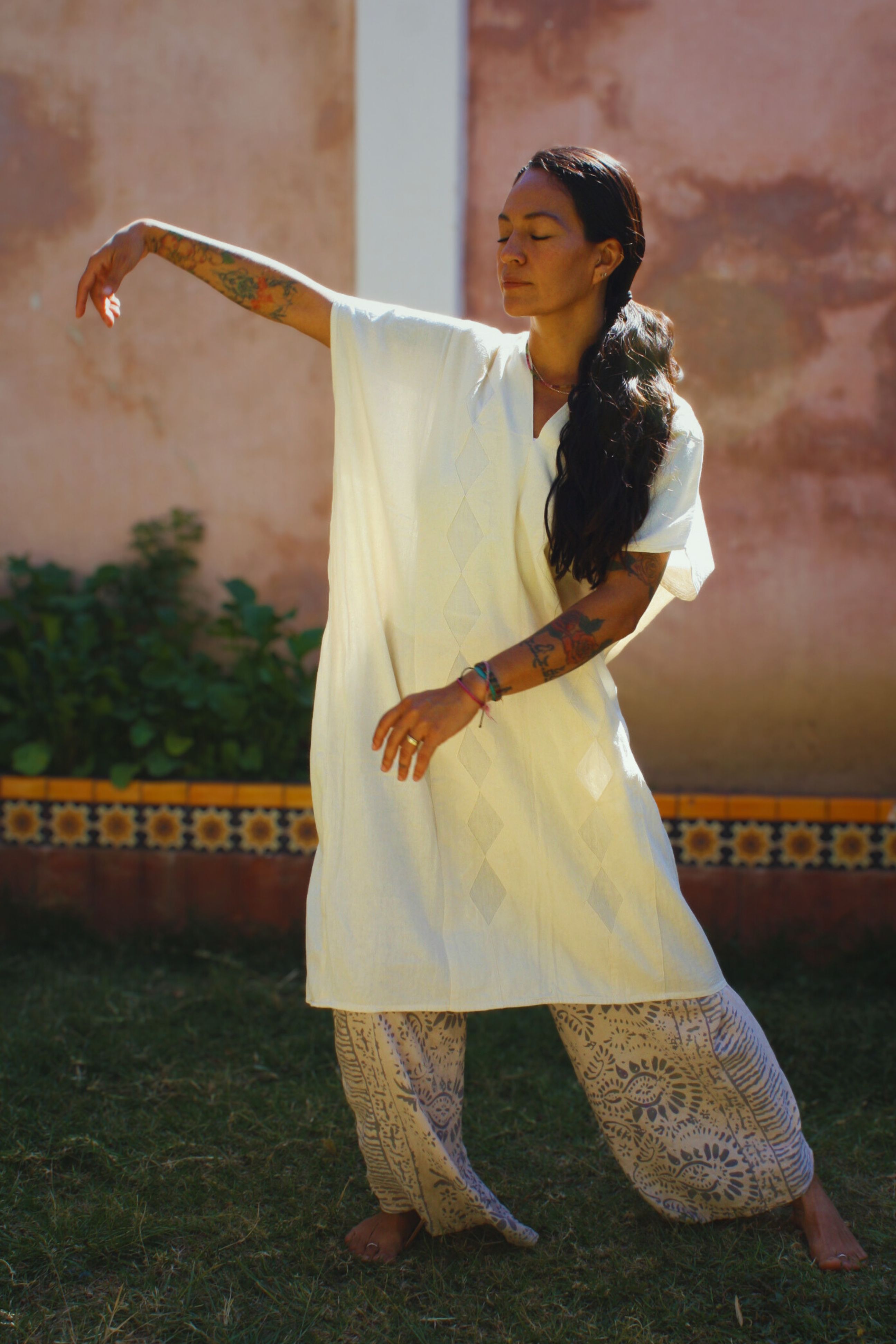
The Importance of Rhythm Life Began Long Before the Clock Existed Imagine for a moment a world before clocks existed. Before schedules. Before agendas. Before digital calendars. How did a living being know when to rest? When to look for food? When to reproduce? When to migrate? The answer is surprisingly simple. It listened to the rhythm of life. Long before human beings learned to measure time, time was already shaping our bodies. The alternation between day and night. The seasons. The phases of the moon. The tides. The cycles of sleep. Hunger. Breathing. The beating of the heart. Life was never completely chaotic. It was deeply rhythmic. One of the most fascinating discoveries in biology is that living organisms depend on multiple rhythms that coordinate with one another. The heart does not beat with perfect uniformity. Breathing is constantly changing. Hormones follow cycles. Body temperature fluctuates. Brain activity oscillates through complex patterns. And virtually every cell in the body participates, in different ways, in biological timing systems. We do not simply live within time. We live through it. Perhaps this is why rhythm moves us so deeply. A song. A poem.
The sound of waves. The footsteps of walking. The rocking of a hammock. The heartbeat we hear in another person's chest. Something inside us responds. As if the organism recognized a very ancient language. And perhaps it does. Because rhythm is not simply a musical phenomenon. It is one of the most fundamental ways in which life organizes itself. And yet, there is a paradox. We live in an era obsessed with time. And, at the same time, profoundly disconnected from rhythm. We know what time it is. But we often do not know whether we are tired. We know our schedule. But we have lost the sense of when we need a pause. We measure minutes with extraordinary precision. And yet, we often ignore the body's internal rhythms. Somatic practice invites us to look at this differently. It does not ask only how much time we have. It asks how we are inhabiting time. Because clock time is one thing. And the time of the organism is something very different. The clock moves with mechanical regularity. The body does not. The body speeds up and slows down. Expands and contracts. Needs moments of activation and moments of recovery. Alternates between attention and rest. Movement and stillness. Inhalation and exhalation. Perhaps one of the greatest misunderstandings in our culture is that we have tried to live as though the body were a linear machine. As though it could produce at the same pace throughout the entire day. Throughout every month. Throughout every year. Biology tells another story. Life happens in cycles. And when those cycles lose flexibility, coordination, or alignment with the demands of the environment, the organism may find adaptation more difficult. Not because it is failing. But because rhythm is one of the ways living systems organize change.
Throughout this article, we will explore what science tells us about biological rhythms, why the nervous system needs alternation and coordination in order to adapt, and how somatic practices use movement, breathing, orientation, and attention to help us recover a quality that life has known since long before we invented clocks. Because perhaps well-being is not only about having more time. Perhaps it is about remembering that the body has always known something the clock can never teach us. **Life is not sustained by speed. It is sustained by rhythm.** Science Explains The Body Does Not Work Like a Machine. It Works Like an Orchestra. If we look at a clock, we find almost perfect precision. Every second lasts exactly the same amount of time. The movement is uniform. Predictable. Mechanical. For a long time, we tried to understand the body using this same metaphor. As though it were a machine made up of independent parts. Modern biology has gradually moved away from that image. Today, the organism looks much less like a clock and much more like an orchestra. An orchestra does not contain a single instrument. There are many. Each has its own rhythm. Its own intensity. Its own moment to enter and its own moment of silence. Music does not depend on everyone playing the same thing. It depends on their ability to coordinate. Something similar happens in the human body. The heart has a rhythm. Breathing has another. The brain produces electrical oscillations. Hormones follow cycles. Body temperature changes throughout the day. Sleep is organized into phases. Digestion has its own timing. And all of these rhythms are part of a much broader biological organization.
One of the fundamental discoveries of chronobiology, the science of biological rhythms, was the recognition that organisms possess internal timing systems capable of organizing physiological processes in relation to time. We do not depend on a single central clock. The body is full of clocks. Some are especially involved in regulating sleep and wakefulness. Others participate in metabolism. Others influence hormonal, immune, and restorative processes. These systems interact with signals from the environment, particularly the cycles of light and darkness. The result is not a perfectly synchronized machine. It is something much more sophisticated. Coordination. Adaptation. Flexibility. Life is deeply organized through time, but that organization is never completely rigid. Perhaps this is also why rhythm occupies such an important place in the nervous system. When we walk, the brain coordinates extraordinarily complex rhythmic patterns. When we speak, it synchronizes breathing, the larynx, tongue, and lips. When we listen to music, multiple brain regions can respond to temporal structures and repeating patterns. When a baby is rocked by a caregiver, the infant's organism participates in a rhythmic sensory and relational experience. The brain, neuroscience has shown us, is not a static organ. It functions through changes, oscillations, and dynamic patterns of activity. Brain waves represent some of these rhythmic patterns, which change according to states of consciousness, attention, sleep, learning, and many other functions. Even the heart, which we tend to imagine as a metronome, does not beat with perfect regularity. This is not necessarily a sign of disorder. There is a phenomenon known as heart rate variability, which describes differences in the intervals between successive heartbeats. Heart rate variability is used in research as one indicator of cardiovascular dynamics and its relationship with autonomic regulation. For a long time, our intuition led us to believe that health should look like absolute regularity. Today we understand that living systems do not work that way. A certain degree of variability can be part of flexible physiology. Health does not always mean rigidity. Very often, it means adaptability.
Breathing offers another extraordinary example. When we inhale, heart rate tends to increase slightly. When we exhale, it tends to decrease. This phenomenon, known as respiratory sinus arrhythmia, demonstrates that the heart and breathing maintain a continuous dialogue. They do not function independently. They adjust to one another. And here we arrive at an idea that feels especially important for somatic work. The goal is not to impose an ideal rhythm. It is to support the organism's ability to find rhythms that are appropriate to the context. We need faster rhythms when we run. Slower rhythms when we rest. More intense rhythms when we create. Gentler rhythms when we recover. A healthy organism is not one that always remains the same. It is one that can change rhythm without losing its capacity for organization. This is why the challenge of chronic stress is not simply that the nervous system becomes activated. Activation is necessary. It allows us to respond. Move. Protect ourselves. Focus. Act. The difficulty can arise when the organism struggles to move from one state to another. When it becomes difficult to slow down. Sleep. Recover. Play. Feel pleasure. Or simply rest. From this perspective, nervous system regulation is not about remaining calm all the time. It is about maintaining enough flexibility to respond to the demands of the moment and then allowing the organism to shift again when the conditions permit. Contemporary science increasingly shows that many processes related to well- being depend less on the absence of activity than on the ability to coordinate different physiological processes over time. And here the body offers us a profoundly elegant lesson. Nature never chose the straight line.
It chose oscillation. Day and night. Inhalation and exhalation. Systole and diastole. Wakefulness and sleep. Activity and rest. Life does not eliminate movement between opposites. It organizes it. Perhaps this is why rhythm can be so deeply regulating. Not because it makes us slower. But because it helps the organism maintain a flexible relationship between activation and recovery. Between effort and rest. Between presence and pause. Between movement and stillness. And perhaps this is where we can find a different definition of health. Not as a fixed state. But as a dance of rhythms that know how to listen to one another. Experience Gives It Meaning The Body Remembers Rhythm Even When We Have Forgotten It There is something deeply revealing about this. If you observe a baby before they learn to speak, you will notice that much of their life unfolds through rhythm. They settle when rocked. They fall asleep listening to a breath. They respond to a familiar voice. They find familiarity in the regularity of certain gestures. Their nervous system does not yet understand explanations. It understands rhythms. Perhaps we have not stopped doing this. We have simply learned to forget. Think about the moments when you have felt deeply well. A long walk. Swimming. Dancing. Listening to music. Rowing. Knitting. Cooking slowly. Breathing beside another person.
Sitting in front of the ocean. In many of these moments, something similar happens. The body enters a rhythm. Not because someone forces it to. But because it finds a way to coordinate itself. This may be why people often describe a difficult-to-explain sensation when they walk for a long time. Their thoughts change. Their breathing changes. Movement becomes more fluid. Time seems to organize itself differently. The problems do not necessarily disappear. But they no longer feel completely disconnected from the rest of life. Somatic work observes this with particular interest. Because rhythm is not only an external pattern. It is a form of internal organization. When we walk, the body coordinates the legs, arms, breathing, balance, and gaze. When we breathe naturally, the diaphragm, ribs, heart, and nervous system participate in a rhythmic conversation. When we speak with someone with whom we feel safe, our facial expressions, tone of voice, pauses, and breathing may begin to synchronize spontaneously. In this sense, regulation has much to do with the ability to enter rhythms that the organism can sustain. There is an idea I would like to emphasize. Not all rhythms are slow. We often associate well-being with slowing down. But a child playing may be extraordinarily organized while running, laughing, and moving intensely. A musician can experience profound internal coherence during a very fast performance. A dancer can feel deeply present during intense movement. What matters is not speed alone. It is relationship. A rhythm can be intense and, at the same time, deeply organized. And an apparently slow rhythm can feel exhausting if it is full of effort. Perhaps the problem with many contemporary lives is not simply excessive speed. Perhaps it is the loss of alternation. We work. Answer messages. Think. Plan.
Produce. Consume information. And little by little, the spaces of transition disappear. There is no longer a pathway between one activity and the next. The pause before eating. The silence after a conversation. The walk without an immediate purpose. The moment of looking out the window. The space between finishing one task and beginning another. The body loses opportunities to reorganize its rhythms. Here another image I love becomes useful. Imagine a lake. If you throw a stone into it, ripples appear. After some time, the water finds a new equilibrium. Now imagine throwing a stone every three seconds. The ripples never have time to settle. Something similar can happen when the rhythms of activation and recovery stop alternating. Somatic practices do not attempt to eliminate every disturbance. Life will continue throwing stones into the lake. What matters is whether the organism retains the ability to reorganize after each one. This is why a nervous system regulation practice does not necessarily have to be an experience of stillness or deep relaxation. It can be walking. It can be rocking. It can be dancing. It can be breathing. It can be changing posture. It can be looking around. It can be feeling your feet while continuing to move. It can be finding a transition. What matters is giving the organism opportunities to experience different rhythms without requiring it to remain permanently in only one. And, interestingly, that rhythm is rarely something that needs to be imposed from outside. It is discovered. Listened for. Negotiated. Over time, many people begin to recognize something very subtle. There are days when the body needs movement. Others when it needs stillness. There are moments for creating.
Moments for resting. Moments for being alone. Moments for seeking company. Moments for concentrating. Moments for allowing attention to wander. Rhythm stops being a discipline and becomes a form of dialogue. Perhaps this is why some people experience an unexpected emotion when they begin living with greater attention to their rhythms. They do not feel as though they are adding something completely new. They feel as though they are returning to a way of living the body already knew. As if some ancient part of the organism were saying: "Finally, someone is listening to the rhythm I have been trying to live by all along." And perhaps this is where a different understanding of well-being emerges. Not as a permanent state of calm. But as the ability to participate in life's rhythms without losing contact with oneself. Because the body does not ask us to always move slowly. It asks us to live in a way that can be breathed. And that distinction changes the entire conversation. Practice Transforms Rhythm Does More Than Calm Us. It Can Also Organize Movement, Attention, and Bodily Experience. In the 1990s, a group of neuroscientists began studying something that initially seemed like a curiosity. They wanted to understand why people with Parkinson's disease could temporarily improve certain aspects of movement when walking to the rhythm of a metronome or music with a steady beat. What they found opened a fascinating line of research. An external rhythmic stimulus could provide a temporal reference capable of facilitating certain movement patterns. Over time, these observations contributed to a field known as Rhythmic Auditory Stimulation, which has been used in neurological rehabilitation for certain movement impairments. Why might this happen? Because the brain does not perceive rhythm entirely passively. It can anticipate temporal patterns and coordinate action with them. This phenomenon is often described as entrainment, or temporal synchronization. Steps can synchronize with music.
Breathing can coordinate with movement. Attention can follow a repetitive pattern. The voice can organize itself around rhythm. Even two people who talk together for some time may spontaneously coordinate aspects of their movements, pauses, or interaction dynamics. Science continues to investigate the precise mechanisms involved. And it is important not to turn these findings into a universal explanation. But one idea is especially interesting. Rhythm can help organize coordination. And the word coordination is much more interesting than relaxation. Because nervous system regulation is not only about reducing activation. It is also about improving the organism's ability to respond, change, and coordinate its different functions. Breathing. Movement. Attention. Emotion. Orientation. Relationship with the environment. This is why many somatic practices use rhythm in seemingly simple ways. Walking. Rocking. Breathing with a natural cadence. Moving the arms alternately. Singing. Gently tapping a drum. Repeating a movement. Not because there is a magical rhythm. But because living organisms are sensitive to temporal patterns. There is an important difference between repetition and rigidity. Rigidity prevents change. Healthy rhythm allows change within a structure. Think of a wave. It is never exactly the same as the previous one. And yet it maintains a pattern. Breathing is not identical from one moment to the next. Neither is the heartbeat. Neither is walking. Life oscillates within organization. Perhaps this is why rhythm can become an interesting resource for people living with persistent stress, fatigue, or a sense of disconnection from the body. Not because rhythm automatically eliminates these experiences.
But because it can offer a temporal and sensory reference that may help organize movement and attention. And here another idea seems especially important. We do not need to impose a rhythm from the outside. We need to discover what rhythm the organism can sustain without violence. For one person it may be walking. For another, gentle breathing. For another, repetitive hand movements. For another, music. For another, gardening. For another, rowing. For another, knitting. The question is not which rhythm is best. The question is which one allows the body to experience continuity without turning the practice into another demand. In fact, one characteristic that can accompany persistent stress is difficulty making transitions. Everything feels fragmented. Tasks. Rest. Emotions. Attention. Rhythm, by contrast, creates bridges. One step leads to the next. One breath to the next. One movement to the next. And gradually, the organism no longer has to decide everything from scratch. It begins to rely on an organization. Perhaps this is one reason rhythm has been used across cultures in rituals, celebrations, collective work, and communal care. It was not simply a form of entertainment. It was also a form of synchronization. Between people. Between bodies. Between breaths. Between movements. Synchronization does not eliminate differences. It organizes them. And that organization can become a meaningful experience of connection. Here, too, an important distinction is necessary. Synchronizing does not mean losing autonomy. A healthy living system does not need to remain synchronized with another system all the time.
It needs to be able to come closer. Coordinate. Move away. Recover its own rhythm. Meet again. That movement between connection and autonomy is also part of flexibility. Contemporary research continues to explore how movement rhythms, temporal perception, and social interaction relate to brain activity and bodily experience. And perhaps this offers us a different understanding of somatic practices. Not as exercises designed simply to relax. But as ways of offering the organism experiences of coordination, continuity, and flexibility. Because rhythm, when it is sufficiently gentle, does not force the body to follow a beat. It invites the body to discover that it can still find its own. And that difference is enormous. Because an organism can obey an external rhythm. But only when that rhythm becomes its own can it become a truly integrated experience. Research Continues Shared Rhythm: When Two Living Systems Learn to Coordinate One of the most interesting discoveries in human development research is that babies do not learn to regulate themselves entirely alone. They learn to regulate in relationship. Before understanding words, a baby is already immersed in a universe of shared rhythms. The breathing of the person holding them. The movement of the body. The tone of the voice. The pauses between sounds. The pace at which they are fed. The way one gaze responds to another. Early development does not happen through affection alone. It also happens through thousands of tiny acts of coordination. Researchers studying caregiver-infant interaction have observed that these relationships are filled with temporal micro-adjustments. When an adult responds with sufficient sensitivity and predictability, the baby has opportunities to develop expectations about interaction. Not because everything is perfect. But because there is a dance between them.
This idea profoundly changed our understanding of regulation. For a long time, we thought that self-regulation was exclusively an individual skill. Today we understand that human regulation also has a relational dimension. We learn our first rhythms in the presence of others. And perhaps we never completely stop doing so. Think about a conversation with someone with whom you feel deeply comfortable. Something curious often happens. The pauses begin to fit. The pace of the voice changes. Breathing may become calmer. Bodies stop feeling unfamiliar. We rarely notice this because it happens spontaneously. And yet, research into social interaction has shown that people can synchronize aspects of their movement, expression, voice, and behavior during interaction. This is not a mysterious fusion. It is a biological capacity for coordination. This coordination does not mean that both systems do exactly the same thing. It means that they can adjust to one another. And here we encounter an important idea for understanding persistent stress and emotional recovery. When someone has lived for a long time in an unpredictable, chaotic, or threatening environment, it may become difficult to trust the predictability of a relationship. It may be difficult to rest in another person's presence. To follow a movement. To receive a calm voice. To allow a pause. Not because the person does not want to. But because previous experience may have taught the organism to remain prepared for unexpected changes. This is why many forms of somatic education and therapy pay attention to rhythm. Not only internal rhythm. But also the rhythm of the relationship. The pace at which we speak. The pauses. The breathing. The way an experience begins and ends. Respect for the organism's timing. All of this can communicate something important. "We do not have to hurry."
From a scientific perspective, this idea deserves careful study. Nervous systems are constantly processing information about what is happening and what might happen next. Sufficiently stable patterns can support anticipation. And anticipation is part of how organisms organize their responses to the environment. Perhaps this is one reason music, group singing, dance, community ceremonies, and collective rituals have appeared across so many human cultures. Beyond their symbolic meanings, many create experiences of shared rhythm. Breathing together. Moving together. Singing together. Walking together. Listening together. Synchronization does not eliminate differences. It organizes them. And that organization can contribute to an experience of belonging. Here I would like to introduce an idea that expands our understanding of flexibility. A flexible nervous system is not only one that can change rhythm internally. It is also one that can enter and leave shared rhythms without losing its own identity. It can accompany. Be accompanied. Move closer. Move away. Coordinate. And recover its own rhythm when necessary. Perhaps relational health has something to do with this capacity. Not with remaining permanently synchronized. But with being able to participate in a dance where connection and autonomy can coexist. Science continues to explore these processes. There are still many open questions. And that is important to say. Research on interpersonal synchronization, autonomic regulation, and bodily experience is still developing, and not every association observed in research can automatically become a clinical claim. But one intuition is becoming increasingly interesting. **Rhythm does not belong only to the body. It also belongs to relationships.** And perhaps an important part of recovery is not only finding our own rhythm.
It is also discovering with whom, and in which environments, our nervous system can once again experience a sufficiently safe form of coordination without having to stop being itself. Explorers of This Idea Recovering Rhythm Is Recovering a Way of Being Alive There is a word that often appears when people describe moments of profound well-being. They say: "I found my rhythm again." It is a curious expression. We rarely say: "I found my glucose again." Or: "I found my immune system again." But we do speak about rhythm as though it were an intimate quality of life. And from a biological perspective, perhaps we are not entirely wrong. Contemporary research suggests that much of the body's organization depends on temporal systems that coordinate sleep, metabolism, physiological activity, and our relationship with the environment. Chronobiology studies precisely these variations. Circadian rhythms. Sleep-wake cycles. Hormonal changes. Physiological oscillations. The relationship between light, behavior, and biological time. But human experience is broader still. Sleeping and waking. Activating and resting. Breathing and exhaling. Moving and stopping. Being with others and being alone. Focusing and wandering. When this alternation becomes highly rigid or highly chaotic, the organism may find adaptation more difficult. This is why I like to think of recovery as more than simply reducing stress. It can also be understood as a form of rhythmic reorganization. This does not mean returning to an ideal rhythm. It means recovering the capacity to oscillate. To alternate. To adapt. To find continuity again between the different moments of life.
Perhaps this is why many people notice that something has changed even before all their difficulties have disappeared. They begin sleeping differently. Walking differently. Breathing differently. Relating to time differently. Recognizing when they need a pause. Recognizing when they need movement. Allowing one activity to end before beginning another. The organism begins to recover a music that had been interrupted. At Sentido Somático, we understand rhythm as an expression of biological intelligence. Not because there is one perfect rhythm for everyone. But because each organism needs to discover the conditions that allow it to maintain sufficient flexibility and coordination. For some people, this may involve regulating sleep. For others, recovering movement. For others, learning to breathe without effort. For others, singing again. Dancing. Walking. Resting. Or simply allowing a conversation to have pauses. Somatic education does not seek to impose a rhythm. It seeks to develop the ability to listen for it. And that listening is a skill. It can be learned. Refined. Transformed over time. Perhaps the question is not whether we are living at the correct rhythm. Perhaps the question is whether our nervous system still has room to change rhythm when life requires it. Because flexibility has been the thread running through this entire book. Flexible breathing. Flexible attention. Flexible perception. Flexible relationships. And now we can understand that these processes share a common root. The organism's ability to organize itself rhythmically. Perhaps the body never asked us for a perfectly balanced life. It asked us for a life that could alternate. That could breathe. That could stop.
That could begin again. And this profoundly changes the way we understand well-being. It is no longer a fixed state we must achieve. It becomes a capacity we can cultivate. A dance between stability and change. Between continuity and transformation. Between the rhythm we inherited and the rhythm we continue creating each day. Science continues to investigate biological rhythms, neural synchronization, chronobiology, and the relationships between rhythm, movement, sleep, and health. Many questions remain open. But perhaps one intuition is becoming increasingly clear. Life does not ask us to remain the same. It asks us not to lose the capacity to find rhythm again when we have moved away from it. And perhaps that is one of the deepest definitions of nervous system regulation. Not the absence of movement. Not the absence of emotion. Not permanent calm. But the capacity to keep dancing with life without breaking the thread that connects us to ourselves. Rhythm as a Form of Listening Perhaps after reading all of this, a very simple question arises. How do I know what my rhythm is? And perhaps the answer is not a number. It is not exactly eight hours of sleep. Not exactly ten minutes of breathing. Not exactly thirty minutes of movement. There is no stopwatch capable of telling us when an organism has found its rhythm. Because the rhythm of life cannot be completely reduced to measurement. There is measurable information. Yes. We can measure cycles. Frequencies. Variations. Sleep patterns. Heart activity. Movement. Breathing. But living also means learning to perceive.
And this is where body awareness takes on another dimension. Not to monitor the body. Not to turn every sensation into a diagnosis. But to recognize transitions. Can I notice when I am speeding up? Can I recognize when I am tired? Can I distinguish between needing movement and needing rest? Can I notice when an activity has ended even though my mind is still inside it? Can I allow space to exist between one thing and the next? These are not instructions. They are doors. Because perhaps recovering rhythm does not mean doing less. Sometimes it means doing things differently. Walking more slowly. But also running when the body wants to run. Resting. But also playing. Breathing. But also singing. Being still. But also moving. Being alone. But also allowing ourselves to enter into relationship. Flexibility does not mean always choosing what is gentle. It means being able to choose. And perhaps this is one of the deepest differences between a life organized by the clock and a life that also listens to the organism. The clock asks: "What time is it?" The body may ask: "What moment is this for me?" Perhaps both questions are necessary. We cannot live outside social time. We have schedules. Responsibilities. Commitments. The problem is not having a clock. The problem arises when the clock becomes the only authority we listen to. Because there are moments when the body knows something the clock cannot know. That we need to stop. That we need to change activities. That we need to breathe.
That we need to sleep. That we need to move. That we need to be with someone. That we need to be alone. And perhaps recovering that listening does not mean rebelling against time. It means inhabiting it again. The Sentido Somático Principle Life does not ask us to remain calm all the time. It asks us to preserve the capacity to move between different states. Rhythm is not speed. It is the relationship between movement and pause, activation and recovery, continuity and change. A flexible organism is not one that always remains the same. It is one that can change without losing itself. There is no perfect rhythm for everyone. There is a relationship with time that can become increasingly conscious, flexible, and our own. Perhaps well-being is not finally arriving somewhere where nothing changes. Perhaps it is discovering that we can change with life. Speed up when necessary. Slow down when possible. Move. Rest. Come closer. Move away. Begin. Finish. Breathe. Begin again. Because life began long before the clock existed. And our bodies still carry that memory. They do not need us to teach them what rhythm is. Perhaps they need us to stop interrupting it so often. And every now and then, to listen again. Not to live more slowly. Not to live faster. But to live in rhythm again. Explorers of This Idea This article enters into dialogue with researchers and fields that have expanded our understanding of biological rhythms, synchronization, and the regulation of living systems:
• Franz Halberg, a pioneer of chronobiology and the study of circadian rhythms. • Russell Foster, whose research has contributed significantly to our understanding of biological clocks, sleep, and circadian synchronization. • Stephen W. Porges, for his work concerning autonomic regulation, physiological flexibility, and social connection. • Edward Large, for his research into synchronization, rhythm perception, and neural dynamics. • Colwyn Trevarthen, for his work on early synchronization between infants and caregivers and the development of intersubjectivity. • Contemporary research in chronobiology, neuroscience, movement sciences, developmental psychology, and somatic education, which continues to investigate how rhythm organizes the body, brain, and human relationships. Scientific References As part of the editorial methodology of Sentido Somático, this article enters into dialogue with contemporary research concerning chronobiology, circadian rhythms, autonomic regulation, synchronization, movement, and development. Relevant scientific fields include: • Research on circadian rhythms and biological clocks. • Research on sleep and the temporal regulation of the organism. • Studies of heart rate variability and autonomic regulation. • Research on interpersonal synchronization and rhythm perception. • Studies of rhythm, movement, and neurological rehabilitation. • Research on caregiver-infant interaction and temporal coordination. • Contemporary research on interoception, regulation, and bodily experience. Research on interoception, for example, describes the organism as continuously detecting, integrating, and interpreting internal signals, while more recent work also emphasizes important conceptual and methodological questions about how these processes can be measured in humans. This distinction matters to Sentido Somático. We do not need to turn every interesting hypothesis into certainty. We can allow the research to continue. Sentido Somático Editorial Log Article 46 - Corresponding module Title: The Importance of Rhythm Expanded semantic title: Rhythm, Nervous System Regulation, and the Body's Biological Rhythms
Last editorial and scientific review: September 2026. Editorial principles applied The original narrative structure and reflective voice are preserved. The second semantic layer has been integrated naturally around concepts including: biological rhythms, circadian rhythms, nervous system regulation, autonomic regulation, sleep and wake cycles, stress recovery, physiological flexibility, heart rate variability, synchronization, somatic movement, body awareness, rhythm, and health. These concepts are not presented as a list of keywords. They form part of the natural language of the article. The article also avoids reducing nervous system regulation to a permanent search for calm. Regulation is presented as a dynamic capacity that includes activation, recovery, transition, adaptation, and flexibility. Likewise, the article avoids suggesting that all bodily rhythms must be perfectly synchronized or that there is one universally correct biological rhythm. A living organism does not function like a clock. It functions through multiple systems that interact, adjust, and respond to context. Scientific research supports the importance of biological rhythms while continuing to explore the complexity of their relationships. In keeping with the philosophy of Sentido Somático, the article does not invite the reader to obsessively monitor her rhythms or interpret every variation as a sign of illness or dysregulation. Our purpose is not to teach you how to measure your life. It is to help you feel that you are inhabiting it again. The Sentido Somático Principle Life does not need us to find the perfect rhythm. It needs us to preserve the capacity to change rhythm. The body is not a clock that needs to be synchronized. It is a living organism that learns, adapts, and continually finds new ways to organize itself. Regulation is not remaining calm all the time. It is being able to move between different states without completely losing contact with ourselves. And perhaps, after all, the body has been teaching us this from the beginning. Before the clock. Before agendas. Before we learned to measure every minute. It was already there.
Day. Night. Breathing. The heart. Movement. Pause. Connection. Recovery. Beginning. And again. Rhythm after rhythm. Because perhaps living does not mean beating time. Perhaps it means learning, little by little, to enter the rhythm of life again.