Interoception: Learning to Listen to the Body
Interoception: Learning to Listen to the Body Throughout our lives, we move through experiences that change us. Some fill us with confidence. Others awa...
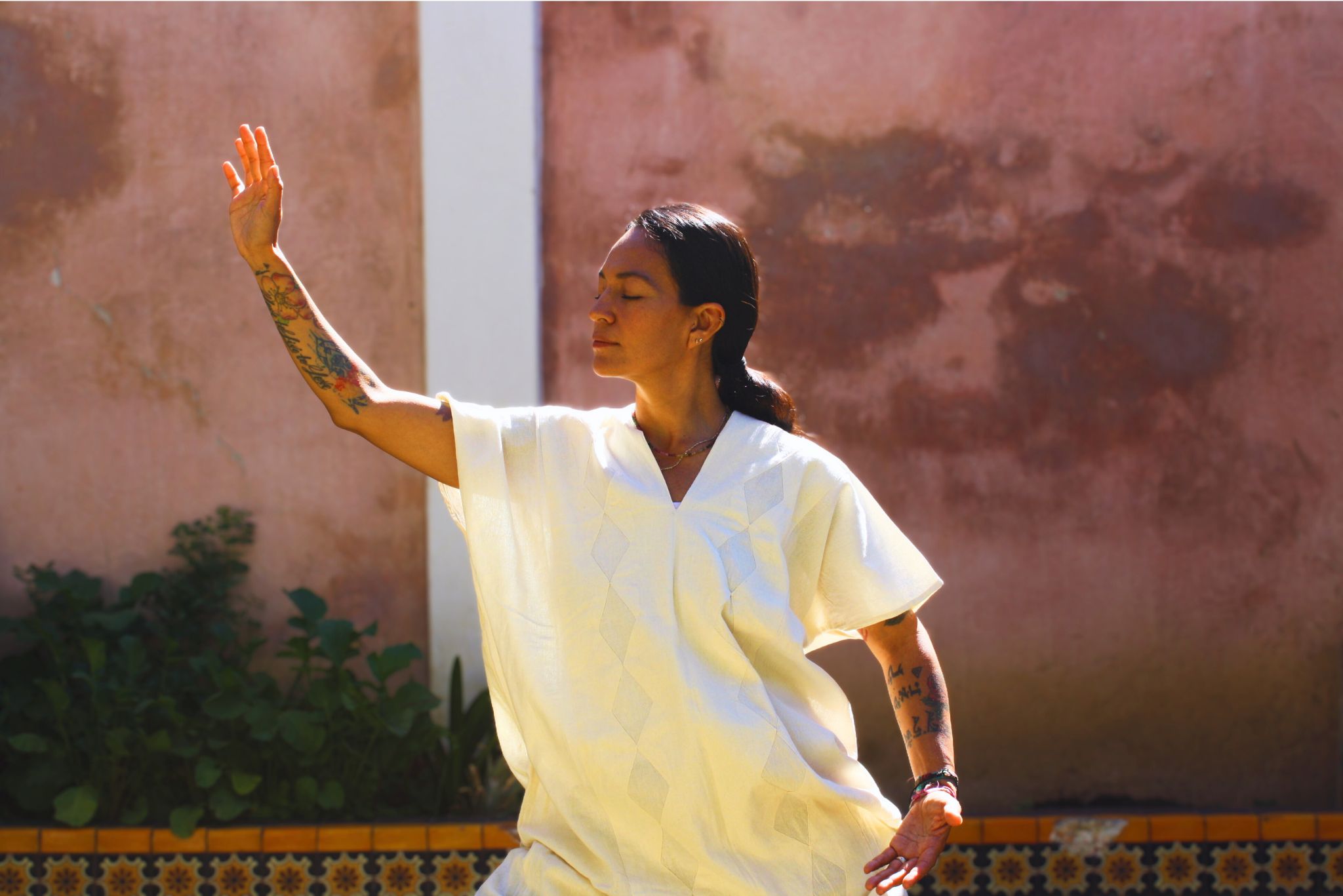
Interoception: Learning to Listen to the Body Throughout our lives, we move through experiences that change us. Some fill us with confidence. Others awaken new capacities. Some teach us that the world can be a place where we can rest, love, and create. Others ask us to draw on every resource we have simply to keep going. Life is made of both. And yet, some experiences leave a particularly deep imprint. Not only because of what happened, but because of the enormous effort the body had to make to adapt to what it was experiencing. This is what many disciplines today refer to as trauma. And perhaps this is where we need to pause. In recent years, the word trauma has become increasingly common—sometimes used to describe almost any difficult experience. At the same time, many people feel afraid when they hear it, as though naming trauma means acknowledging that something inside them is irreparably broken. At Sentido Somático, we want to approach this word differently. Not as a label. Not as a diagnosis that defines a person. And certainly not as an identity. We prefer to understand trauma as a form of learning that can emerge when an experience temporarily exceeds the capacity the body had at that time to process, integrate, or move through it with the resources available. From this perspective, the focus of the conversation shifts. It is no longer only about what happened. It becomes about the relationship between the experience and the body that lived through it. Because two people can move through similar circumstances and yet their bodies may learn something very different. The difference does not depend only on the intensity of what happened. Age, relationships, a sense of safety, rest, context, support, and many other factors also matter. Perhaps that is why one of the most important questions is no longer simply: "What happened?" but also: "How was my body able to experience what was happening?" That question changes the way we approach suffering.
It moves us away from blame. And toward understanding. It invites us to look at the body with the same respect we might offer a tree that has grown through strong winds. We would not think the tree was wrong for changing its shape. We would understand that its shape also tells a story. Our nervous system does something similar. The responses that appear in our lives today do not speak only about the present. They can also express what the body once learned in order to protect life when circumstances were especially difficult. And here is one of the ideas that will accompany this entire second journey through the Knowledge Center: Trauma is not proof that the body failed. Often, it is evidence of how deeply the body tried to protect life with the resources available at the time. Understanding this does not erase pain. But it can profoundly transform the way we relate to it. We stop looking at the body as an enemy. And begin recognizing an intelligence that, even in the most difficult moments, never stopped trying to care for us. That will be the spirit of the articles that follow. Not defining people by what they have lived through. But exploring how life continues to learn, reorganize, and discover new possibilities for expression—even after the most difficult experiences Science Explains Trauma Does Not Change Who We Are. It Changes How the Body Learns to Protect Life. For a long time, trauma research focused primarily on understanding the events that could cause profound suffering. Today, neuroscience, developmental psychology, and the biology of stress have expanded that perspective. We are increasingly understanding that trauma cannot be explained only by what happened. We also need to consider how the body experienced what happened. When an experience temporarily exceeds our available capacity to respond, integrate, or find enough support, the nervous system can mobilize extraordinary resources in an attempt to protect life. Some people become intensely activated.
Others feel the need to stop. Some seek help. Others become quiet. None of these responses appear because the body has decided to function incorrectly. They emerge because, in that moment, they may represent the best possibility available for getting through what is happening. This is one of the important shifts in contemporary trauma research. Responses that were once interpreted as failures are increasingly understood as adaptive strategies. They are not conscious decisions. They are deeply biological expressions of a body attempting to preserve life. This changes the question we ask. Instead of: "Why do I react this way?" we can begin asking: "What was my body trying to protect when it learned to respond this way?" The difference between these two questions is enormous. The first can easily lead toward judgment. The second opens a path toward understanding. And here, neuroplasticity offers something deeply hopeful. Just as the body learned particular ways of responding at one point in life, it also retains the capacity to continue learning through new experiences. This does not mean erasing the past. It means expanding what the body has learned. Biology is not like a blackboard where we write and erase information. It is much more like a tree. Each year, new rings appear. The earlier ones remain. But the story continues to grow. Our nervous system does too. Every experience of safety. Every relationship where trust becomes possible. Every space where we can rest. Every moment when the body discovers that it no longer has to carry everything alone. All of these become part of that ongoing learning. This is why, at Sentido Somático, we do not understand trauma as a sentence. We understand it as part of the story of a living body. And as long as there is life, there remains the possibility of learning. Perhaps that is one of the most hopeful contributions of contemporary science. It does not promise that we will forget what happened.
It reminds us that our capacity for adaptation did not end on the day of that experience. It continues with us today. And it may continue for as long as life keeps unfolding within us. That is why we choose to look at every response of the body with deep dignity. Before asking how to change it, we want to understand the extraordinary intelligence that made it possible for us to arrive here. As we often say at Sentido Somático: Nothing your body did to try to protect your life deserves shame. It deserves to be understood. And perhaps that understanding is the first step toward discovering that the body no longer has to walk the rest of the path alone. Experience Gives Meaning Understanding the Past So We Can Meet the Present Again When we begin to understand how difficult experiences can influence the nervous system, something deeply human often happens. Pieces begin to fall into place. Responses that once seemed confusing start to make sense. Some people feel relief. Others feel sadness. Some remember moments from their history that remained without words for a long time. All of this can be part of the process of understanding. And yet, there is something equally important: Understanding the past does not mean living from the past. The intention is not to reduce our entire story to what happened to us. It is to create the possibility of relating to ourselves with greater understanding and less judgment. Because an explanation can sometimes become, without us realizing it, another way of remaining stuck. If every emotion, difficulty, or decision is explained only through trauma, we risk forgetting something essential: Life is still happening now. We are still building relationships. Still learning. Still changing. Still encountering people, places, and experiences that can expand what the body knows about the world.
At Sentido Somático, we believe looking back has meaning when it helps us participate more freely in the present. We do not look back to remain there. We look back to understand the path we have traveled—and to discover that today, possibilities may exist that were not available to us before. Perhaps this is one of the deepest forms of compassion. Not denying the pain. Not rushing the process. Not demanding that everything be resolved. And, at the same time, not allowing suffering to become the only story we can tell about our lives. Because we are so much more than what happened to us. We are also everything we continue to discover. Every friendship that helps trust return. Every place where the body can rest. Every moment when we find ourselves laughing again. Every time curiosity returns. Every time we choose to care for ourselves. Every time we discover beauty in something simple. All of this is part of our story, too. And it deserves a place in it. Perhaps the most important question is not only: "What experiences left a mark on my body?" Maybe we can also ask: "What experiences do I want to keep offering my life today?" Because the body learns from both. It learns from pain. But it also learns from care. It learns from loss. But also from connection. It learns from threat. But also from safety. And it is precisely this ongoing capacity for learning that keeps open the possibility of change. Perhaps that is why everything deserves to be seen. Everything deserves to be felt. Everything deserves a space where it can exist without shame. Not because everything should remain the same. But because what is first met with dignity often finds the conditions it needs to begin transforming.
Practice Changes Understanding Transformation Happens When Life Finds New Conditions for Learning After understanding how our experiences can influence the nervous system, a natural question arises: What helps the body keep learning? For a long time, we have looked for answers primarily in techniques. And certainly, there are deeply valuable practices that we will explore later. But before talking about any particular tool, perhaps we need to remember something much more essential: Life learns through the conditions it encounters. A seed does not bloom because someone tells it to grow. It blooms when it finds fertile soil, water, light, and time. Our nervous system needs conditions, too. It needs rest. Relationships where we can feel seen without being judged. Movement. Moments of silence. Play. Contact with nature. Spaces where the body no longer has to remain constantly defended. Experiences that allow it to discover, again and again, that the world can also be a place where it is possible to rest. This is why transformation rarely happens because someone simply tries harder. Often, it begins when we stop fighting ourselves. When we change the relationship we have with our own experience. When we stop constantly asking how to get rid of what we feel. And begin asking: "What is my body trying to show me today?" That question opens a completely different door. It does not come from the urgency to correct. It comes from a willingness to listen. And listening requires something deeply human: Time. Presence. Patience. No meaningful learning happens through rushing. A child needs time to learn how to walk. A tree needs time to grow. A relationship needs time to develop trust. Our nervous system does, too.
That is why, at Sentido Somático, we do not try to accelerate the natural processes of life. We prefer to accompany them. With respect. With curiosity. With a deep trust in the intelligence of the body. We know that some experiences will need more time than others. We know there will be moments of movement and moments when it may seem as though nothing is changing. All of this is part of the path. Nature does not bloom every day of the year. It also knows winter. It knows rest. It knows cycles. Perhaps we can learn to look at ourselves with that same patience. Not waiting for immediate transformation. But recognizing each small moment when the body discovers a new possibility. A breath that feels a little more spacious. A night of deeper rest. A conversation where a little more trust becomes possible. A boundary we are able to express. A moment when curiosity about life returns. All of this is transformation. Even when it happens quietly. And perhaps one of the deepest expressions of transformation is this: Only what is given permission to exist can begin to transform. Research Continues From Understanding Trauma to Understanding Integration For a long time, trauma research focused primarily on understanding its effects on the brain and behavior. That knowledge has been, and continues to be, deeply valuable. It has helped us understand how difficult experiences can influence memory, attention, emotions, relationships, and the functioning of the nervous system. But in recent years, research has begun asking different questions. It is no longer interested only in understanding what happens when an experience leaves a deep imprint. It is also asking: What supports the integration of that experience? What conditions allow the nervous system to regain flexibility?
What role do safe relationships play? How does rest influence recovery? What is the importance of movement? And how do breath, nature, play, creativity, sleep, and a sense of belonging participate in our capacity to adapt? This shift represents something important. The conversation is no longer focused exclusively on what has been harmed. It is also becoming interested in the human capacity to keep learning. Neuroplasticity continues to expand our understanding of the possibility of change throughout life. Attachment theory continues to illuminate the profound influence of relationships on our development. Interpersonal neurobiology explores how the presence of another human being participates in regulation. Somatic education reminds us that lived experience is also a form of knowledge—not only intellectual understanding. And fields such as sleep medicine, movement physiology, and contemplative science continue to explore how different aspects of everyday life participate in our capacity to adapt. At Sentido Somático, we find deep inspiration in this dialogue. Not because all of these fields say exactly the same thing. They don't. But because, from different perspectives, they seem to point toward something remarkably hopeful: Life has an extraordinary capacity to keep learning when it finds the right conditions. This does not minimize suffering. It does not promise immediate change. It does not deny the complexity of human experience. It simply reminds us of something deeply hopeful: The story continues. And as the story continues, so does the possibility of discovering new ways of relating to ourselves. Perhaps this is why we choose to walk with humility. Science will continue to evolve. New research will emerge. Some explanations will change. Others will become more nuanced. And that makes us glad. Because science is not a collection of immovable truths. It is a deeply human way of continuing to learn. At the same time, we will continue to honor something no research can replace:
The experience of a body that begins to feel at home again. The emotion of discovering that we can rest without guilt. The trust that grows when someone feels seen with respect. The calm that appears when we stop fighting ourselves. All of this is also part of human knowledge. And it deserves a place in this conversation. Perhaps, in the end, one of science's greatest contributions is not telling us who we are. It is helping us see more clearly the extraordinary intelligence with which life has been trying to care for us from the beginning. And perhaps this is also one of the deepest invitations of Sentido Somático: Not learning to distrust our bodies. But slowly beginning to recognize that many of the responses that are difficult for us today were, at one point, profound attempts to protect life. Because when we begin to see the body from that place, something changes quietly. We stop asking how to overcome the body. And begin asking: How can I walk alongside it again? Perhaps that is one of the deepest ways of healing a relationship. Not convincing the other to change. But discovering that they never stopped trying to be on our side. The Research Behind This Article Over the past several decades, our understanding of trauma has changed profoundly. Early research focused primarily on identifying the effects overwhelming experiences could have on the brain and behavior. Today, through dialogue among neuroscience, developmental psychology, attachment theory, interpersonal neurobiology, and somatic education, we have a broader understanding. Trauma cannot be explained only by the event itself. It also needs to be understood through the relationship between the experience, the body, and the resources available at the time. This shift in perspective has allowed us to stop viewing many human responses simply as failures or weaknesses. Instead, we can begin to understand them as extraordinary attempts at adaptation.
At the same time, research on neuroplasticity has greatly expanded our understanding of the nervous system's capacity to continue learning throughout life. New experiences. Trusting relationships. Rest. Movement. Safety. Ongoing learning. All can participate in the ongoing reorganization of the nervous system. At Sentido Somático, this perspective is central. We do not understand trauma as a sentence. We understand it as a story of adaptation that remains open. As long as there is life, there remains the possibility of continuing to learn. That is why we choose to remain in dialogue with science with deep humility. Research will continue to evolve. New findings will continue to expand our understanding. And that is good news. Because science, like life, remains in motion. At the same time, we recognize that there are dimensions of human experience that no study can fully contain. Love. Presence. Trust. Beauty. Contemplation. Shared silence. The feeling of coming home to our own bodies. These experiences also transform our lives. And they belong to the human wisdom we continue to cultivate. At Sentido Somático, we do not believe science and experience compete with one another. They are in dialogue. One expands our understanding. The other gives it depth and meaning. And together, they remind us that knowledge finds its greatest value when it helps us live with greater dignity, presence, and humanity. Reference Books
The following books have contributed to the broader conversation around trauma healing, nervous system regulation, somatic healing, attachment, neuroplasticity, and human development. They are not presented as absolute answers, but as different voices within an evolving conversation between science, lived experience, and somatic understanding. Bessel van der Kolk — The Body Keeps the Score One of the most influential books for understanding how overwhelming experiences can affect the body and exploring pathways toward integration. Peter A. Levine — Waking the Tiger: Healing Trauma Offers a biological and somatic perspective on trauma, emphasizing the body's natural capacity to reorganize when supportive conditions are available. Stephen W. Porges — Polyvagal Safety Expands the conversation around safety, neuroception, and the role of relationships in nervous system regulation. Daniel J. Siegel — The Developing Mind A foundational work for understanding how experience, relationships, and neuroplasticity participate in human development throughout life. Bruce D. Perry & Oprah Winfrey — What Happened to You? A deeply human invitation to approach difficult experiences through the question: "What happened to you?" rather than beginning with what might be wrong with a person. Norman Doidge — The Brain That Changes Itself Explores research demonstrating the brain's extraordinary capacity to continue reorganizing and learning throughout life. Deb Dana — Anchored An accessible and compassionate approach to polyvagal theory and the cultivation of everyday experiences of safety.