Movement and Emotions
Movement and Emotions How movement can influence emotional regulation and the nervous system There are emotions that change when the body changes direct...
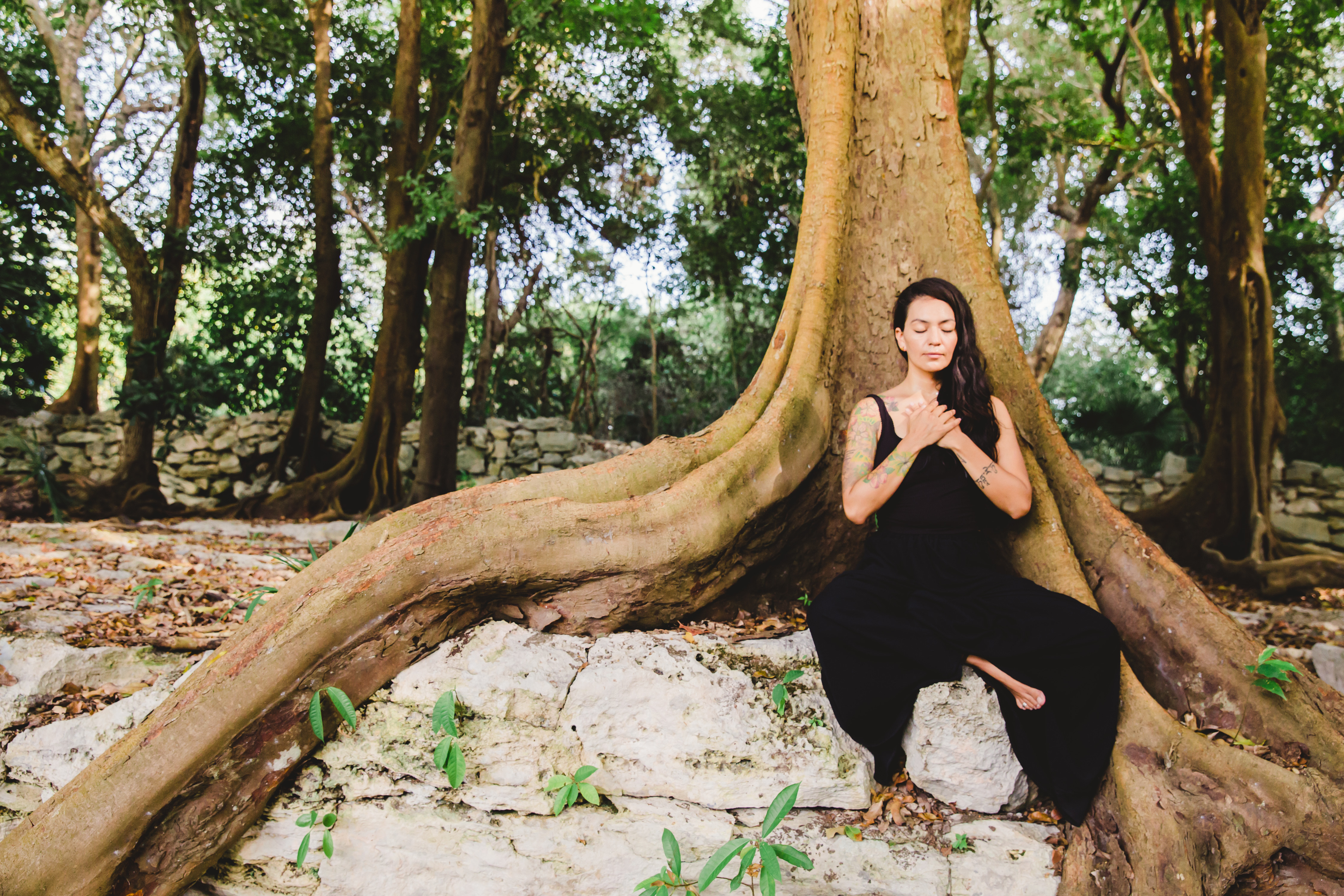
Movement and Emotions How movement can influence emotional regulation and the nervous system There are emotions that change when the body changes direction. I would like to invite you to try a very simple experiment. For a few seconds, let your shoulders drop. Allow your jaw to soften. Exhale slowly. Now walk a few steps. Then stop and notice something. Is your internal state exactly the same as it was a moment ago? Most people notice some kind of difference. Perhaps a very small one. The breath has changed. The tension has changed. The attention has changed. The body has changed. And with it, something in the emotional experience may have changed as well. This is deeply interesting because for a long time we learned to think of emotions as something that happened mainly in the mind. We feel sadness. Then the body cries. We feel fear. Then the body trembles. We feel joy. Then the body smiles. Contemporary science offers us a much more complex understanding. The body is not simply a screen on which emotions appear. It actively participates in the way we perceive, interpret, and experience what we feel. Emotion involves changes across multiple systems of the organism: attention, perception, breathing, autonomic activity, muscle tone, readiness for action, and our relationship with the environment. This changes the way we understand emotional regulation, stress, and embodied experience. Many people try to change how they feel by changing only what they think. And thought is important. But the organism has another language.
The language of movement. In my own experience, much of the learning has happened precisely there. In movement. Not only as exercise. Not only as dance. But as a form of knowing. There are movements that reveal fear. Movements that contain anger. Movements that seek protection. Movements that express openness. Movements that organize balance. And movements that allow an emotional experience to find a different path. Over time, I came to understand something that profoundly transformed the way I work. Movement is not only a tool for the body. It is also a tool for perception, emotion, and awareness. When a person changes the way they breathe, walk, support themselves, or move, they are not simply changing a posture. They are changing the sensory information available to the organism. And that information can participate in the emotional experience. Here is an idea that feels central to me. Emotions have movement. Fear tends to organize the body in one way. Sadness in another. Joy in another. Shame in another. Not because there is one universal posture for each emotion. That would be an oversimplification. Rather, emotions are dynamic processes involving action tendencies, physiological changes, bodily perception, and our relationship with context. This is why remaining completely still for long periods can influence our internal state. And it is also why certain movements may produce an immediate sense of greater spaciousness, presence, or vitality. Not because there is a magical movement capable of eliminating an emotion. But because changing movement can also change what we perceive, attend to, and experience. There is something that moves me deeply. Children understand this naturally. When they are happy, they jump. When they are frustrated, they push. When they are frightened, they seek closeness. When they imagine, they transform themselves with their whole body.
They do not separate emotion and movement. We learned to do that. We learned to contain gestures. To immobilize impulses. To sit for hours. To move less and less while trying to feel better and better. Perhaps there is an important contradiction here. Throughout this article, we will explore what science tells us about the relationship between movement and emotions, how the nervous system participates in this ongoing dialogue, and why recovering a more conscious relationship with movement may become a resource for emotional regulation and well-being. Because perhaps movement is not only a way of moving through the world. Perhaps it is also a way of transforming how we experience the world within ourselves. And perhaps an important part of healing begins when we stop asking only what we feel and begin asking: How is this experience being organized in my body? What the Science Tells Us Movement is one of the nervous system's oldest languages There is a simple statement that can profoundly change the way we understand well-being. Everything that is alive moves. The heart moves. The lungs move. The blood moves. Cells move. Breathing moves. Even while we sleep, the organism is filled with movement. Life is not a static structure. It is a dynamic process. And the nervous system evolved within that movement. Long before language existed, human beings were already communicating through the body. Posture. Orientation. Speed. Distance. Gesture. Movement was one of the earliest forms of relationship.
And it remains one of the most important ways in which we relate to our environment. Contemporary neuroscience shows that movement and emotion cannot be fully understood as two separate processes. Emotions prepare the organism for action. And action, in turn, changes the sensory information the organism receives. It is an ongoing dialogue. When we walk, breathing patterns and proprioceptive information change. When we change our pace, physiological demands change. When we modify our support, information from muscles, joints, and skin changes. When we move our gaze and head, what we attend to can change. When we move alongside another person, processes of coordination and synchronization emerge. Movement and emotion are part of the same organism. For a long time, medicine and psychology tended to study the body and mind separately. Today we understand that this division is insufficient for fully understanding human experience. Emotions involve changes in muscle tone, breathing, orientation, attention, and readiness for action. But we also need to be precise about how we describe this. There is no universal posture of fear. There is no universal breathing pattern of sadness. There is no single movement of joy. Context matters. Personal history matters. Culture matters. The situation matters. And individual differences matter. What we can say is that emotional experience is closely connected with bodily changes and action tendencies. This has an important consequence. The body is not simply where we feel emotions. It is part of the process through which we experience them. This does not mean that we can resolve every emotional experience simply by moving. It means something more interesting. Movement can offer the nervous system new possibilities for organization. This connects with an idea that has appeared throughout many of the previous articles. Nervous system regulation is not simply about calming down. It is also about recovering flexibility.
And movement is one of the most direct expressions of that flexibility. Think of a tree. It does not survive because it is completely rigid. Its structure needs enough stability to hold itself and enough flexibility to respond to the wind. Adaptation requires both. Stability. And movement. Researchers in motor development have shown for decades that movement is one of the primary ways through which the brain learns. Babies come to know the world through movement. They explore. Reach. Turn. Crawl. Walk. Every movement provides information. Every attempt modifies coordination. Every new experience contributes to building bodily maps and relationships with the environment. In other words: movement is learning. And this capacity does not disappear in adulthood. We continue learning through movement. We continue refining perception. We continue developing skills. We continue modifying our patterns of response. We continue expanding our repertoire of possibilities. Here neuroplasticity becomes important. Whenever we learn a new motor skill, the nervous system adapts its connections and strategies of control. We do not need to turn this into a grand promise of "rewiring the brain." Neuroplasticity is complex. But we can recognize something extraordinarily valuable: the nervous system retains the capacity to learn. And learning means changing. I want to pause here with rhythm. In previous articles, we explored re-rhythmization. Movement is one of the body's primary organizers of time. Walking. Swaying. Dancing. Breathing.
Running. Moving the arms. All of these introduce temporal patterns. The body lives within rhythm. The heart has rhythm. Breathing has rhythm. Walking has rhythm. Sleep has rhythm. Relationships have rhythm too. We approach. We move away. We speak. We listen. We respond. We pause. Movement participates in all of these processes. Human communities have used collective movement for thousands of years. Dance. Ritual. Ceremony. Procession. Celebration. Contemplative practice. Play. Synchronized movement. These expressions appeared in cultures throughout the world. Their meanings were different. Their contexts were different. But many shared an intuition: moving together changes the experience of being together. Contemporary research on interpersonal synchrony explores precisely how coordinating movement, rhythm, and action may relate to cooperation, social connection, and belonging. Collective movement does not merely express community. It can also contribute to creating it. This connects directly with co-regulation. When we walk with someone, dance, play, or engage in synchronized activity, our bodies are continuously exchanging information. Movement becomes a form of conversation. And perhaps here we find one of the most important ideas in this article. Movement is not only physical activity. It is also a language. A biological language.
An emotional language. A relational language. And an adaptive language. When a person regains the ability to move with greater freedom, they may discover something that goes far beyond physical mobility. They may recover a form of expression. A form of learning. A form of creativity. A form of relationship. And, in some circumstances, an additional resource for well-being. Because the nervous system was not designed only to understand life. It was designed to participate in it. And participation involves movement. Experience Gives Meaning Some emotions need movement, not only explanation For many years, I believed that movement was a form of expression. Over time, I understood that it was also a form of listening. There are things the body can reveal through movement that the mind may take much longer to recognize. A sadness that changes after walking for an hour. An anxiety that finds another rhythm after dancing. A sense of immobility that begins to transform when the body recovers the impulse to move forward. Not because movement is a magical solution. But because emotion and action are deeply connected. I want to say something that feels fundamental. Many emotions need to be felt and understood, but they do not necessarily need to be explained over and over again. We live in a culture that tries to understand everything. We analyze. Interpret. Remember. Name. And all of this can be valuable. But sometimes we forget that an emotion is also a physiological experience. It has breathing. It has muscle tone. It has direction. It has impulse. It has rhythm. Fear prepares the organism to protect itself.
Anger can mobilize energy toward action. Sadness can alter our pace, attention, and orientation. Joy can support approach and exploration. These are not only thoughts. They are processes involving the whole organism. This is why an emotion does not always change simply because we understand it intellectually. Sometimes it changes when our relationship with it changes. And movement can participate in that relationship. Here is an idea that has profoundly transformed my work. An emotion is not only something we feel. It is also something the organism does. This does not mean that every emotion has one correct movement. It means that emotions are connected with action tendencies. Moving toward. Moving away. Stopping. Pushing. Protecting ourselves. Searching. Exploring. Resting. Crying. Asking for help. When these impulses are repeatedly restricted, ignored, or made impossible by circumstances, we may experience sensations of tension, blockage, or immobility. But precision matters here too. Not every bodily block means there is an "unreleased emotion." Not every muscular tension represents trauma. Not every physical sensation has a psychological meaning. The body is complex. Bodily sensations can have many causes. This is why somatic work begins with curiosity, not interpretation. Many people say: "I feel like something is stuck." That statement deserves to be heard with respect. Not because there is necessarily an emotion physically stored inside a particular tissue. But because the person is describing a real bodily experience. A sense of interruption. Tension. Immobility.
Lack of resolution. Conscious movement can then become a form of exploration. We do not move the body to "get an emotion out." We move the body to discover how our experience is being organized. Sometimes we discover that the breath wants to expand. That the feet want to feel the ground. That the spine wants to regain mobility. That the arms want to create space. That the body wants to sway. That it wants to walk. Or that it needs to remain still. And this last point is important. Regulation does not always mean moving more. Sometimes it means discovering that we can stop without feeling trapped. This is why conscious movement is not about keeping the body constantly active. It is about recovering choice. Moving. Pausing. Changing. Returning. Exploring. Resting. This capacity to alternate may be far more important than the amount of movement itself. Many people experience well-being when they return to moving freely. Not necessarily through intense exercise. But through recovering the sense that the body can explore. Improvise. Change direction. Take up space. Play. Dance. Walk without a goal. That freedom matters. Because an organism that can explore different movement possibilities can also expand its repertoire of possible responses. Here movement connects directly with creativity. Every new movement provides new information. Every new coordination opens a possibility. Every different way of inhabiting the body can expand our sensory and motor repertoire. This is why movement is a form of learning.
And perhaps this is why so many human traditions placed movement at the center of communal life. Dance. Play. Ritual. Celebration. Walking. Pilgrimage. Repetitive and synchronized movement. We do not need to attribute universal therapeutic properties to these practices to recognize something essential: movement can transform the way we participate in an experience. There is an image that stays with me. A river does not remain alive by staying still. It remains alive because it flows. When water changes direction, the landscape changes too. Something similar happens with human experience. We are not made for permanent stillness. We are made to alternate movement and rest. Exploration and pause. Expansion and contraction. Action and recovery. Perhaps this is why well-being has so much to do with maintaining some capacity for movement. Not only physically. Emotionally. Relationally. Creatively. And perhaps an important part of healing is precisely this. Not forcing ourselves to feel something different. But allowing our experience to find new ways of organizing itself. Because in the end, the body does not always ask us to change our emotion. Sometimes it asks for something much simpler. To be able to keep moving through what we feel. Practice Transforms Conscious movement as a bridge between feeling and expression There is a question that can change the way we relate to emotions. Instead of asking only: "What am I feeling?" we can ask:
"How is my body participating in this experience?" And, when appropriate: "Is there a movement I would like to explore?" That question shifts attention away from analysis and toward perception. And often the body responds before the mind. An emotion can feel like a tendency to push. To approach. To move away. To contract. To expand. To walk. To rest. To cry. To breathe. There is no universal movement for each emotion. There is exploration. And that exploration can become a practice of body awareness. In Sentido Somático, we do not use movement to force a release. We use it to create a bridge between experience and expression. Many people have learned to feel without expressing. Or to express without feeling. Conscious movement can help bring these dimensions together again. When a person gives themselves permission to explore movement, something important happens. The emotion is no longer only a problem that must be controlled. It can become an experience that can be observed, accompanied, and understood. That shift changes the relationship with the body. Again and again, I have observed that when someone finds a movement that feels authentic, a very particular sensation can appear. The emotion does not necessarily disappear. But the sense of being completely trapped inside it may lessen. There is more space. More breath. More options. As if the organism had found a way to continue. I want to make an important distinction. Conscious movement is not about intensity. It is about presence. Sometimes the most meaningful movement is very small. A shift of weight between the feet. A gentle turn of the head. A nearly imperceptible sway.
An arm opening a few inches. An exhalation finally finding space. Our culture of performance has also entered the world of movement. We think movement means doing more. Faster. Stronger. Longer. Regulation may require something else. More listening. Because the body does not always need to be pushed. Sometimes it needs to be listened to. And that listening is deeply creative. Here we find another connection with the previous article. Creativity does not happen only when we invent something external. It also appears when we allow the organism to discover a different response. Conscious movement can become a form of embodied creativity. Every time we discover a different support, rhythm, direction, or way of moving, we expand our repertoire. This is why movement may have therapeutic value in certain contexts. Not because it automatically eliminates suffering. But because it can expand possibilities for responding. And expanding possibilities is an important part of adaptation. Research has found that acute stress can affect certain aspects of creativity and cognitive flexibility, although the effects are not uniform and depend on the type of stress and individual characteristics. This offers us an interesting perspective. When we are under intense pressure, it may become more difficult to change strategies. More difficult to explore. More difficult to generate alternatives. This does not mean that movement is a cure for stress. It means that any practice that supports a more flexible relationship with experience may deserve consideration within a broader approach to well-being. There is a very simple practice we can explore. When an intense emotion appears, before trying to change it, observe: What is my body doing? Is it contracting? Leaning? Trying to move away? Looking for support? Holding the breath? Wanting to walk? Wanting to remain still?
We do not need to find an explanation. We do not need to interpret. Simply observe. Then we can try one very small change. Change the support. Move the gaze. Take a step. Feel the feet. Sway. Breathe. And then stop again. The question is not: "Did it work?" The question can be: "What changed?" Perhaps the breath changed. Perhaps the tension changed. Perhaps the attention changed. Perhaps nothing changed. That is information too. This practice restores agency without turning the body into a machine that we must control. Because the goal is not to achieve a particular emotional state. It is to learn how to relate to our experience with greater curiosity. Here movement connects with freedom. An organism that can explore different movement possibilities can also discover different possibilities for responding. Rigidity reduces options. Exploration can expand them. And perhaps this is one of the reasons so many people experience well-being when they return to moving with presence. They do not only recover physical mobility. They may recover emotional mobility. Relational mobility. Creative mobility. Vitality. Perhaps conscious movement is one of the oldest ways of remembering that emotions are part of life. They are not enemies we need to expel. They are processes we can learn to listen to. And life, when given enough space, continues moving.
The Explorers of This Idea Movement as a way of continuing to live There is a question that has accompanied me for many years. What does a person learn when they begin to move freely again? At first I thought they learned coordination. Strength. Balance. Flexibility. Over time, I understood that they could learn something much deeper. That the body still has possibilities. And that experience can change the way we inhabit life. At Sentido Somático, we have explored many paths. Breathing. Rhythm. Interoception. Proprioception. Nature. Co-regulation. Play. Creativity. Movement brings all of these paths together. Because movement breathes. It has rhythm. It refines perception. It builds bodily maps. It relates us to the environment. It relates us to others. It awakens curiosity. And it creates new possibilities. I would like to propose a concept that I want to develop further throughout this body of work: The intelligence of movement The intelligence of movement is the organism's capacity to adjust, learn, coordinate, and adapt through embodied experience. It is not intellectual intelligence. It is biological capacity. It knows how to recover balance after a stumble. How to change support. How to adjust force. How to modify rhythm. How to learn a new coordination.
How to respond when the environment changes. Many times, the body knows something before we can explain it. And that deserves respect. Science continues to investigate how movement interacts with the brain, emotions, learning, and health. We know that physical activity and motor learning are associated with multiple brain and physiological processes. We also know that stress can alter cognitive processes related to flexibility, attention, and creativity. But perhaps movement teaches us something beyond any individual study. It teaches us that life is never completely static. Seasons change. Rivers change. Relationships change. The body changes. We change. We suffer when we try to turn life into something completely fixed. Movement continually reminds us that adaptation is a form of intelligence. I want to return to a sentence from earlier. Many emotions need to be felt and understood, but they may also need space to be expressed through action. Now I would like to expand it. Perhaps many stages of life do not need to be eliminated either. They need to find a movement. Grief. Transition. Motherhood. A change of work. Loss. Birth. Aging. Each stage involves reorganization. And movement can become one of the bridges through which that reorganization becomes more conscious. Something moves me deeply. When a person regains freedom of movement, they often regain freedom to imagine. To create. To connect. To play. To rest. As though movement opened doors that had seemed closed.
Perhaps this is why so many human traditions placed movement at the center of spiritual, communal, expressive, and everyday life. Not because movement was an ornament. But because they understood something essential: moving the body is also participating in the experience of being alive. At the beginning of this article, we said that there are emotions that change when the body changes direction. Now we can say something more. There are lives that change when the body recovers the possibility of moving freely. Not a perfect freedom. A living freedom. The freedom to explore. To feel. To express. To stop. To begin. To change rhythm. To change direction. And perhaps this is one of the deepest definitions of well-being. Not a body that never feels. Not a mind that is never disturbed. Not a life without difficulty. But an organism that can continue finding possibilities while moving through whatever life brings. Because, in the end, movement is not merely an activity. It is an expression of life. And as long as there is the possibility of a new movement, there may also be the possibility of a new response. A new relationship. A new way of inhabiting the present. Perhaps healing is, to a great extent, recovering trust in that silent intelligence that lives in the body. The intelligence that does not always know where we are going. But knows how to adapt. Adjust. Explore. Wait. Move forward. And find balance again. Not because we know exactly where we are going. But because movement teaches us an ancient truth:
being alive means continuously participating in the art of transforming ourselves. The Sentido Somático Principle We do not need to move our bodies in order to escape what we feel. We can move in order to discover how we are living what we feel. The body is not a machine we must control in order to reach a perfect emotional state. It is a living organism that perceives, learns, adapts, and changes. Movement does not necessarily eliminate an emotion. But it can change our relationship with it. It can offer information. It can expand perception. It can open a possibility. It can help us recover choice. And perhaps that is much more important than trying to feel good all the time. Because regulation does not mean stopping ourselves from feeling. It means being able to continue participating in our lives while we feel. To be able to stop. To be able to move. To be able to change direction. To ask for support. To rest. To return. To begin again. Perhaps movement is precisely this: the possibility of continuing. Not always forward. Sometimes inward. Sometimes backward. Sometimes sideways. Sometimes nowhere at all. But always with the possibility of choosing again. Because life does not ask us to remain still. It asks us to adapt. And as long as we can move — even very slightly — there remains space to discover something new. A new sensation. A new relationship. A new response. A new way of being here. And perhaps, after all, that is one of the deepest forms of well-being:
not having to feel different in order to keep living. But discovering that we can keep moving through what we feel. The Explorers of This Idea This article is informed by researchers and authors who have expanded our understanding of movement, emotions, bodily perception, and regulation. Antonio Damasio His work on emotion, the body, consciousness, and decision-making has contributed to the understanding that emotional processes cannot easily be separated from bodily processes. Daniel Stern His work on interpersonal development, affect, and vitality affects offered an especially relevant perspective for understanding how we experience dynamic qualities — rhythm, intensity, duration, and movement — within relationships. Jaak Panksepp His research in affective neuroscience explored emotional systems, motivation, and play, contributing to a more integrated understanding of emotion and action. Stephen W. Porges His work on autonomic regulation, orientation, and safety has strongly influenced contemporary discussions of regulation and body-oriented approaches. At Sentido Somático, we use these contributions as a complementary framework while distinguishing them from areas supported by stronger scientific consensus. Moshe Feldenkrais His approach to somatic education placed motor learning, attention, and movement exploration at the center of developing new bodily possibilities. Bonnie Bainbridge Cohen Her work in Body-Mind Centering has influenced contemporary approaches to conscious movement and somatic education. Bessel van der Kolk His work contributed significantly to the popularization of research and clinical discussion around trauma, the body, and movement. Some of his formulations have become influential within the field, although clinical hypotheses should be distinguished carefully from claims supported by stronger experimental evidence. Contemporary research Current research continues to explore the interactions between movement, bodily perception, emotion, stress, attention, and cognitive flexibility.
A 2024 literature review examining Dance Movement Therapy and emotional regulation found potential benefits while also identifying inconsistencies and gaps in the existing evidence, highlighting the need for further research. Research on movement and emotion also suggests that motor behavior and emotional processes are closely interconnected through complex neural systems. This invites us to move away from simple explanations. Not all movement regulates. Not all stillness dysregulates. Not every bodily change has an emotional meaning. Context matters. And this is precisely why somatic education can be valuable: because it does not begin with an interpretation. It begins with a question. What is happening here? And then: What possibilities exist? References • Damasio, A. R. (1994). Descartes' Error: Emotion, Reason, and the Human Brain. Putnam. • Damasio, A. R. (1999). The Feeling of What Happens: Body and Emotion in the Making of Consciousness. Harcourt. • Stern, D. N. (1985). The Interpersonal World of the Infant. Basic Books. • Stern, D. N. (2010). Forms of Vitality: Exploring Dynamic Experience in Psychology, the Arts, Psychotherapy, and Development. Oxford University Press. • Panksepp, J. (1998). Affective Neuroscience: The Foundations of Human and Animal Emotions. Oxford University Press. • Porges, S. W. (2011). The Polyvagal Theory: Neurophysiological Foundations of Emotions, Attachment, Communication, and Self- Regulation. W. W. Norton. • Feldenkrais, M. (1972). Awareness Through Movement. Harper & Row. • Cohen, B. B. (1993). Sensing, Feeling, and Action: The Experiential Anatomy of Body-Mind Centering. Contact Editions. • van der Kolk, B. A. (2014). The Body Keeps the Score. Viking. • Shafir, T. (2016). Using Movement to Regulate Emotion: Neurophysiological Findings and Their Application in Psychotherapy. Frontiers in Psychology, 7, 1451. • Zhang, X., & Wei, Y . (2024). The role of dance movement therapy in enhancing emotional regulation: A literature review. Heliyon, 10(15), e35733.