Practices for Strengthening Proprioception
Practices for Strengthening Proprioception The Invisible Sense That Tells You Where You Are I want to invite you to do something very simple. Close your...
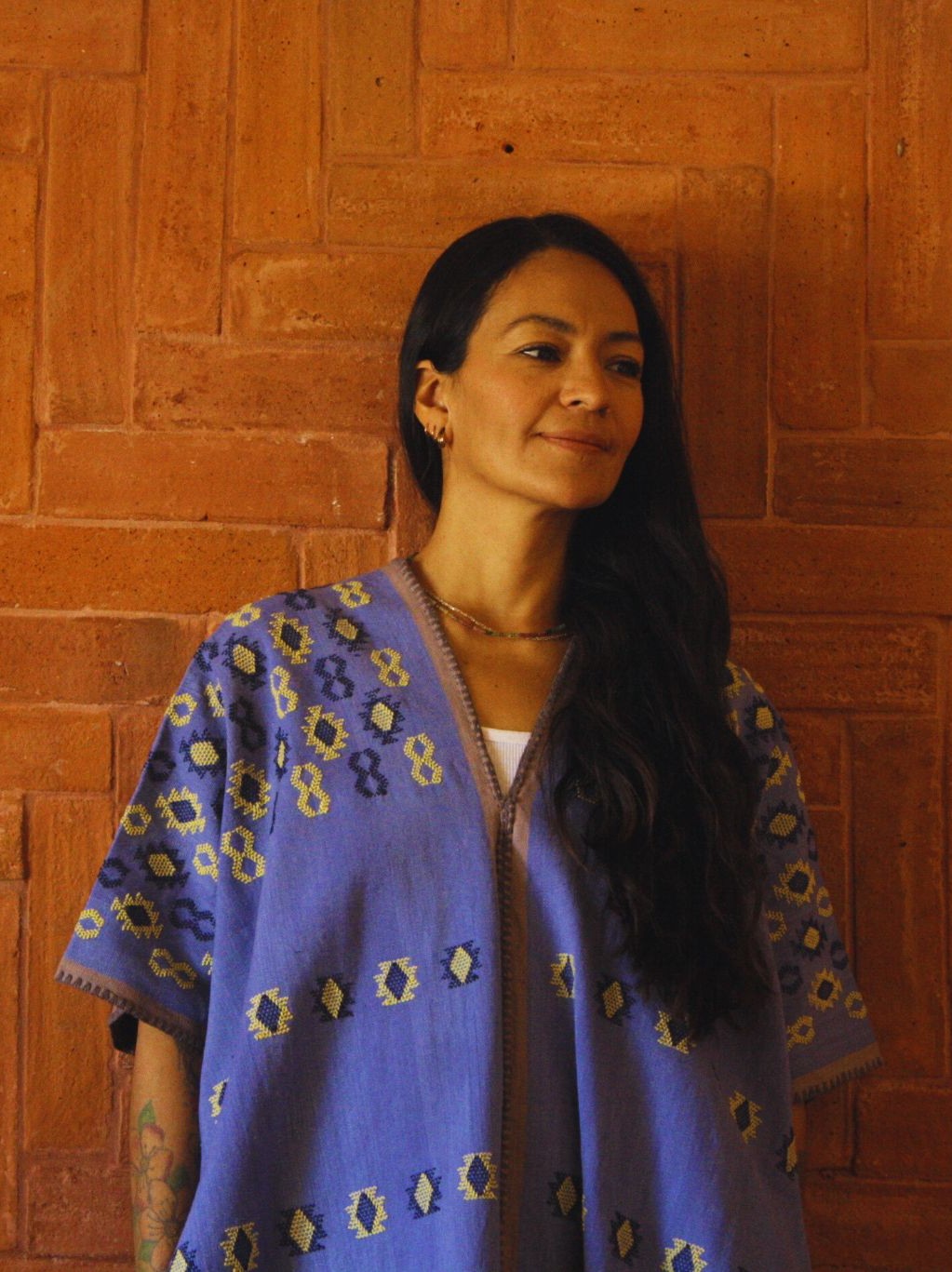
Practices for Strengthening Proprioception The Invisible Sense That Tells You Where You Are I want to invite you to do something very simple. Close your eyes for a moment. Slowly lift one hand. Now stop. Without opening your eyes, answer one question. Where is your hand? Most people can answer immediately. It is in front of me. Higher. Lower. Near my face. To one side. What is extraordinary is that you don't need to see it to know where it is. Your body already knows. And that knowledge has a name. Proprioception. It is one of the fundamental senses that allows us to relate to our own bodies and, at the same time, one of the least understood. It doesn't usually appear on the traditional list of the five senses. We rarely talk about it. We don't usually think about it. And yet, it is active in every second of our lives. Thanks to proprioception, you can walk without looking at your feet. Bring a cup to your mouth. Climb stairs. Hug someone. Write. Dance. Drive. Change your posture. And keep your body organized while you are reading these words. Proprioception contributes to our ability to perceive the position and movement of different parts of the body, even when we are not looking at them. But I want to propose an idea that goes beyond coordination. Proprioception also participates in something deeply human: the feeling of occupying a place in space.
It seems obvious. We all know that we are here. But that certainty is not only an idea. It also has a bodily dimension. The organism continuously builds and updates information about where its different parts are, how they are moving, and how they relate to one another and to the environment. And that map influences us much more than we might imagine. In recent years, the neuroscience of movement has made the complexity of the systems involved in body perception, coordination, balance, motor learning, and the regulation of action increasingly clear. Proprioception is an important part of that system. When bodily information is sufficiently clear, many movements can be organized without us having to consciously attend to every detail. When that information becomes less precise, some actions may require more attention, effort, or compensation. Perhaps this is why some people describe a very particular experience during prolonged periods of stress, immobility, pain, or disconnection from the body. They say things like: "I feel like I'm not in my body." "I feel disconnected from my legs." "I don't know how I'm sitting." "I realize I've been completely tense for hours." These experiences can have many different causes, and we should not automatically turn them into a diagnosis. But they do show us something interesting. Our experience of the body depends, among other things, on the information we receive from it and on the way our brain integrates that information. At Sentido Somático, we have spoken a great deal about interoception as the capacity to perceive different aspects of the body's internal state. Proprioception is an important complement. If interoception helps us perceive how we are feeling inside, proprioception helps us perceive where our body parts are and how they are organizing themselves in space. Interoception listens to the inner landscape. Proprioception draws the map of the territory. Both work together. And both are part of our embodied experience. There is something deeply beautiful about this discovery. The body doesn't only feel. The body orients itself. It knows, without needing words, where its joints are.
How its muscles are changing. How weight is being distributed. What movement is taking place. Which part of the body is participating in an action. All of this happens quietly. So quietly that we tend to forget it. The body is, in a sense, carrying out a continuous conversation between sensation, movement, gravity, and the environment. And here a fascinating question appears. What happens when we learn to awaken this map? Not so that we can move perfectly. Not to correct every posture. Not to constantly monitor the body. But to inhabit it with greater clarity. Throughout this article, we will explore how proprioception works, what science tells us about this bodily sense, and how certain practices can enrich our ability to orient ourselves, move, and feel present within the space we inhabit. Because perhaps an important part of embodied presence is not only about feeling what is happening inside us. Perhaps it is also about remembering, with increasing clarity: where we are. And maybe that is one of the body's quietest gifts. To have developed a sense that accompanies us constantly, even when we have forgotten that it exists. A sense that, with our eyes closed, continues to say softly: "You are here." What Science Tells Us The Brain Builds a Dynamic Map of the Body Imagine that your brain had to look constantly at every part of your body in order to know where it was. You would have to watch your legs to walk. Your hands to write. Your neck to turn your head. Your feet to know where to place them. Every movement would be incredibly slow. Evolution found a much more elegant solution. The body continuously sends information about itself. Muscles. Tendons. Joints.
And other tissues contain sensory receptors capable of providing information related to stretch, tension, position, and movement. Proprioception emerges from the integration of this information with other sensory and motor systems. As you read these words, your nervous system has information about the approximate position of your feet, how your weight is distributed, which joints are flexed, and what small movements different muscle groups are making. And all of this happens without you having to consciously think about every detail. One of the important participants in this process is the cerebellum, a structure located at the back of the brain. For a long time, the cerebellum was thought to be involved primarily in motor coordination. Today we know that its role is much broader. It participates in coordination, balance, motor learning, and the timing and prediction of movement. We might say that it contributes continuously to answering questions such as: Where is my body? How is it moving? What do I need to adjust in order to carry out this action? Information related to proprioception comes from different parts of the body. Muscle spindles, for example, provide information related to muscle stretch. Golgi tendon organs participate in sensing muscle tension. Joint receptors and other sensory mechanisms also contribute information related to movement and position. The brain integrates all of this with visual, vestibular, and tactile information to construct a dynamic representation of the body and guide action. I want to pause on one word: representation. Proprioception is not simply a collection of isolated signals. It is part of a system that allows the brain to maintain a continuously updated representation of the body. And body representations can change. When we learn a new skill, such as playing an instrument, dancing, practicing a physical discipline, climbing, or learning a new athletic movement, the nervous system adapts to the new demands. Neuroplasticity doesn't happen only at a cognitive level. It also participates in motor learning. The nervous system can change the way it organizes and uses information related to movement. This is one reason conscious movement can be so interesting. It doesn't only strengthen muscles.
It also provides information. It refines our experience of movement. Here we encounter an important distinction between interoception and proprioception. Interoception relates to the perception of signals arising from within the organism, including sensations associated with breathing, heart rate, temperature, and the viscera. Proprioception refers primarily to information related to the position and movement of the body. We could express it very simply: Interoception asks: "How am I?" Proprioception asks: "Where are my body parts, and how are they moving?" But the body does not function in separate compartments. These forms of perception come together within a much broader embodied experience. When we walk, for example, we need to organize the movement of our legs, perceive support, maintain balance, adjust posture, and respond to changes in the environment. The brain integrates information from different systems to make this possible. There is another fascinating aspect. The nervous system doesn't use this information only to respond to what is happening. It also uses previous experience to anticipate. Before lifting an object, we adjust our movement according to what we expect its weight to be. Before stepping onto a stair, we organize our body for the movement. Before turning, we adjust different segments of the body. This predictive capacity is part of the extraordinary intelligence of the motor system. When predictions and sensory information correspond sufficiently, movement can feel fluid. When there is a discrepancy, the nervous system can make adjustments. And here we can begin to understand something important. Moving well does not mean controlling every part of the body. Often, it means having enough information to allow the nervous system to organize movement. This completely changes our relationship with posture. Many people try to improve their posture by searching for a perfect position. Chest up. Shoulders back.
Abdomen pulled in. Head aligned. But a living body cannot remain in one perfect position. It needs to move. Adapt. Change. Respond to gravity. Explore different possibilities. From a somatic perspective, it may be much more interesting to ask: What information does my body need in order to orient itself more effectively? Not: "How should I position myself?" But: "What can I perceive?" This small difference can transform the practice. Because when we enrich sensory information, the organism may have more possibilities for organizing movement on its own. And here one of the most hopeful ideas in this article emerges. Body maps are not completely fixed. They can change with learning, use, experience, pain, immobility, and new demands. That means our bodily experience can also change. We don't have to resign ourselves to a static relationship with our body. We can continue learning. We can explore. We can offer ourselves new experiences. The map can be updated. And perhaps this has much deeper implications than it first appears. Because an organism that can orient itself more clearly doesn't need to devote as much attention to figuring out where it is at every moment. It can use some of that capacity to explore. To learn. To relate. To create. And to be present. Experience Gives It Meaning When the Body Map Becomes Blurred There is an experience many people know, even though they rarely give it a name.
They are working at a computer and suddenly realize they have been clenching their jaw for an hour. Or they drop their shoulders and notice that they had been holding them completely tense. Or they stand up and realize they had barely paid attention to their legs. What is interesting is that the tension did not appear at that moment. Awareness appeared at that moment. The body had been functioning all along. What had changed was our perception of it. This is important because it helps us understand that a lack of bodily awareness does not necessarily mean that the body has stopped sending information. The organism continues functioning. Breathing. Adjusting balance. Regulating muscle tone. Moving. Adapting. What can change is our conscious relationship with that information. Proprioception has a particular quality. When it is functioning as part of everyday life, we barely notice it. Just as we rarely think about balance while walking, we rarely think about the body map while living. But when our bodily orientation becomes less clear, we may experience clumsiness, insecurity, rigidity, or disconnection. "I feel outside my body." "I don't know how I'm sitting." "I can't feel my feet." "I'm too much in my head." These phrases deserve to be listened to without immediately turning them into clinical explanations. Because a bodily experience can have many causes. Fatigue. Lack of movement. Pain. Stress. Attention being excessively directed toward thought. An injury. Neurological changes. And many other circumstances. We don't need to decide in advance what the cause is. We can begin with something much simpler: observe.
We also live in a culture that encourages long periods of immobility and attention directed outward. We spend many hours in front of screens. Sitting. Performing repetitive movements. Carrying out highly specialized activities. And often with little bodily variation. The problem is not using a computer. Nor is it sitting. The body can do both. The difficulty can arise when our movement possibilities become restricted for prolonged periods and we stop exploring other ways of using the body. Imagine a city. If for years you travel only along two streets, the rest of the territory gradually becomes unfamiliar. Something similar can happen with our bodily experience. We can become accustomed to using certain areas while paying very little attention to others. Many people inhabit their heads and hands primarily. The rest of the body gradually becomes a territory that is rarely visited. From a somatic perspective, this has profound implications. Proprioception is not only about coordination. It also participates in our ability to orient ourselves bodily. When we perceive more clearly the support of our feet, the direction of movement, the position of our arms, or the shifting of weight, we have more references with which to relate to space. And those references can contribute to a very particular feeling: the feeling of being here. I want to introduce a concept that feels especially important to Sentido Somático: the body's compass. Proprioception can be understood as part of a compass that helps the organism orient itself in space. It does not point toward geographic north. It points toward something much closer. Where our body parts are. How they are moving. Where our weight is. Where our support is. Where we are moving toward. And what adjustments movement requires. Think about a time when you find yourself in an unfamiliar place. If you have no reference points, every step requires more attention.
If you begin to recognize the terrain, you can move with greater freedom. The body also needs reference points. The feet. The chair. The wall. The floor. The direction of the head. The position of the arms. The sensation of movement. These references don't have to be used to correct ourselves. They can simply be used to orient ourselves. And here another idea emerges. Many people try to find themselves exclusively through thought. Proprioception offers another possibility. Finding ourselves also through a body situated in the world. This is not a philosophical idea. It is an experience. Feeling the feet. Feeling support. Feeling the length of the arms. Perceiving the movement of the pelvis while walking. Noticing how weight shifts when we turn. Feeling the relationship between our body and space. Little by little, the body stops feeling like merely a concept. It begins to feel like a place we can inhabit. And perhaps this is why developing body awareness can have such a profound dimension. Not because proprioception alone resolves our emotional difficulties. Not because feeling the body is a universal cure. But because recovering bodily references can offer a concrete experience of orientation. I am here. This is my body. This is the space I occupy. This is the ground supporting me. And from there, we can begin to explore. Practice Transforms Ways to Awaken the Body Map There is an idea I would like to accompany us throughout this article. Proprioception is not strengthened by constantly correcting the body.
It can be enriched by offering the nervous system varied experiences of position, movement, support, and orientation. That distinction completely changes the practice. Many people approach movement by asking: "What is the correct posture?" "What exercise should I do?" "How long should I practice?" Proprioception asks a different question: "What information does my nervous system need in order to orient itself more effectively?" The body learns through experience. And one of the most interesting ways to provide information is to increase the variety and quality of sensory and motor experiences. Not the intensity. The quality. At Sentido Somático, we like to speak about awakening the body map. Not because the map has disappeared. But because some regions may have become less familiar. Like an old map where certain paths have not been traveled for a long time. These are some of the most valuable doorways through which to explore it. Support: The Place Where Orientation Begins Body perception can become clearer when we pay attention to support. Feeling the contact of the feet with the floor. Noticing how weight is distributed. Feeling the pressure of a chair beneath the body. Noticing the surface supporting the back. We don't need to change anything. Just perceive. Many people discover something interesting: They don't always need to "relax." Sometimes they need to feel where they are supported. Support provides information. And that information can spontaneously influence the organization of movement. Balance: A Conversation with Gravity Balance is not a perfect position. It is a dynamic process. It is a continuous dialogue between our body, gravity, and the environment. Every small adjustment of the ankles, knees, pelvis, and spine is part of that conversation. This is why practices involving weight shifts, standing on one foot, slow movements, or gentle explorations of balance can be rich proprioceptive experiences.
Not because they challenge the body. Because they offer new opportunities for orientation. Three-Dimensional Movement: Leaving the Two Familiar Streets Much of our daily life happens forward. We walk forward. We look forward. We work forward. Proprioception can be enriched when the body remembers that it can also move in other directions. Turn. Lean. Reach. Roll. Rotate. Change levels. Cross the midline. Move one part while another remains relatively stable. We don't need complex movements. The richness lies in the variety. It is like exploring neighborhoods that have not been visited for a long time. Closing the Eyes: Trusting Other Sources of Information One of the most interesting ways to explore proprioception is, paradoxically, to temporarily reduce visual information. When we close our eyes, one of the main external sources of spatial information becomes less available. We can then pay more attention to other signals. Where the arm is. How weight shifts. Where the feet are. Which direction the body is moving. But there is an important qualification here: closing the eyes is not always necessary and is not always appropriate. If someone has balance problems, dizziness, or feels insecure while standing, it is better to explore while seated or with stable support. Somatic practice is not about adding unnecessary difficulty. It is about creating conditions that are safe enough for perception. Walking in Nature: A Living Map Nature offers a sensory richness that can be difficult to reproduce in some everyday environments. Sand.
Stones. Earth. Slopes. Roots. Uneven ground. Every step requires small adjustments. The foot responds. The ankle adapts. The knee changes. The pelvis participates. The trunk reorganizes. And the nervous system continuously receives information. This is why walking across natural terrain can become an extraordinarily rich experience for body awareness. We don't have to turn it into training. We can simply walk. Feel. Look. Listen. Notice how movement changes. There is something that connects all of these practices. None of them is about extraordinary performance. They are all about clearer perception. And here a central idea appears. Proprioception is not necessarily developed by fighting against the body. It develops through collaborating with it. Listening to how it organizes movement. How it distributes weight. How it searches for balance. How it responds to gravity. How it adapts. Over time, something beautiful may happen. The body begins to feel more present not because it occupies more space. But because that space has become more familiar. The person no longer needs to constantly look at their feet in order to walk. They don't need to correct themselves at every moment. Movement can become more economical. More spontaneous. More familiar. And that confidence has a deep root. It does not come from controlling every detail. It comes from having references. From knowing the map.
A Simple Practice for Awakening the Body Map You can try something very simple. You don't need to do it for very long. Sit or stand in a comfortable, stable way. First, look around. Don't search for anything in particular. Notice the space. Then feel your feet. Don't change their position. Simply notice where they are. Now slowly shift your weight toward one foot. Then return to center. And toward the other. You don't need to go very far. Simply perceive the shift. At what point does the movement begin? Which part of the body moves first? Where do you notice the change in weight? Is there any difference between one side and the other? Now slowly lift one hand. Stop. Without looking at your hand, perceive where it is. Then open your eyes and check. Not to evaluate whether you were right. Simply to compare the experience with visual information. This small game can be surprisingly revealing. Because we are not trying to do something correctly. We are observing how our nervous system represents the body. And that is enough. Those Exploring This Idea Proprioception as a Form of Bodily Trust There is a question that has been quietly present throughout this article. What actually changes when we strengthen proprioception? The deepest answer may not be movement alone. Perhaps it is the relationship we develop with it. Not confidence understood as absolute certainty. But as a growing familiarity with our own bodies. Many people live as though they need to supervise themselves constantly. They correct their posture.
Control their breathing. Monitor their movements. Doubt their sensations. As though the body were an unpredictable territory. Proprioception offers another possibility. Learning to orient ourselves from within. When bodily experience becomes more familiar, some actions may require less conscious supervision. We know where our feet are. We recognize support. We perceive movement. We adjust effort. We respond to space. This can create a very particular feeling: bodily trust. Not because everything is under control. But because we don't need to control everything in order to move. I want to pause here because this feels particularly important for Sentido Somático. Bodily trust does not mean ignoring the body's signals. Nor does it mean blindly obeying them. It means developing a sufficiently clear relationship with those signals so that we can orient ourselves. I can feel tension without immediately concluding that something is wrong. I can feel uncertainty without assuming that I am incapable. I can lose my balance and find it again. I may not know exactly where my hand is and then discover it. I can move slowly. I can explore. I can learn. Proprioception reminds us that the body does not need to be perfect in order to be trustworthy. It needs to be able to adapt. And that is a profound difference. At Sentido Somático, we often speak about inhabiting the body. Proprioception shows us that inhabiting does not only mean feeling emotions or internal sensations. It also means knowing, clearly enough: where we are, how we move, what space we occupy, where we find support, and how we relate to the world.
Science continues to investigate the mechanisms of proprioception, motor learning, balance, body maps, and neuroplasticity. We will surely understand much more about these relationships in the coming years. But perhaps we already know something essential. The body learns. And when it receives varied experiences, appropriate attention, and opportunities to explore, it can continue developing new forms of organization. This does not mean that every proprioceptive practice produces the same effects, nor that proprioception is a universal solution for pain, anxiety, or emotional regulation. It means something simpler. We can learn to perceive ourselves more clearly. And that possibility is already valuable. At the beginning of this article, I asked you to close your eyes and locate your hand. Now I would like to offer you another image. Imagine walking along a path at dusk. You know the terrain. You feel the support beneath your feet. You perceive your balance. You notice how weight shifts with every step. The body responds. You don't need to think about every movement. You trust your references. Perhaps strengthening proprioception is something like this. Not learning a perfect movement. Learning to walk through your own body with a growing sense of orientation. Because, in the end, proprioception is not simply the sense that allows us to know where a hand is. It is part of the system that allows us to know where our body is in relation to itself and to the space we inhabit. And when that reference becomes more familiar, something very simple can change. Space no longer feels completely unfamiliar. Movement no longer requires as much supervision. The body can feel a little more known. And perhaps that is one of the deepest forms of embodied presence. Not finding a perfect body. Finding a body that we can feel, explore, and inhabit. And discovering that this body can also, slowly, become a kind of home.
Those Exploring This Idea This article is in dialogue with the contributions of researchers who have expanded our understanding of proprioception, movement, balance, body representation, and motor learning: • Charles Sherrington, who introduced the term proprioception and made a decisive contribution to our understanding of the perception of the body's position and movement. • Alain Berthoz, for his research on perception, movement, spatial orientation, and the way the brain organizes our dynamic relationship with the environment. • Antonio Damasio, for his work on body representation, emotion, and consciousness, which has been fundamental to understanding the close relationship between organism and experience. • Esther Thelen, for her contributions to the study of motor development and to a dynamic understanding of how movement emerges and becomes organized. • Stephen W. Porges, for his work on autonomic regulation and orientation. At Sentido Somático, we consider these contributions part of an interdisciplinary dialogue, while avoiding presenting specific formulations of his theory that remain scientifically debated as settled facts. • Contemporary research in movement neuroscience, which continues to explore how the brain integrates proprioceptive, vestibular, visual, and tactile information to produce coordinated movement, maintain balance, learn new skills, and update body representation. Scientific References • Sherrington, C. S. (1906). The Integrative Action of the Nervous System. Charles Scribner's Sons. • Proske, U., & Gandevia, S. C. (2012). The proprioceptive senses: their roles in signaling body shape, body position and movement, and muscle force. Physiological Reviews, 92(4), 1651-1697. • Proske, U., & Gandevia, S. C. (2018). Proprioception: what do we need to know? Clinical Neurophysiology, 129(10), 2230-2238. • Wolpert, D. M., Ghahramani, Z., & Jordan, M. I. (1995). An internal model for sensorimotor integration. Science, 269(5232), 1880-1882. • Shadmehr, R., Smith, M. A., & Krakauer, J. W. (2010). Error correction, sensory prediction, and adaptation in motor control. Annual Review of Neuroscience, 33, 89-108. • Damasio, A. R. (1999). The Feeling of What Happens: Body and Emotion in the Making of Consciousness. Harcourt.
• Berthoz, A. (2000). The Brain's Sense of Movement. Harvard University Press. • Thelen, E., & Smith, L. B. (1994). A Dynamic Systems Approach to the Development of Cognition and Action. MIT Press.