The Role of Play in Regulation
The Role of Play in Regulation The Strange Idea That Growing Up Meant Leaving Play Behind I want to invite you to try a very simple experiment. Think of...
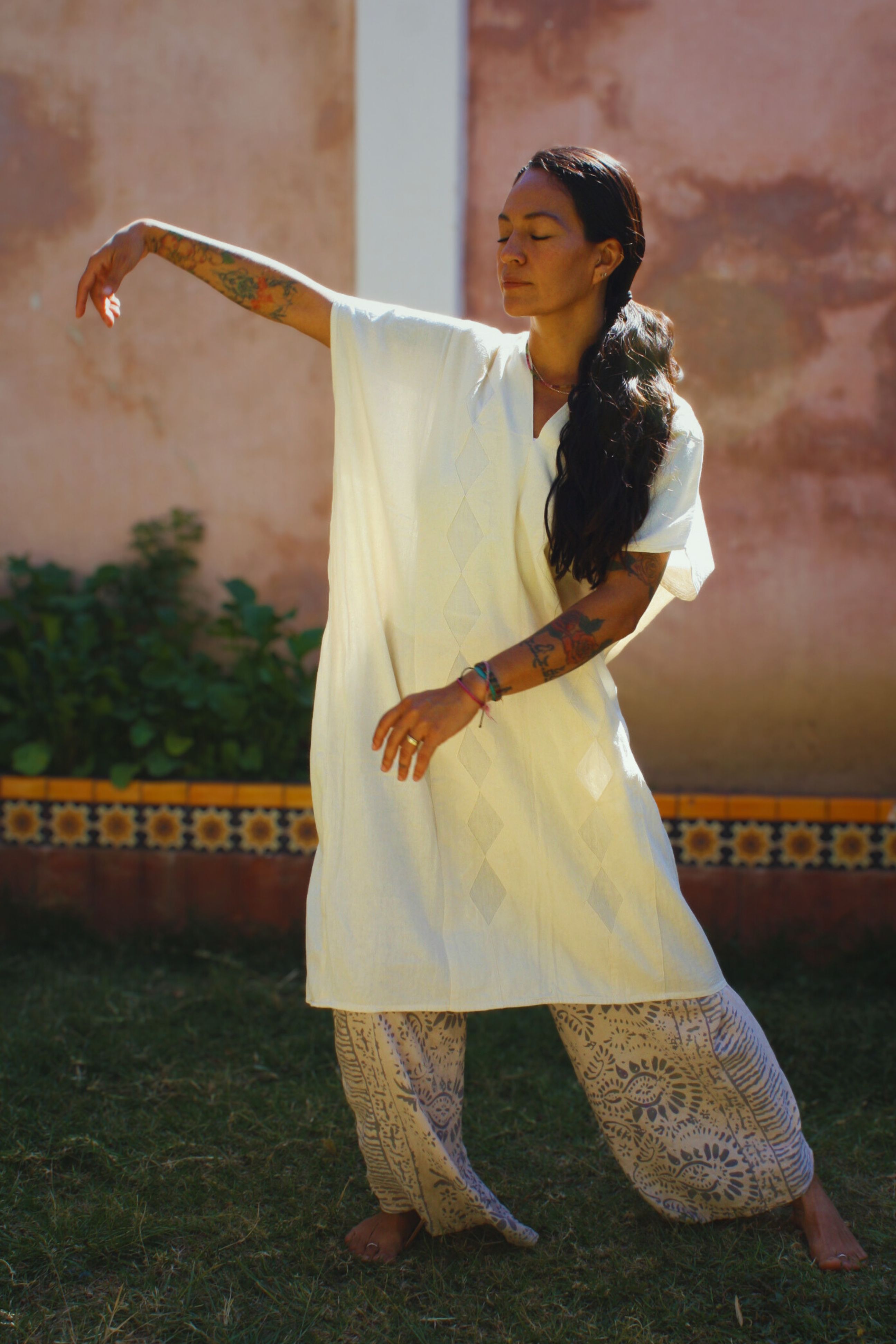
The Role of Play in Regulation The Strange Idea That Growing Up Meant Leaving Play Behind I want to invite you to try a very simple experiment. Think of a four-year-old child. They are not playing to become more productive. They are not consciously playing to develop social skills. They are not playing to improve their nervous system. They are playing because play is one of their natural ways of being in the world. Now think of an adult. When was the last time you played without a purpose? Without competing. Without proving something. Without taking a photograph of it. Without turning the experience into an achievement. Most people take a long time to answer. And that pause already tells us something important. At some point, we confused maturity with seriousness. We began to believe that growing up meant leaving play behind. That play was a waste of time. A luxury. A break. A childhood activity. Biology tells a very different story. Play is widely observed among mammals and serves important functions in development, learning, and social interaction. Puppies play. Primates play. Dolphins play. Many species invest time and energy in activities that, at first glance, appear unnecessary. From an evolutionary perspective, this is remarkable. If a behavior requires energy and yet repeatedly appears across different species and contexts, it deserves our attention. And play deserves it. Play organizes movement. It supports coordination. It strengthens connection. It allows experimentation. It develops flexibility.
It encourages creativity. It provides opportunities to learn how to adapt. And it can participate in emotional and physiological regulation, particularly when it takes place within relationships that feel sufficiently safe and predictable. Perhaps one of the most interesting questions is not why children play. Perhaps the question is why adults stop. In my work, I see something quite often. People who are deeply intelligent, sensitive, and committed to their personal growth, yet who have almost completely lost the ability to play. They know how to analyze. They know how to work. They know how to solve problems. But they find it difficult to do something simply because it feels good to explore it. As if play had been replaced by performance. This can have consequences for the way we relate to stress, emotional recovery, and everyday flexibility. Because play introduces a quality that few other activities offer. The possibility of experiencing movement, novelty, relationship, and uncertainty without immediately having to turn everything into a problem that needs to be solved. A child plays intensely. They run. They fall. They laugh. They imagine. They change the rules. They start again. And while all of this is happening, they are learning something essential. That they can explore. That they can make mistakes. That they can change strategies. That an interruption does not necessarily mean everything is over. That an unexpected experience can become part of the game. Here is an idea I find deeply important. Play is not a pause from life. It is one of the ways we learn how to live. And perhaps that is why losing it matters. When we stop playing, we don't simply lose fun. We lose a pathway into exploration, flexibility, and learning. There is something that moves me deeply when I watch children. They do not separate body, emotion, imagination, and learning.
Everything happens together. They learn while moving. They connect while imagining. They experience while feeling. They create while exploring. We, on the other hand, tend to fragment experience. We work. Then we try to relax. Then we try to exercise. Then we try to connect. As if every dimension had to happen separately. Play integrates. And that integration has enormous value for human development. Throughout this article, we will explore what science tells us about play, why it matters for nervous system development, how it relates to emotional regulation, and what can happen when adults recover the ability to play without turning play itself into another obligation. Because perhaps one of the deepest forms of health is not simply learning how to calm ourselves. Perhaps it is also recovering a capacity that childhood knew very well. The capacity to explore the world with enough safety that the body can learn, create, and enjoy at the same time. And perhaps the real problem is not that we don't have enough time to play. Perhaps the problem is that we convinced ourselves that play no longer had anything important to teach us. When in reality, it may be one of the most natural ways of keeping our capacity for exploration alive. Because perhaps growing up was never supposed to mean giving up play. Perhaps it meant learning how to carry play with us. What Science Tells Us Play as a Space for Learning, Flexibility, and Regulation For a long time, we thought of play as a luxury of childhood. Something that happened once all the important needs had been taken care of. Research in development, animal behavior, affective neuroscience, and learning psychology suggests a much more interesting picture. Play serves important functions in preparing an organism for life. Think about a puppy. It chases. It gently bites. It stops. It changes direction.
It starts again. What may look chaotic can actually involve extraordinarily complex learning. The puppy is developing coordination. Control of force. Awareness of social signals. Flexibility. The ability to recover from small mistakes. And it is learning to adjust its behavior according to what is happening around it. Neuroscientist Jaak Panksepp, one of the major researchers in affective neuroscience, studied play as one of the important emotional systems in mammals. His work contributed to showing that play is not simply entertainment. It is part of the motivational and social architecture of many species. Here we encounter a fascinating idea. Play allows us to rehearse life without having to face all of life's consequences. Through play, we explore possibilities. We test movements. We experiment with limits. We make mistakes. We adapt. And we try again. From an evolutionary perspective, this makes sense. An organism that can practice skills within a relatively safe context has opportunities to develop capacities that may later be useful in more complex situations. Play creates, in a sense, a laboratory of experience. A space where the system can learn. Not because play eliminates activation. Quite the opposite. Play can be intense. It can increase energy. It can create excitement. It can involve competition, surprise, or frustration. But there is an important difference between activation and threat. A child can run around screaming with excitement and, a few minutes later, sit down to rest. They can lose a round and play again. They can become angry and then laugh. They can suddenly change activities. That movement between states is part of what makes play so interesting. Play provides opportunities to practice flexibility.
The ability to enter an experience and come out of it. To become more activated and reorganize. To adapt. To return. This becomes especially relevant when we talk about emotional regulation. Regulation does not mean remaining calm all the time. It also involves being able to experience different states and recover enough organization to continue. Play can provide many opportunities to practice precisely that. There is another essential aspect. Play does not only develop motor skills. It can also support social exploration, problem-solving, creativity, and learning how to negotiate shared rules. Children playing together need to negotiate. Wait. Suggest. Accept. Refuse. Modify. Repair. Try again. Sometimes someone changes the rules. Someone becomes upset. Someone laughs. Someone walks away. And then they reconnect. All of this is extraordinarily rich social learning. I want to pause over one word: freedom. Play changes when every movement is completely directed toward an external goal. When every activity has to produce an outcome. When every mistake is evaluated. When there is no room to move away from the expected path. Play needs some space for exploration. That does not necessarily mean having no rules. In fact, many games depend on rules. But the rules of play can coexist with improvisation. Imagination. Surprise. The possibility of discovering something that was not planned. Here we encounter a contemporary paradox. We have filled childhood with structured activities.
And we have emptied adult life of spontaneous play. Children may have less time for free play. Adults may feel guilty when they play. Both phenomena deserve our attention. Because play is not simply a reward after all the important things have been completed. For children, playing is one of the important ways of learning. And for adults, maintaining spaces for play may help keep alive a flexible relationship with experience. Research on social interaction also helps us understand something else. Shared play is relational. It does not happen only inside one person. It happens between people. Between bodies. Between gazes. Between movements. Between rhythms. One person moves closer. The other responds. One exaggerates. The other imitates. One surprises. The other laughs. A conversation without words begins to emerge. In this sense, social play can become a form of interpersonal regulation. Not because one person "controls" another person's nervous system, but because both people are continually adjusting their behavior and state within the interaction. This connects with what we explored previously about co-regulation. Human regulation is not exclusively individual. We also learn and organize ourselves within relationships. And play provides one of the most natural contexts for that experience. There is something else I find especially interesting. Play is not the opposite of seriousness. It is the opposite of rigidity. A person can be deeply committed to something and still retain the capacity to play. They can work seriously and still improvise. They can care deeply and still laugh. They can move through difficult moments and still find small spaces of curiosity. What play challenges is not responsibility. It challenges the idea that everything has to be under control. From a somatic perspective, this is especially valuable.
Because many people try to regulate themselves exclusively through control. Control the breath. Control the thoughts. Control the emotions. Control the body. Play offers another pathway. Exploring instead of controlling. We do not always need to master an experience in order to relate to it. Sometimes we need to discover what happens when we leave a little space for curiosity. And curiosity can change our relationship with what is happening. An organism that asks, "What would happen if...?" is in a different position from one that is only trying to avoid making a mistake. This is why play deserves to be understood as much more than entertainment. It is a form of learning. An opportunity to practice flexibility. An experience of relationship. And, in certain contexts, a way of exploring activation and recovery. Perhaps play is one of life's most elegant ways of teaching us that not everything uncertain is dangerous. Experience Gives Meaning The Day Play Stopped Being an Option There is a question I like to ask from time to time. When did you stop playing? The answer is rarely a date. It is more often a feeling. "When I had too many responsibilities." "When I started working." "When I became an adult." "When I stopped having time." But perhaps something deeper happened. Perhaps we did not stop playing because we grew up. Perhaps we stopped playing because we learned that value came from performance. Little by little, we began asking different questions. What is this for? What am I going to achieve? Am I using my time well? Am I being productive? And without realizing it, part of our experience began living under constant evaluation.
Play needs something that constant evaluation makes difficult. Permission to explore. A child does not play knowing exactly what they are going to discover. They explore. They try. They make mistakes. They change the rules. They invent a world. They destroy that world. They build another. Learning happens precisely because the outcome is not completely defined. Many adults have lost that permission. Even when they try to rest. They go to a yoga class and want to do it correctly. They go for a walk and want to optimize the walk. They learn an instrument and want to progress quickly. They play with their children and end up organizing the game. The logic of performance invades territories that once belonged to exploration. Here is an idea I find deeply important. Play is not the absence of intelligence. It is a different form of intelligence. An intelligence that learns by trying. By moving. By imagining. By relating. By improvising. There is something I often observe in my work. Many people are deeply exhausted and believe they simply need more rest. Sometimes they do need rest. But some also need to recover spaces where they don't have to be functioning. Spaces where they can be curious. Playful. Clumsy. Creative. Where they can do something without immediately asking whether they are doing it well. Because play does not replace rest. But it can recover a quality that passive rest does not always provide: exploration. And exploration changes our relationship with our surroundings. When someone is genuinely curious, they observe differently. They look differently.
They move differently. They ask different questions. The body enters a mode of searching. That does not mean difficulties disappear. It means the experience is no longer organized exclusively around defense. I want to say something especially important for those who have children. Children do not play only to entertain themselves. They play to develop capacities. To build maps of the world. To understand relationships. To experiment with limits. To create. To imagine. To tolerate small frustrations. To discover what happens when they try something different. Every time we constantly interrupt free play to direct it, accelerate it, or turn it into a formal lesson, we may forget something fundamental: play is already learning. And perhaps adults need to remember exactly the same lesson. There is a scene that moves me deeply. A father is playing with his child. For a few minutes he forgets his phone. He forgets work. He forgets the list of things that need to be done. He crawls across the floor. Makes ridiculous sounds. Builds a tower. The tower falls. They both laugh. In that moment, the child is not the only one learning. The adult is too. He is remembering a form of presence that may have fallen asleep. Neuroscience of learning and research on creativity show the importance of exploration, emotion, attention, and motivation in the way we learn. Play brings many of these conditions together spontaneously. That is why so many ideas appear when we stop trying to produce them. Playing. Walking. Drawing. Talking. Improvising. There is something especially beautiful about play.
It brings us back to the present without requiring us to tell ourselves to be present. We do not need to repeat that we should concentrate. Play can naturally absorb our attention. Time changes texture. Experience becomes more immediate. A quality of flow may emerge. And that experience can be deeply rewarding. Perhaps this is why play has such an interesting place within a somatic understanding of regulation. Not because it is a technique for "calming the nervous system." But because it offers opportunities to experience movement, curiosity, relationship, surprise, and recovery within a context that may feel sufficiently safe. Activation without threat. Movement without performance. Learning without constant evaluation. Connection with less defense. Perhaps the problem is not that we have become adults. Perhaps the problem is that we confused adulthood with losing permission to explore. And a system that stops exploring can become more rigid. More predictable. More limited. Recovering play does not mean becoming children again. It means recovering a deeply human capacity. The capacity to approach life with enough openness to discover something new. And when curiosity returns, the body may remember something very old. That not every movement has to prove something. That not every moment has to produce something. And that sometimes a shared laugh can open a space of connection that no rational explanation can replace. Perhaps play is, at its core, the place where the body discovers that it still has permission to keep learning. Practice Transforms How to Recover Play Without Turning It Into Another Obligation There is a curious paradox. Many people read about the benefits of play and immediately think: "I should play more." And without realizing it, they turn play into a task.
They schedule it. They evaluate it. They want to do it correctly. They want results. The system returns to the logic of performance. Play disappears again. At Sentido Somático, we are interested in a different idea. Not recovering play simply as an activity. Recovering it as a quality of experience. That quality appears when there is enough space to explore, improvise, and be surprised. So the first step is often not doing something childish. It is letting go of the demand for an outcome. Play begins when exploration becomes more important than performance. Here is a concept I would like to integrate into the book. Everyday micro-play. Just as we have spoken about micro-recovery, we can also think about small moments in which we temporarily step out of rigidity and into exploration. They do not need to last an hour. They can last a minute. Change the way you walk. Move your shoulders in an unfamiliar way. Invent an absurd melody. Dance while you cook. Play with a child by following their rules rather than your own. Throw a ball. Draw something without showing it to anyone. Build something with your hands. Improvise. Laugh. The point is not the activity. It is your relationship with the activity. There is a question that can help us: When was the last time I did something without trying to be good at it? That question often opens an important door. Because many adults only engage in activities in which they already have some degree of competence. And competence provides security. But play needs another kind of security. The security of being clumsy. Making mistakes. Changing direction.
Laughing at ourselves. Starting again. This can be deeply valuable for emotional flexibility. When we play, we practice something extraordinary. The ability to recover from small mistakes. A tower falls. We rebuild it. We lose a round. We keep playing. We get confused. We laugh. The organism can learn that an interruption is not necessarily a catastrophe. That experience matters. I want to pause for a moment around movement. Many people exercise. Far fewer people play with movement. There is an important difference. Exercise often has a goal. Body-based play has a question. "What else can my body do?" That question awakens curiosity. And curiosity expands the map of bodily possibilities. That is why free dancing, exploring unfamiliar movements, walking across different kinds of terrain, throwing, catching, rolling, or playing with balance can be interesting experiences. Not because they are superior forms of exercise. But because they awaken exploration. And exploration creates opportunities for learning. There is another aspect that feels particularly important. Shared play is relational. When two people play, they coordinate rhythms. Gazes. Pauses. Surprises. Laughter. Adjustments. The nervous system participates in an interaction where relationship can become a space for creativity rather than simply evaluation. This is especially valuable for people who have children. We often believe we must constantly teach them. Sometimes the most important thing is allowing ourselves to be taught by their capacity to play. Children remember something adults frequently forget.
That deep learning also needs pleasure. It needs movement. It needs imagination. It needs connection. And it needs space where the outcome has not yet been decided. Perhaps one of the most important practices is this. Every day, do something that has no purpose other than exploration. Do not measure it. Do not publish it. Do not optimize it. Do not turn it into a personal development project. Just explore. Because play stops feeling like play when it becomes a strategy for becoming better. It opens again when it allows us to be alive in a less rigid way. And perhaps that is something many people need. Not simply more rest. But more opportunities to discover that life can still surprise us. Because an organism that plays is not denying reality. It is expanding its possible responses within reality. And that flexibility is one of the most interesting expressions of health. Perhaps recovering play means remembering that the body was not made only to survive. It was also made to explore. Create. Connect. Discover. Laugh. Learn. And that every small moment of exploration can be a quiet way of saying: "I still have permission to inhabit life with curiosity." Exploring the Idea Playing Is a Way of Continuing to Learn How to Live There is a question I would like to leave open at the end of this article. What would happen if play were not a childhood activity, but a human capacity that needs to accompany us throughout life? Perhaps many things would change. The way we work. The way we learn. The way we relate. The way we parent.
And also the way we age. Developmental science has shown that the brain retains significant capacity for change throughout life. Neuroplasticity does not belong only to childhood. We continue learning. We continue modifying bodily maps. We continue acquiring skills. We continue developing new strategies. We remain capable of discovery. Within this context, play stops being merely a memory. It can become a way of keeping our relationship with learning alive. At Sentido Somático, we have spoken about body literacy, inner landscapes, orientation, co-regulation, and nervous system flexibility. Play moves through all of these processes. Because play awakens movement. Movement awakens perception. Perception opens possibilities for learning. And learning transforms our relationship with the world. I want to return to an idea that appeared earlier. Curiosity. There is a quiet cultural belief that curiosity belongs to childhood. Children ask. Explore. Touch. Invent. Become surprised. Adults are expected to know. Control. Explain. Predict. But curiosity is not immaturity. It is a form of intelligence. It is the ability to approach reality without assuming that we already know everything about it. And that attitude can change our bodily experience. An organism that can ask, "What else is here?" is in a different position from one that is only trying to confirm what it already believes. Curiosity reduces rigidity. It expands perception. It creates room for new experiences. This is why play and curiosity are so deeply connected. We do not play because we already know. We play to discover.
There is an image that stays with me. Imagine a scientist. They observe. They ask questions. They experiment. They make mistakes. They adjust. They try again. In a certain sense, a good scientist and a child at play share something essential. A willingness to explore the unknown. Perhaps this is why play is one of the most sophisticated forms of learning. Because it keeps the ability to ask questions alive. And questions can change what we perceive. Change what we try. Change what we learn. Change how we inhabit an experience. Research on creativity, innovation, and learning highlights the importance of spaces where possibilities can be explored without every attempt having to produce an immediate result. Play creates precisely that margin. A space where experience can surprise us. And surprise, when it occurs within a sufficiently safe context, can become an opportunity for learning. I want to say something that feels especially important. Recovering play does not mean becoming children again. It means recovering a more alive relationship with experience. Learning a new skill at fifty. Dancing without thinking about how we look. Playing with our children without constantly directing the game. Laughing. Improvising. Changing our minds. Trying a different path. Continuing to ask questions. That capacity protects something deeply valuable. Vitality. Because vitality does not depend only on age. It also depends on our relationship with novelty. At the beginning of this article, we said that growing up seemed to mean leaving play behind. Now perhaps we can say something more. Growing up should not mean losing play.
It should mean discovering new ways of playing. Playing with ideas. With movement. With relationships. With creativity. With learning. With life. Perhaps maturity does not mean abandoning curiosity. Perhaps it means protecting it. Because curiosity keeps us in conversation with the world. And that conversation is one of the deepest forms of presence. Science will continue to investigate the role of play in brain development, emotional regulation, creativity, learning, and well-being. We will likely understand its mechanisms more clearly in the years to come. But perhaps we already know something essential. Play is not an interruption of life. It is a way of participating fully in it. And when we recover permission to explore, something very old awakens again. The feeling that we can still learn. Still create. Still be surprised. And perhaps that is one of the most beautiful definitions of health. Not having stopped playing with existence. Because, in the end, an organism that retains curiosity also retains a door open toward learning, connection, and experience. And as long as that door remains open, the nervous system continues to encounter opportunities to adapt. Life does not only have to be faced. It can also be explored. Exploring the Idea Playing Is a Way of Staying Open to Life This article is in dialogue with researchers whose work has expanded our understanding of play, learning, development, and regulation. Jaak Panksepp For his pioneering work in affective neuroscience and, particularly, his research into the emotional systems involved in play among mammals. Stuart Brown For his research and extensive work on play, human development, creativity, and well-being. Lev Vygotsky
For his foundational contributions to understanding play as a context for cognitive development, imagination, social learning, and meaning-making. Donald Winnicott For his understanding of play as a potential space for creativity, experience, and the development of a living relationship with the world. Stephen W. Porges For his research and theoretical contributions concerning autonomic regulation, safety, and social behavior. At Sentido Somático, we use these contributions as part of an interdisciplinary dialogue, distinguishing between influential clinical models and concepts supported by a broader body of scientific evidence. Contemporary Research This article also draws on contemporary research in developmental neuroscience, learning psychology, behavioral science, creativity, child development, and studies of social interaction. Scientific understanding of play continues to evolve. And that evolution matters. It allows us to move away both from the idea that play is "a waste of time" and from the opposite temptation to turn play into another universal solution. Play does not need to become therapy in order to have value. It does not need to constantly justify itself. It does not need to produce something. Perhaps part of its importance lies precisely in reminding us that an experience can be valuable even when we cannot turn it into a number. Scientific References • Panksepp, J. (1998). Affective Neuroscience: The Foundations of Human and Animal Emotions. Oxford University Press. • Brown, S. (2009). Play: How It Shapes the Brain, Opens the Imagination, and Invigorates the Soul. Avery. • Vygotsky, L. S. (1978). Mind in Society: The Development of Higher Psychological Processes. Harvard University Press. • Winnicott, D. W. (1971). Playing and Reality. Tavistock. • Pellis, S. M., & Pellis, V. C. (2009). The Playful Brain: Venturing to the Limits of Neuroscience. Oneworld. • Siviy, S. M. (2010). A brain motivated to play: Insights from the affective neuroscience of curiosity. Developmental Psychobiology, 52(6), 548-556. • Burghardt, G. M. (2005). The Genesis of Animal Play: Testing the Limits. MIT Press.
• Ginsburg, K. R. (2007). The importance of play in promoting healthy child development and maintaining strong parent-child bonds. Pediatrics, 119(1), 182-191. • Yogman, M., Garner, A., Hutchinson, J., Hirsh-Pasek, K., & Golinkoff, R. M. (2018). The power of play: A pediatric role in enhancing development in young children. Pediatrics, 142(3), e20182058. • Gray, P . (2011). The decline of play and the rise of psychopathology in children and adolescents. American Journal of Play, 3(4), 443-463. Sentido Somático Principle Play does not need to be productive to be deeply human. We do not need to play in order to improve our nervous system. We can play because we are alive. Regulation does not mean always being calm. It also means retaining the capacity to move between activation, exploration, rest, connection, and recovery. The body learns through exploration. And perhaps one of the deepest ways of caring for our vitality is not forgetting that we can still be surprised. Because perhaps growing up was never supposed to mean leaving play behind. Perhaps it meant learning how to carry play with us. At twenty. At forty. At sixty. At eighty. Not to return to childhood. But to preserve that part of ourselves that can still look at the world and ask: "What would happen if...?" And then discover it. 🌿