What Does the Word "Somatic" Really Mean?
What Does the Word "Somatic" Really Mean? An Ancient Word for a Completely New Question In the summer of 1976, an American philosopher named T...
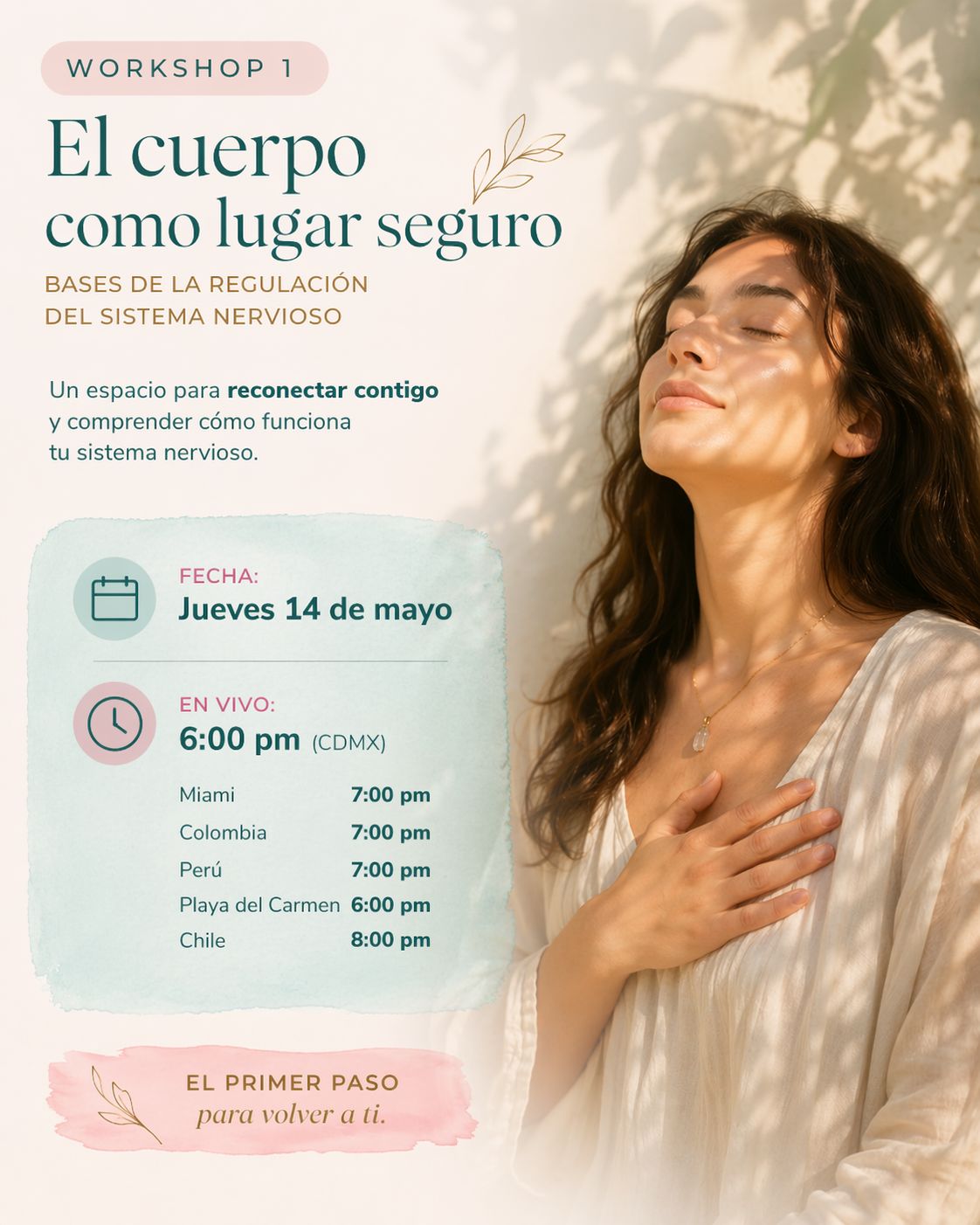
What Does the Word "Somatic" Really Mean? An Ancient Word for a Completely New Question In the summer of 1976, an American philosopher named Thomas Hanna published an article with an idea that, at the time, seemed almost provocative. He was not proposing a new therapy. He was not presenting a revolutionary technique. Nor was he trying to discover an unknown organ of the human body. His proposal was much simpler and, precisely for that reason, much more radical. He said that we were missing a word. It may seem strange. After thousands of years of studying the human body, how could we still be missing a word? Medicine knew the bones, muscles, and organs with extraordinary precision. Anatomy had mapped the body in remarkable detail. Physiology explained how its systems functioned. Neurology was beginning to reveal the mysteries of the brain. But Hanna noticed that all these disciplines shared one characteristic. They looked at the body from the outside. As an object that could be described, measured, and analyzed. Then he asked a question that would contribute to the emergence of a new field of study. What word do we use to talk about the body as it is experienced from within? Not the body observed by a doctor. Nor the body that appears in an MRI. Nor the body represented in an anatomy book. But the body that feels. The body that breathes. The body that senses the warmth of the sun on the skin. The body that notices the heart beating faster when someone says our name. The body that shivers when it hears a melody. The body that knows where our hands are even with our eyes closed. That body was not a new idea. It had accompanied humanity from the beginning. What was new was the decision to place it at the center of the conversation. To name it, Hanna returned to a word from ancient Greek: soma.
In classical Greece, soma referred to the living body. Not simply a collection of tissues and organs, but the embodied human being—the body as it is lived by the person inhabiting it. From that root came a new word: somatic (somatics). Not to replace medicine. Not to oppose science. But to remember something that, paradoxically, had been left outside many scientific conversations: There is a difference between having a body and living a body. It may seem like a subtle distinction. In reality, it changes the question completely. Because when we look at the body only from the outside, we seek to understand how it functions. But when we begin to explore it from within as well, another kind of knowledge emerges. The knowledge of experience. Of perception. Of movement. Of body awareness. Of somatic experience. Of that silent conversation our nervous system maintains, moment after moment, with the world around us. And perhaps this is where one of the most interesting revolutions of recent decades began. Not a technological revolution. Nor a pharmacological one. A revolution in the way we look at human beings. Because perhaps the question was never simply how the body functions. Perhaps the question that had been waiting for centuries was much simpler. What changes when we learn to listen to the body not only as an object of study, but also as the place from which we live our entire experience? Science Explains The Day the Body Stopped Being Only an Object For much of the history of Western medicine, something extraordinary happened. We learned to know the body... by moving away from it. It may sound like a contradiction. But it isn't. To understand how the heart functions, we had to open the body. To study the brain, we had to observe it under a microscope.
To understand muscles, we had to draw them, classify them, and name them. And through this way of looking, humanity achieved some of the greatest advances in its history. Surgeries that once seemed impossible. Vaccines. Antibiotics. Transplants. Imaging capable of detecting a tumor only a few millimeters in size. Modern medicine is undoubtedly one of the greatest achievements of our civilization. And yet, while we were learning to look at the body from the outside, an unexpected question began to emerge. What happens to the body as we experience it from within? No X-ray can show how an embrace feels. No MRI can record the experience of dancing when a song moves us. No blood test can describe the sensation of taking a deep breath after crying. Science could observe the organism. But there was still a territory that was difficult to name. Experience. It was precisely during the twentieth century that different people, coming from very different places, began approaching this question. They did not belong to a single discipline. There were doctors. Philosophers. Dancers. Educators. Actors. Movement researchers. Each arrived by a different path. But all seemed to sense something similar. The body was not merely a biological structure. It was also a way of knowing the world. While the neuroscientist studied the brain in the laboratory, Moshe Feldenkrais observed how small changes in movement altered a person's perception of themselves. While medicine analyzed muscles, Charlotte Selver invited thousands of people to discover how their experience changed simply by paying attention to breathing, touch, or the weight of the body against the ground. While physiology described reflexes, Elsa Gindler explored how body awareness transformed the everyday relationship with effort, rest, and movement.
Years later, Thomas Hanna brought many of these approaches together under a single name. Somatics. The interesting thing is that none of them were trying to invent a new body. They were trying to recover an ancient question. What does it feel like to be alive from within? Today, neuroscience has begun to engage with many of those intuitions. We know that the brain does not function independently of the rest of the organism. It constantly receives information from muscles, joints, skin, heart, breathing, the gut, and many other organs. Some research suggests that a substantial amount of the information processed by the brain at any given moment comes precisely from within the body. The scientific term for our ability to perceive what is happening inside us is interoception. Thanks to it, we can notice that we are thirsty before becoming dehydrated. Feel hunger. Sense that the heart is beating more strongly. Recognize a knot in the stomach before an important conversation. Or experience that difficult-to-describe sensation we often call "intuition," which frequently begins as a bodily perception before becoming a thought. Proprioception, meanwhile, allows us to know where our body is in space even with our eyes closed. And exteroception maintains an ongoing dialogue with the world through the senses. Suddenly, science began describing something fascinating. We do not experience the world with the brain alone. We experience it through the whole organism. Perhaps this is one of the deepest contributions of somatics. It does not propose abandoning science. It invites us to expand it. It reminds us that knowing the body does not only mean measuring it, observing it, or repairing it. It also means learning how to inhabit it. And here one of the central ideas of somatic education emerges: developing a more conscious relationship with one's own body through perception, movement, and first-person experience. Because there is a kind of knowledge that no book can fully teach us. The knowledge that appears when we stop asking only how the body functions and begin exploring what it feels like to live inside it.
And perhaps this difference explains why the word somatic continues to awaken so much curiosity almost fifty years after Thomas Hanna brought it back into the conversation. Not because it describes a technique. But because it returns us to a question that, in reality, has never stopped accompanying humanity: What part of life can only be understood when we stop observing it from the outside and begin experiencing it from within? Experience Gives Meaning Long Before the Word Existed, the Experience Was Already There There is something curious about words. We often believe that an idea is born on the day someone gives it a name. But that is rarely how it happens. Gravity existed long before Newton described it. Microorganisms inhabited the world before we invented the microscope. And human beings experienced their bodies long before Thomas Hanna wrote the word somatic. In fact, you probably had your first somatic experience before you learned to speak. Think for a moment about a baby. It does not know language. It cannot explain what it feels. It does not know what stress is. Or emotional regulation. Or the nervous system. And yet, it is already continuously learning about the world. It learns to recognize its mother's voice. The temperature of arms holding it. The rhythm of a breath. The movement of someone rocking it. The difference between silence and noise. Between hunger and satiety. Between tension and rest. All of this learning happens before words appear. Or, in other words, the body learns before language. This idea may seem simple. In reality, it profoundly changes how we understand human experience. For centuries, many Western cultures gave a privileged place to rational thought. As though understanding meant only thinking.
But we only need to observe any aspect of life to discover that we do not learn through ideas alone. We learn by walking. We learn by falling. We learn by dancing. We learn by embracing. We learn by breathing. We learn by looking at the faces of those who care for us. We learn by feeling. A pianist does not consciously think through every finger movement while performing a piece. A cyclist does not solve equations to maintain balance. A dancer does not consciously calculate the exact angle of every joint. The body knows. And it knows because it has learned. Neuroscience calls part of this phenomenon implicit learning. It is a form of learning that does not depend on memorizing concepts, but on repeated experience. Through it, we learn to walk without remembering every step. To recognize the smell of our home. To respond when someone we love says our name. And sometimes, to respond with tension to certain situations that our organism has associated with threat. That is why, when we speak at Sentido Somático about somatic therapy or somatic education, we are not referring only to intellectually understanding how the body works. We are interested in something deeper. Creating new experiences. Because the body does not change only when it receives information. It also changes when it experiences something different. Perhaps this is why many people describe a very particular moment during a process of support. They do not say: "Today I understood a new theory." They say: "For the first time, I felt that I could breathe without effort." Or: "I realized that my shoulders had been tense for years and I hadn't even noticed." Or even: "I didn't know it was possible to feel so much calm without having to do anything extraordinary." These sentences may seem small.
And yet, they describe one of the most fascinating phenomena of human learning. There are experiences that do not simply expand our knowledge. They expand the way we inhabit the world. Perhaps that is one of the greatest contributions of somatics. It does not ask us to think less. It invites us to think with all that we are. With movement. With breathing. With perception. With sensitivity. With that silent intelligence that allowed us to learn how to walk long before we could explain what walking was. And perhaps this is why somatics does not teach us something entirely new. Rather, it invites us to remember a capacity that has always been there. The capacity to experience the body not as the stage on which our existence takes place. But as the very form through which existence becomes possible. Because perhaps the question was never simply: "What does my mind know about my body?" Maybe the question that has been waiting for us all along is: "What does my body already know about life that my mind has not yet learned to hear?" Practice Transforms Learning to Perceive Is Not the Same as Learning to Do When we think about learning, we almost always imagine the same scene. Someone explains. Another person listens. Then memorizes. And, hopefully, understands. This is how we learn historical dates. Mathematical formulas. A new language. Or how a cell functions. This kind of learning has made much of human knowledge possible. But there is another way of learning that began long before schools existed. No one taught us to recognize the taste of water when we are thirsty. No one had to intellectually explain the difference between a caress and a blow. No one gave us a lecture so that we could discover that the light of dawn does not feel the same as the light of a summer afternoon. There are forms of knowledge that do not arrive first through words.
They arrive through experience. And only afterward, if necessary, do we find language to describe them. Somatics belongs to this family of learning. That is why many people are surprised when they begin a practice of somatic education or somatic therapy. They expect complex instructions. They expect to learn a technique. They expect someone to tell them what to do with their body. Instead, something unexpected happens. The first invitation is often much simpler. Pay attention. Not to analyze. Not to correct. Not to reach a special state. Simply to perceive. It may seem like very little. And yet perception is one of the most sophisticated capacities of the human organism. Perceiving does not simply mean receiving information. It means establishing a relationship with it. When you observe the weight of your feet against the floor, you are not creating a new sensation. The information was already there. The only thing that has changed is your attention. When you discover that you have been holding your breath while responding to an important email, the breath has not just appeared. What has appeared is awareness of something that had already been happening for several minutes. And when you notice your shoulders beginning to relax after a calm conversation, you have not forced the body to change. You have offered it the conditions to express a possibility that was already there. Perhaps this is why Thomas Hanna said that much of somatic education is not about training the body more, but about refining our perception of ourselves. It is a profoundly simple idea. And, at the same time, revolutionary. We live in a culture that devotes enormous effort to teaching us to produce, solve, optimize, and accelerate. Much less often do we learn to perceive. To recognize when we are tired before reaching exhaustion. When we need a pause before the body demands one. When a relationship makes us feel more expansive or smaller. When a breath changes the quality of a moment.
Perception does not replace scientific knowledge. It completes it. Science can explain how breathing works. Only you can discover how your experience changes when you breathe differently. Neuroscience can describe interoception. Only you can notice how your heart beats after being reunited with someone you love. Books can explain nervous system regulation. But there is an intimate and unrepeatable moment in which each person recognizes for themselves what it feels like when a body stops fighting for a moment. And that recognition cannot be borrowed. It must be lived. Perhaps this is one of the greatest contributions of somatics. It reminds us that the body is not only an object of knowledge. It is also a place of knowledge. Not because it possesses magical answers. But because it continuously participates in the construction of our experience. Before closing this section, I would like to invite you to try something different. Not an exercise. Just an observation. As you continue reading these pages, pause for a few seconds. Do not change your posture. Do not alter your breathing. Do not try to relax. Simply ask yourself: What am I feeling right now that I had not noticed five minutes ago? Perhaps the answer is very small. The contact of clothing against your skin. The support of your back. The temperature of the air. The softness of your breathing. Or perhaps you discover something even more interesting. That nothing has changed. And yet your experience of the moment is no longer exactly the same. Because attention has an extraordinary capacity. It does not create reality. But it can reveal aspects of it that, until that moment, were quietly waiting for us. And perhaps that is one of the most beautiful definitions of somatics. Not learning how to become someone different. But learning to perceive, with increasing clarity, the richness of the life that was already happening within and around us.
Research Continues The More We Learn About the Body, the More Mysterious It Becomes There is a common image of science. We imagine scientists moving through the world collecting answers. Yet many researchers describe almost the opposite experience. Every important discovery tends to bring new questions. It is like entering an unfamiliar room. At first, we see only one door. We open it. And behind it, ten more doors appear. Something similar has happened with the study of the human body. At the beginning of the twentieth century, many believed that understanding the organism mainly meant identifying each of its organs and describing how they functioned. It was an enormous task. And an extraordinarily valuable one. But something unexpected happened. The more we understood the parts, the more obvious it became that life could not be explained simply as the sum of those parts. How does consciousness arise? How does an emotion change the rhythm of the heart? Why can a conversation relieve physical pain? How does a secure relationship influence the development of a baby's brain? How does movement change the way we perceive ourselves? Each of these questions opened new fields. And with them, new ways of understanding human experience. Today we speak of neuroscience, interoception, interpersonal neurobiology, embodied cognition, psychoneuroimmunology, movement sciences, attachment theory, and many other fields that only a few decades ago were just beginning to enter into dialogue with one another. The interesting thing is that none of them studies the body in isolation. They all begin from a shared intuition. Life functions as a network of relationships. The brain is constantly communicating with the heart. The immune system responds to signals from the nervous system. Breathing influences brain activity. Movement changes perception. Relationships shape the development of the organism. And the organism, in turn, changes the way we relate to the world.
Perhaps the greatest surprise of contemporary research is not discovering that everything is connected. Many cultures had already intuited this interdependence centuries ago. The real novelty has been beginning to describe, with increasingly precise scientific tools, how this dialogue occurs. Not to replace experience. But to understand it more deeply. That is why the word somatic is more relevant today than when Thomas Hanna proposed it almost fifty years ago. Not because science has proven that he was right about everything. Good science never works that way. What has happened is much more interesting. More and more disciplines, coming from completely different paths, are arriving at a similar conclusion: We cannot fully understand human beings if we study the body only as a biological object. We also need to understand how that body perceives, learns, remembers, relates, and constructs meaning. We need to understand embodied experience from within, not only its description from outside. And this conversation is only beginning. Perhaps twenty years from now, many of the ideas we consider solid today will have evolved. There will be new discoveries. New technologies. New questions. That does not weaken science. It strengthens it. Because one of the most beautiful characteristics of scientific knowledge is its ability to correct itself, expand, and continue learning. At Sentido Somático, we want to participate in that conversation with the same attitude. We do not seek to turn a theory into a doctrine. Nor do we present somatics as the definitive answer to human experience. We prefer to understand it as an invitation. A way of looking that continues to grow through dialogue between research, clinical practice, education, movement, art, and the everyday experience of millions of people. Perhaps that is the most valuable lesson the history of science gives us. Knowledge is never completely finished. It remains alive. Like a conversation that moves across generations.
And perhaps somatics is precisely a new voice within that ancient conversation. Not to have the final word about the body. But to help us formulate increasingly deeper questions about what it means to be alive. The Research Behind This Article No Great Idea Is Born From One Person Alone There is a very human tendency to tell the history of discoveries as though they were the work of a single genius. We say Newton discovered gravity. Darwin discovered evolution. Freud discovered the unconscious. Reality is almost always more interesting. Great ideas tend to emerge when many people, from different places and at different moments, begin asking similar questions. The history of somatics is a wonderful example. Although the term was coined by Thomas Hanna in the 1970s, the conversation had begun much earlier. At the end of the nineteenth century and beginning of the twentieth, while medicine was making extraordinary advances through anatomy, physiology, and neurology, some people began exploring a different question: What happens when the body becomes not only an object of study, but also a source of knowledge? Interestingly, many of these pioneers did not work in laboratories. Some were doctors. Others musicians. Dancers. Educators. Philosophers. Actors. People who observed human movement with an attention that the science of their time did not yet know how to describe. Elsa Gindler (1885-1961) In Germany, Elsa Gindler began investigating how attention, breathing, and movement profoundly changed everyday experience. She never sought to create a therapeutic method. Her interest was much simpler and, at the same time, much more revolutionary: What happens when a person learns to perceive themselves more clearly? Many of her ideas would influence the development of modern somatic education decades later. Moshe Feldenkrais (1904-1984)
A physicist and engineer, as well as a judo practitioner, Feldenkrais became interested in movement while trying to understand his own knee injury. That personal search eventually developed into decades of exploration into learning, neuroplasticity, and the organization of movement. Long before neuroplasticity became widely known, Feldenkrais already sensed that the brain learned through experience and that small changes in movement could profoundly transform our perception of ourselves. Charlotte Selver (1901-2003) A student of Elsa Gindler, she brought these explorations to the United States and developed the approach known as Sensory Awareness. Her work inspired artists, educators, psychologists, and health professionals. Rather than teaching exercises, she invited people to recover their ability to feel with greater precision. Thomas Hanna (1928-1990) A philosopher by training, he was the person who brought many of these approaches together under a common concept. In 1976, he proposed the word Somatics to describe the study of the lived body from a first-person perspective. He was not founding a new therapy. He was offering a common language for a collection of investigations that had previously remained scattered. Science Continues to Expand the Conversation Decades later, neuroscience began to engage with many of those intuitions. Researchers such as Antonio Damasio showed that emotions and bodily perception actively participate in decision-making and in the construction of consciousness. Jaak Panksepp explored emotional systems shared by mammals, expanding our understanding of the biological origins of many affective experiences. Stephen Porges, through Polyvagal Theory, opened new questions about the relationship between the autonomic nervous system, perceived safety, and social connection. Daniel Siegel integrated knowledge from neuroscience, developmental psychology, and attachment theory to understand how relationships shape the brain throughout life. More recently, researchers such as Lisa Feldman Barrett have expanded our understanding of how the brain constructs emotions through the ongoing interaction between the body, previous experience, and context. What is fascinating is that none of these researchers studies exactly the same thing. And yet their work is beginning to meet within the same landscape.
The body no longer appears only as a biological structure. It is increasingly understood as a living organism that perceives, learns, anticipates, adapts, and continuously participates in the construction of our experience. Embodied experience is no longer merely a secondary detail. It is becoming an increasingly important part of the conversation about how human beings perceive, learn, and relate to the world. Our Commitment At Sentido Somático, we want to participate in this conversation with deep respect. We do not seek to present somatics as a solution to every problem. Nor do we want to turn it into another belief system. Our commitment is different. To build bridges. Between science and experience. Between biology and philosophy. Between academic knowledge and the wisdom that emerges from observing everyday life with attention. Between what we can study from the outside and what we can truly know only when we experience it from within. We believe that the best questions do not belong to a single discipline. They belong to humanity. And perhaps the question that gave rise to somatics remains one of the most beautiful questions we can ask ourselves: What can I discover about life when, in addition to observing the body, I also learn to inhabit it?